 CLOUD
CLOUD


CLOUD

Microsoft Corp. delivered better-than-expected earnings and revenue in its fiscal 2027 first quarter, driven by growth of more than 48% in its Azure cloud infrastructure business, sending its stock about 4% higher after-hours.
The company reported earnings before certain costs such as stock compensation of $4.89 per share, easily beating Wall Street’s forecast of $4.73 per share, while revenue for the period rose 19% to $92.28 billion, ahead of the $90.69 billion target. All told, the company reported net income of $36.63 billion, up from $27.75 billion in the same period one year earlier.
For the first time in its history, Microsoft disclosed its exact revenue from the Azure business in dollar terms, saying that the unit generated $33.17 billion in the quarter, despite facing delays from some third-party providers. That number came in above expectations, as analysts forecast Azure revenue of just $32.32 billion.
The disclosure was part of a new reporting metric that saw Microsoft’s results broken down into two operating segments: Agents and Infra and Devices and Consumer. For the last 11 years, the company had reported its results under three segments that diced up its Azure, Office and Windows business units.
In the Agents and Infra segment, revenue rose 25% from a year earlier, to $76.8 billion, ahead of the $75.63 billion analyst target. That segment includes Azure along with Microsoft 365 cloud products, productivity tools and server licensing, industry solutions and frontier and support services.
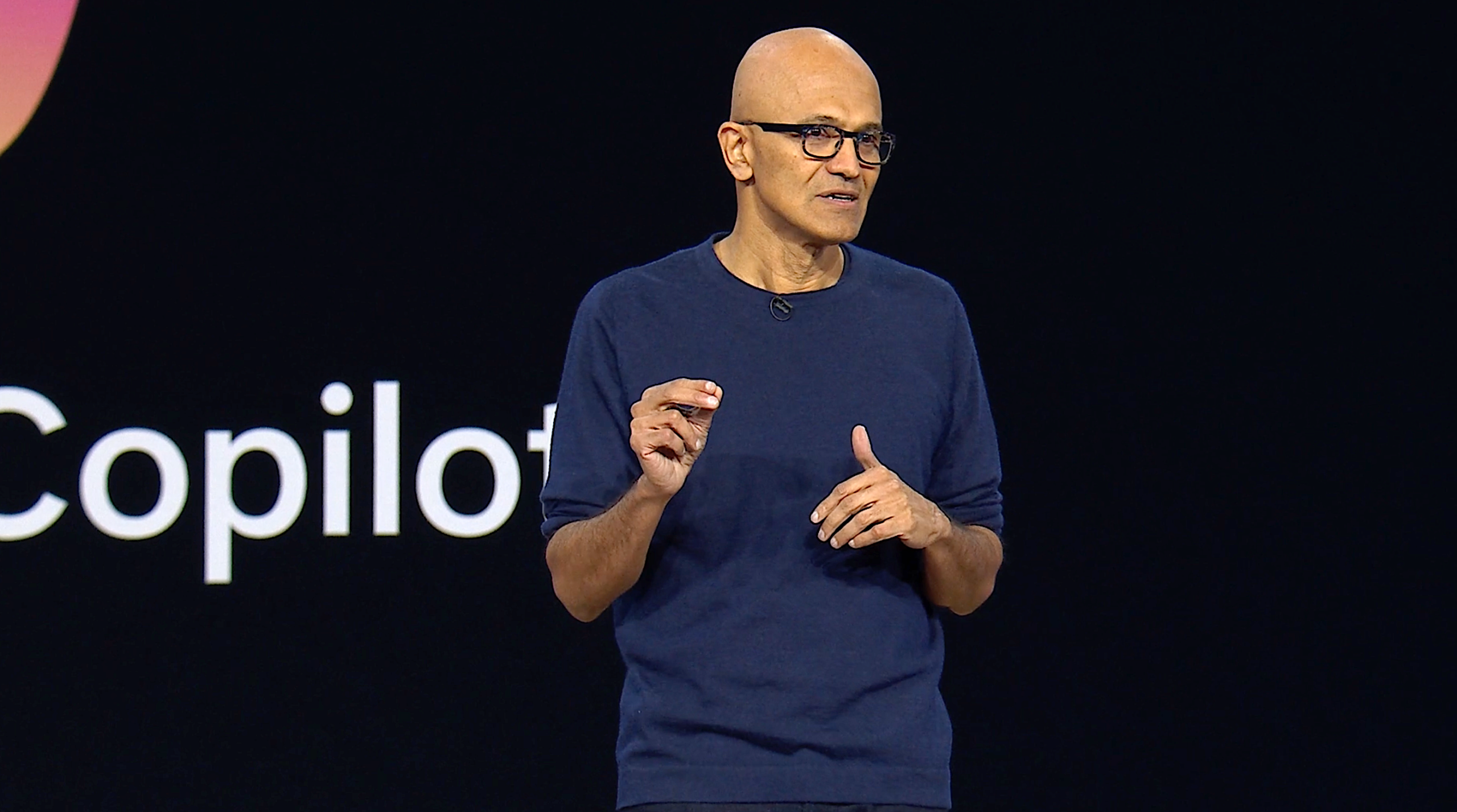
Chief Executive Satya Nadella (pictured) said on a conference call with analysts that the number of people using the Microsoft 365 Copilot artificial intelligence assistant jumped 50% from the previous quarter, but he declined to disclose the number of paid seats it has. However, Chief Financial Officer Amy Hood disclosed that the newly announced Microsoft 365 E7 productivity bundle has already grown to millions of seats.
Revenue in Microsoft’s Devices and Consumer business came to $15.48 billion, down 3% from a year earlier but ahead of the Street’s target of $15.05 billion. That segment includes search and advertising, Xbox devices and Windows operating system licenses that are sold directly to device makers.
The segment was hit by sluggish sales of personal computers, which meant that sales of devices and Windows licenses fell 22% from a year earlier. The reason for that sluggish demand is higher prices, Nadella said, resulting from the rising costs of memory and storage hardware.
Many investors will have been more interested to hear about Microsoft’s ongoing AI infrastructure buildout, which has been sucking up tens of billions of dollars each quarter as the company races to meet demand for AI. During the quarter, Microsoft spent $45.2 billion on capital expenditures and finance leases, up by around 30% from a year before. Analysts had projected this number to be as high as $50.67 billion.
Hood told investors that around 75% of its capex is now tied to short-lived assets such as Nvidia Corp.’s graphics processing units and Intel Corp.’s central processing units, up from 66% in the prior three quarters. The shift reflects the company’s prioritization of infrastructure that can quickly generate a return on investment, she said.
Hood also reassured investors that the company still has plenty of cash on hand to help fund its capex investments. Though its free cash flow did decline 27% to $18.63 billion during the quarter, that’s still a lot healthier than the $9 billion in negative free cash flow reported by its rival Alphabet Inc. earlier today. Meta Platforms Inc. last week reported that its cash flow also turned negative.
On the other hand, Microsoft will continue to generate positive free cash flow throughout fiscal 2027, Hood insisted, and the company will also still have access to other sources of funding if and when it needs. “We’re fortunate to have access in the debt markets, given where our rates ratings are, and we haven’t yet tapped that,” Hood said. “And then, of course, there are other options too.”
Forrester Research analyst Tracey Woo said Microsoft’s results show that there’s still strong enterprise demand for AI, but whether the company ultimately benefits depends on where AI value is ultimately going to be captured. She said the company is in a good position because it can connect its AI investments directly to growth in Azure and a broad portfolio of business applications that are already deeply embedded in customer environments. So if the application layer remains the place that creates most value from AI, Microsoft will benefit, she said.
“However, if the value shifts more toward the infrastructure, chips and foundation models, the competitive landscape could evolve as providers with differentiated infrastructure strategies gain influence,” Woo said. “For enterprises, the key takeaway is that AI competition is no longer just about building capacity. It is increasingly about which providers can turn innovation into sustained business outcomes at scale.”
With respect to guidance, Hood said the company is looking for revenue of between $96 billion and $97.1 billion in its fiscal second quarter, which would amount to growth of around 18.8% at the middle of that range. That’s better than expected, since analysts were looking for second-quarter sales of just $95.6 billion.
Hood also predicted Azure’s revenue to grow by between 49% and 50% at constant currency rates, above the Street’s 45.1% forecast. “We still have demand that exceeds supply,” she explained.
Support our mission to keep content open and free by engaging with theCUBE community. Join theCUBE’s Alumni Trust Network, where technology leaders connect, share intelligence and create opportunities.
Founded by tech visionaries John Furrier and Dave Vellante, SiliconANGLE Media has built a dynamic ecosystem of industry-leading digital media brands that reach 15+ million elite tech professionals. Our new proprietary theCUBE AI Video Cloud is breaking ground in audience interaction, leveraging theCUBEai.com neural network to help technology companies make data-driven decisions and stay at the forefront of industry conversations.