










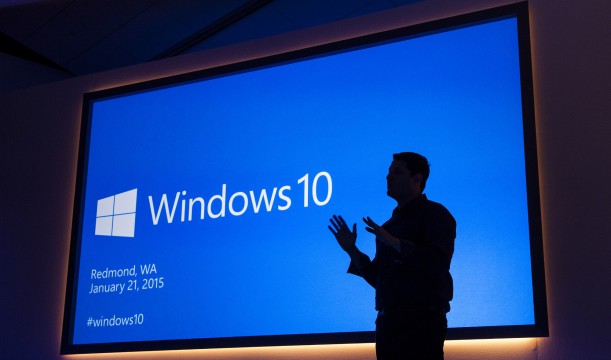
 Microsoft has revealed how it plans to minimize its footprint with its new operating system Windows 10 by employing new space-saving methods. These methods, which partly consist of file-compression, will save around 1.5 GB of space for a 32-bit machine and 2.6GB of space on a 64-bit machine. Phones running Windows 10 will also use the same file-compression techniques.
Another space-saving technique Microsoft has come up with is a redesign of Windows’ refresh and reset functionalities that will preclude the use of separate recovery images, something that is often preinstalled by PC manufacturers. In the event that users have to recover their system, the redesign will mean that using runtime system files you can rebuild the system. This takes up far less disk space, and also means that after recovering your machine you won’t have a long list of updates to reinstall. If you cannot refresh or reset a device following “severe corruption”, using recovery media that has backed-up your original OS and preinstalled software, you can deliver your device back to its “pristine state”.
Microsoft says that with the new design users could save anywhere from 4-12GB’s of space depending on your PC, amounting to a massive 15GB of freed-up space on some computers in total. Phones, however, will only benefit from compression as they already have a storage-optimized recovery solution.
The new compression techniques will also help to keep store apps’ footprint small, says Microsoft, stating that, “Because of compression, you will have more spare capacity for store apps and the store apps themselves will use less capacity.”
Compression techniques are not new to Windows, but Microsoft reports in Windows 10 the company has come up with a new way to compress files that won’t negatively affect the machine’s responsiveness. By taking into account how much RAM a system has and the speed in which a processor can run the decompression algorithm, a device will only automatically compress files when Windows has assessed that its performance won’t be compromised. For new devices running Windows 10 a manufacturer will run a “suitability assessment” that will enable system compression the appropriate way.
Example of space saving on 64-bit Windows

Support our mission to keep content open and free by engaging with theCUBE community. Join theCUBE’s Alumni Trust Network, where technology leaders connect, share intelligence and create opportunities.
Founded by tech visionaries John Furrier and Dave Vellante, SiliconANGLE Media has built a dynamic ecosystem of industry-leading digital media brands that reach 15+ million elite tech professionals. Our new proprietary theCUBE AI Video Cloud is breaking ground in audience interaction, leveraging theCUBEai.com neural network to help technology companies make data-driven decisions and stay at the forefront of industry conversations.