

“Why aren’t all cars Uber’d?”
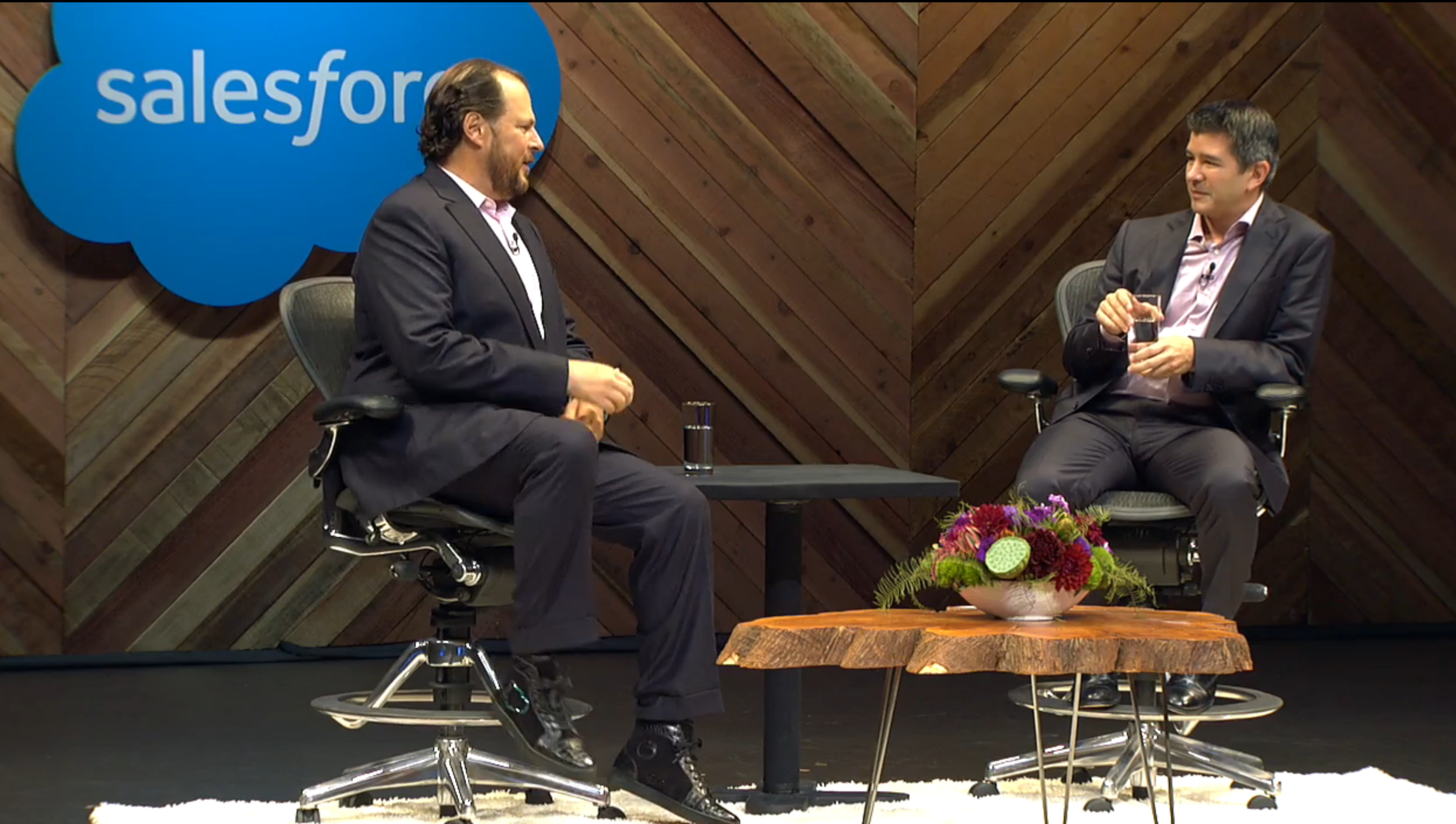
Travis Kalanick, founder and CEO of Uber Technologies, asks this question, and says that he believes it would make the world a better place. In a relaxed and entertaining fireside chat with Salesforce CEO Marc Benioff at Dreamforce 2015 in San Francisco, Kalanick talks about Uber’s strategy, mission, cultural values, and how he personally is coming to grips with his sudden rise to prominence as CEO of a company that has disrupted the traditional concept of transportation.
Benioff shares how he recently got an Uber ride in a Ford F350 truck outfitted for construction. Kalanick responds that making sure that there is always a fast, reliable, and low cost ride available means “filling in the gaps” with part-time drivers. “When we have a busy time, all the folks who are our partners are going to get on the system. If there’s a Ford 350 getting you around, I’m cool with that, ” he says, and suggests that riders engage their drivers in conversation to find out what they do when they’re not driving for Uber.
Kalanick describes the beginning of Uber, when he and his partner, Garrett Camp were cold-calling limo companies and riders. Immediately they knew the demand was there: “You get a third of the people you’re cold-calling saying ‘Yes, please!’ you’re in a good spot,” says Kalanick.
Five years later, and Uber has 4,000 employees and 1,000’s of rides per minute on average, and Kalanick is coping with the personal side of such rapid growth. “I’m still the scrappy entrepreneur. That’s who I am,” he says, and admits that he was shaking before being interviewed by Stephen Colbert earlier this week. His biggest challenge was to not think only as an engineer, and rely on demonstrating how the product works, but to tell why the product is awesome, and share the company story.
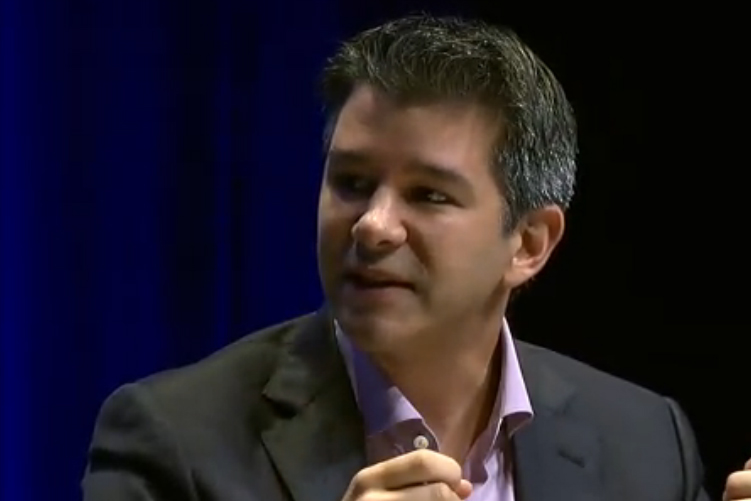
“If something is moving from somewhere to somewhere else in a city, that’s our jam,” says Kalanick, who sees UberPool ridesharing service, and UberEATS delivery as all part of the larger strategy for providing “transportation as reliable as running water, everywhere, for everyone.”
Benioff and Kalanick agree on the importance of having a humanitarian aspect to their companies. Benioff speaks about how important applying his business acumen at the humanitarian level is to him personally, and discusses the goal of this year’s Dreamforce to donate 1 million books to children. Uber has joined this goal, by adding the opportunity for every rider to donate $1.00 of their fare to the Dreamforce cause. “Celebrate the city means giving back to the city at some way or another,” says Kalanick, “If you do this correctly it’s part of what you do. Every office, every operations team, is thinking about what they can do for their community. It’s just what we do.”
The discussion ends with Benioff asking Kalanick about Uber and machine intelligence and driverless cars. Although the transition could threaten Uber’s current method of operation, Kalanick sees it as fitting with the company’s overall vision of greater safety and less traffic, meaning fewer deaths from accidents, lower pollution, and less time spent commuting. He says, “Think back to the industrial revolution, they worked 80 hours a week, now we work 40. We’re on that journey. Let’s have good principles about how we approach the future.”
Photos by SiliconANGLE
Support our mission to keep content open and free by engaging with theCUBE community. Join theCUBE’s Alumni Trust Network, where technology leaders connect, share intelligence and create opportunities.
Founded by tech visionaries John Furrier and Dave Vellante, SiliconANGLE Media has built a dynamic ecosystem of industry-leading digital media brands that reach 15+ million elite tech professionals. Our new proprietary theCUBE AI Video Cloud is breaking ground in audience interaction, leveraging theCUBEai.com neural network to help technology companies make data-driven decisions and stay at the forefront of industry conversations.