

As IBM repositions itself, shedding its networking and x86 server divisions, there’s quite a bit of curiosity regarding the specifics of its shift in business focus, as well as how it will affect the company’s many partners and customers.
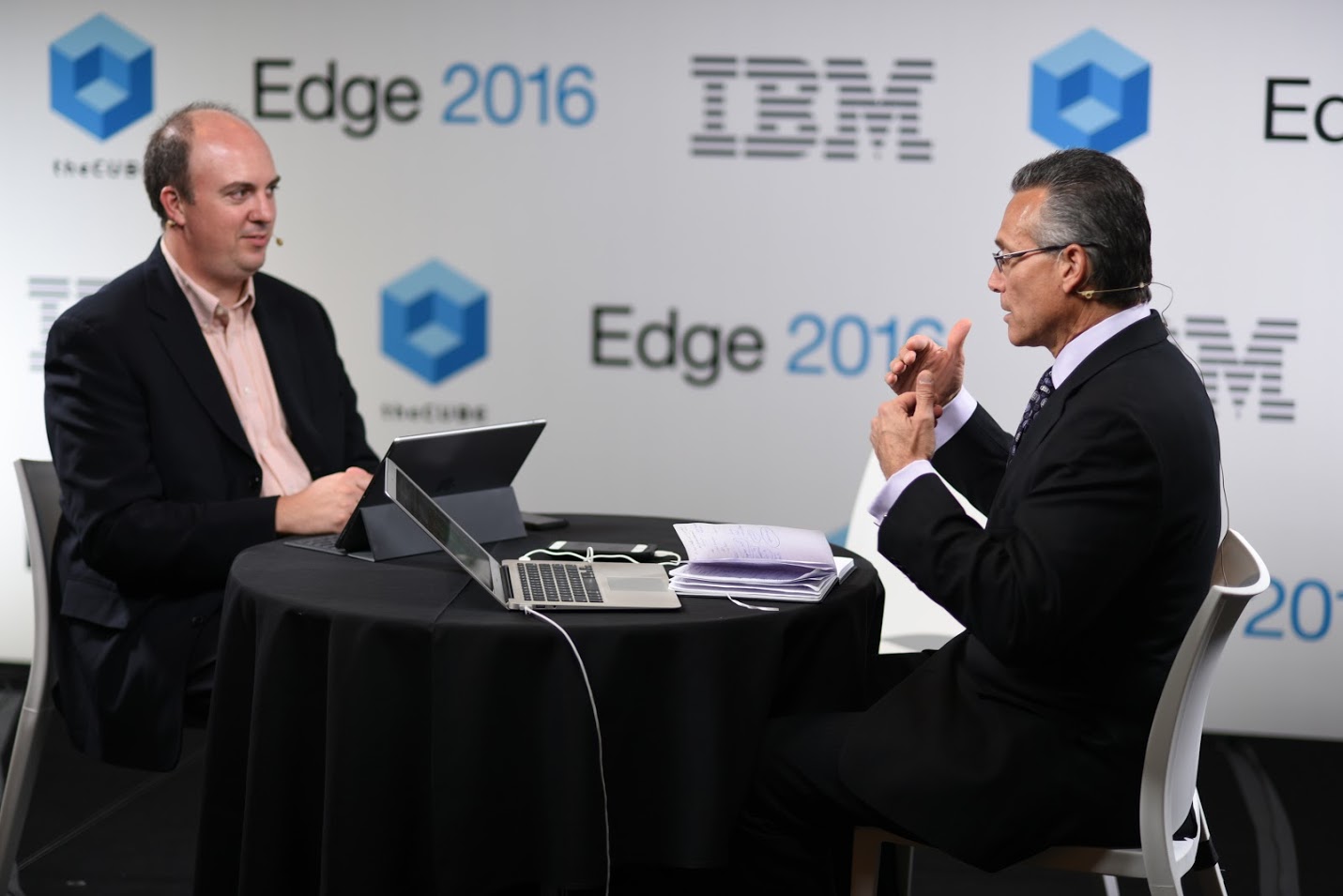
Dave Vellante (@dvellante) and Stu Miniman (@stu), cohosts of theCUBE, from the SiliconANGLE Media team, met to assess and examine the implications of several announcements, presentations and interviews from the first day of this year’s IBM Edge conference, along with a look forward to anticipations for the rest of the week.
In the initial review of the opening day to what Vellante called a “classic IBM event,” the hosts picked out what seemed to be the underlying drivers of innovations and market push showcased at IBM Edge.
“It’s all about analytics,” Vellante stated, with the OpenPOWER Foundation, intended to promote and expand Power Architecture RISC processing, spotlighted as part of this push. “When people first heard about OpenPOWER, they thought, ‘Oh, there’s IBM’s Hail Mary,’” Vellante said, though he felt that by this point, “It seems like, steady as she goes.”
For his part, Miniman felt that while analytics were important, they weren’t alone in IBM’s major plans. “IBM does a great job with the breadth and the depth of people at this conference,” Miniman said. “We talked about some of the bits and bytes, and some of the products that IBM has, but it’s really about … how cognitive computing, IoT, all of these trends … are going to impact business,” he continued.
But on the other hand, there were sides to modern developments on which IBM didn’t seem to have such a firm grasp. “[They were] kind of dancing around hyper-converged … so that’s kind of a question mark,” Vellante noted. And Miniman agreed, pointing to the likelihood of hyper-converged’s future dominance. “While today converged is quite a bit larger than hyper-converged, hyper-converged has a great growth rate,” Miniman explained.
“The new stuff isn’t big enough … to offset the decline in the old stuff,” Vellante added. “The difference with IBM is … [it has] been able to continue to hit its earning, throw off enough cash to do some major stock buy-backs. … If [IBM’s strategy] starts taking off … then IBM is an undervalued company.”
Still, looking forward, both hosts saw the future as an overall positive one for IBM. “Every time there’s been a major change, IBM’s still there,” Miniman noted.
And in adapting to the latest tech upheavals, they felt that IBM was doing a good job of involving itself, rather than trying to resist change. “You’re seeing a whole new sort of wave of storage innovations. … IBM wants to be a player there,” Vellante said, giving IBM an assessment as: “Big business, still highly relevant and supportive of the cognitive [computing initiative].”
Watch the complete video interview below, and be sure to check out more of SiliconANGLE and theCUBE’s coverage of IBM Edge 2016.
Support our mission to keep content open and free by engaging with theCUBE community. Join theCUBE’s Alumni Trust Network, where technology leaders connect, share intelligence and create opportunities.
Founded by tech visionaries John Furrier and Dave Vellante, SiliconANGLE Media has built a dynamic ecosystem of industry-leading digital media brands that reach 15+ million elite tech professionals. Our new proprietary theCUBE AI Video Cloud is breaking ground in audience interaction, leveraging theCUBEai.com neural network to help technology companies make data-driven decisions and stay at the forefront of industry conversations.