 BIG DATA
BIG DATA
BIG DATA










BIG DATA

The competitive landscape for dominance in the data infrastructure field is similar to a car race on a wide stretch of straight open road. No one is especially worried about taking a corner too fast, because this is just a flat-out, pedal-to-the-metal blast to see who can bring the fastest storage performance to the enterprise market and stay in the lead.
One of the companies making a strong push to lead the pack became publicly available last month. Vexata Inc., backed by $54 million in venture investment, has introduced a new array that operates at a latency rate 10 to 40 times less than most storage offerings, according to the company. That’s fast.
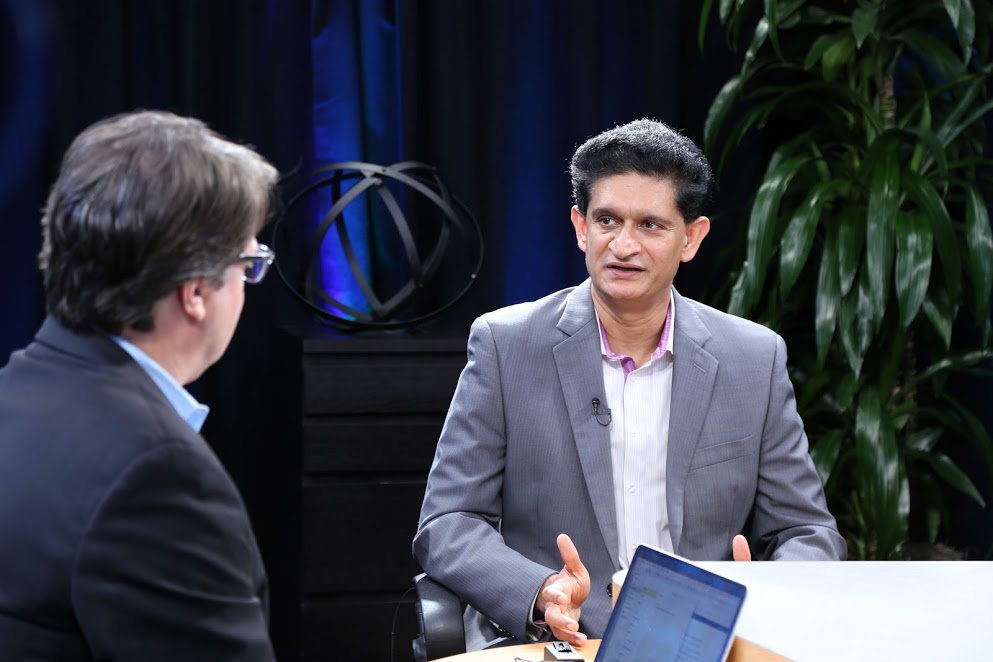
“We wanted to build the highest performance storage system that we could that really accelerates your applications, make them super fast,” said Surya Varanasi (pictured), founder and chief technology officer at Vexata, Inc. “If you plug us into your network and run your application on us, we will eliminate your I/O bottlenecks on your server, and you’ll get 10x speed.”
Varanasi spoke with John Furrier (@furrier), host of theCUBE, SiliconANGLE Media’s mobile livestreaming studio, at the SiliconANGLE Media studio in Palo Alto, California. They discussed use cases for Vexata’s technology and how key elements drive speed and reliability. (* Disclosure below.)
One example of how this might make a difference can be found in the self-driving car. Test models of autonomous vehicles on the road today are stocked with data-gathering drives. After driving around for two weeks, the cars generally return to base where the data is downloaded for study, a process that can take days since it can be as much as 200 terabytes of densely packed information.
“Until that data is off, this car doesn’t move,” Varanasi said. “With us, it takes a few hours so you can get your car back on the road.”
If there is a secret sauce to what Vexata has designed, it’s in the company’s software, which reduces storage stack latencies to an absolute minimum. The company has also built its platform around flash and Intel’s Optane, new memory technology that became available only a few months ago. Intel believes that Optane is faster and more resilient. In an age where data availability is “always on,” this kind of performance can make a difference.
“The problem is you don’t have a little bit of data that’s hot and the rest that’s cold,” Varanasi explained. “Everything is hot, so how do you serve all of that data in real time? That’s what we’re about.”
Watch the complete video interview below. (*Disclosure: Vexata Inc. sponsored this segment of theCUBE. Neither Vexata nor other sponsors have editorial control over content on theCUBE or SiliconANGLE.)
Support our mission to keep content open and free by engaging with theCUBE community. Join theCUBE’s Alumni Trust Network, where technology leaders connect, share intelligence and create opportunities.
Founded by tech visionaries John Furrier and Dave Vellante, SiliconANGLE Media has built a dynamic ecosystem of industry-leading digital media brands that reach 15+ million elite tech professionals. Our new proprietary theCUBE AI Video Cloud is breaking ground in audience interaction, leveraging theCUBEai.com neural network to help technology companies make data-driven decisions and stay at the forefront of industry conversations.