 CUBE EVENT COVERAGE
CUBE EVENT COVERAGE
CUBE EVENT COVERAGE





CUBE EVENT COVERAGE

By 2030, 210 million people are expected to change their occupations due to advancements in new technologies and artificial intelligence, marking a level of labor disruption not seen since the global transformation spurred on by the Industrial Revolution.
The rapid growth pace and uniquely cognitive nature of artificial intelligence technologies has some in the labor force resistant to a transition they fear has the potential to leave them without work, and their concerns are not without some justification. In the wake of England’s industrial transition, wages for workers remained low for decades even as productivity enabled by the newly available tools skyrocketed.
To ensure history does not repeat itself through the social implications of robotic process automation, or RPA, leaders in the automation space are beginning to take a more inclusive, human approach to purposeful integrations with smart technologies.
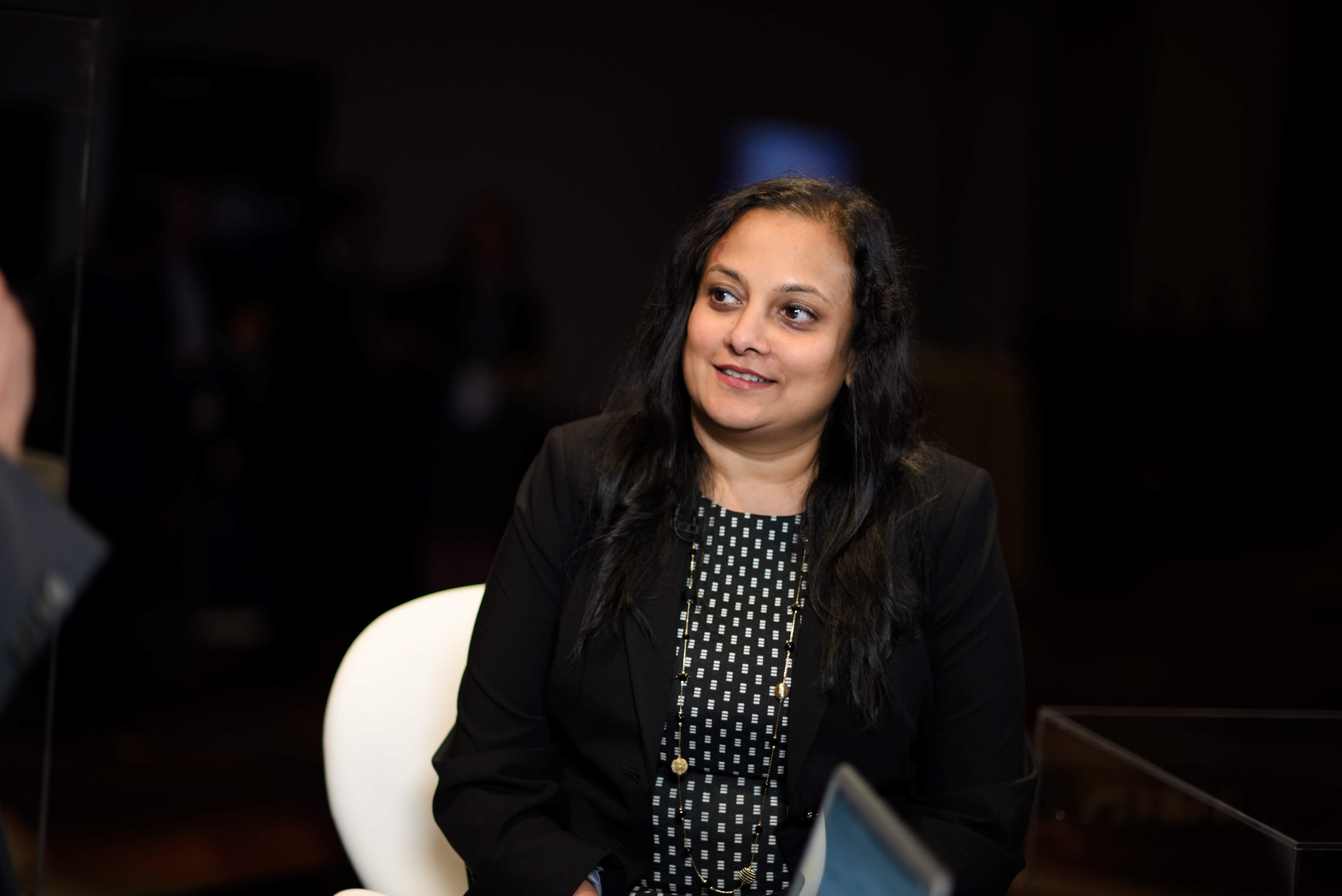
“Corporate leadership must look at it with a human focus,” said Neeti Mehta (pictured), co-founder and senior vice president of brand strategy and culture architect at Automation Anywhere Inc. “Robotic process automation helps get rid of the mundane and repetitive tasks, but the ultimate goal is … [to] enable our human workforce to use this technology to unleash that potential.”
As an increasing number of businesses employ the use of automation, leaders like Mehta are encouraging the industry to consider the ethical issues surrounding artificial intelligence and its effects on the humans it was created to benefit.
Mehta recently sat down with Jeff Frick (@JeffFrick), host of theCUBE, SiliconANGLE Media’s mobile livestreaming studio, during the Imagine 2018 event in New York City. (* Disclosure below.)
This week, theCUBE spotlights Neeti Mehta in our Women in Tech feature.
The market for RPA tools is estimated to reach $2,467 million by 2022, scaling at an annual growth rate of 30.14 percent. The efficiency of bots and automated tasks is a key driver behind market growth as businesses look for faster, less-expensive methods for processing the data surging from cloud-enabled technologies. While the nation’s move from farms to factories took place over the course of a century, AI is set to displace 47 percent of U.S. jobs within 20 years.
The massive growth and increasing corporate acceptance of RPA tools is one reason for AI hesitance among the human workforce, but Mehta believes another issue is to blame — something she calls “bot audacity.” Named for the bold concept that bot cognition could outperform human skill, Mehta said “bot audacity” is a significant factor among the fears that compel resistance to automation.
“Bots promise to self-learn … like a human does, or perform cognitive functions. … Why are we … encouraging this technology to be adopted? So that humans can unleash that potential [and] get to that next level,” she said.
While RPA technology is ultimately created for human benefit, concerns regarding its over-efficiency overshadow its advantages to a wary labor force.
Mehta brings a fresh perspective to the conversation around AI — one that the technology industry is in desperate need of. Women are significantly underrepresented in tech, and even less so as industry leaders. As a female founder at the forefront of automation, Mehta is using her platform to support a larger movement that is calling for the inclusion of more diverse voices in the AI conversation.
Tech’s lack of diversity is an issue that continues to hinder economic and social progress, and as the industry develops a tool that thinks for itself, it risks imbuing it with existing biases at an even larger scale. These prejudices are already apparent in tools like Siri and Alexa — whose feminine “voices” arguably perpetuate gender stereotypes of female subservience — and in image identification software that fails to recognize non-white faces as human.
In an effort to end this cycle and promote greater inclusion, technologists like Mehta, Melinda Gates, Fei-Fei Li and others are pushing for more women in AI to engender more diverse guidance of automated systems. By working to root RPA tools in more comprehensive representation, the movement is promoting the need for increased responsibility in the industry overall.
In order to assuage the fears of a job-insecure workforce and prevent unwanted consequences from AI adoption, Mehta is urging corporations to take an ethically responsible approach to automation. By focusing on the human side of the AI integration through re-skilling efforts, Mehta said businesses can maximize the benefits of both team and technology.
“Having the leadership walk that change … [putting] corporate focus on re-skilling, and talking to our human workforce about what the ultimate vision is and how we are going to get there is very important,” she said.
Incorporating automated elements into business processes will naturally bring about change, but Mehta said those changes are proving to be for the better — with the appropriate corporate introduction. AI is by design better suited to the repetitive tasks humans find mundane, leaving them free to innovate more creatively.
“Most people are able to … get rid of … 25 percent of work that is very repetitive. … Humans who are embracing this bot enablement … don’t want to go back to the other way of doing it. It has improved their work life,” she said.
Despite its controversies, Mehta believes AI holds massive innovation potential for both businesses and individuals, so long as the necessary precautions are taken to ensure the powerful technology is implemented responsibly.
“From an industry and from a societal standpoint, we’re at a cusp. We’ve changed a lot of the world of business and how it works. … If we can leave something behind for the future work prospects for our children, that is something I am very happy about,” she concluded.
Watch the complete video interview below, and be sure to check out more of SiliconANGLE’s and theCUBE’s coverage of Imagine 2018. (* Disclosure: TheCUBE is a paid media partner for Imagine 2018. Neither Automation Anywhere Inc., the event sponsor, nor other sponsors have editorial control over content on theCUBE or SiliconANGLE.)
Support our mission to keep content open and free by engaging with theCUBE community. Join theCUBE’s Alumni Trust Network, where technology leaders connect, share intelligence and create opportunities.
Founded by tech visionaries John Furrier and Dave Vellante, SiliconANGLE Media has built a dynamic ecosystem of industry-leading digital media brands that reach 15+ million elite tech professionals. Our new proprietary theCUBE AI Video Cloud is breaking ground in audience interaction, leveraging theCUBEai.com neural network to help technology companies make data-driven decisions and stay at the forefront of industry conversations.