 BLOCKCHAIN
BLOCKCHAIN
BLOCKCHAIN






BLOCKCHAIN

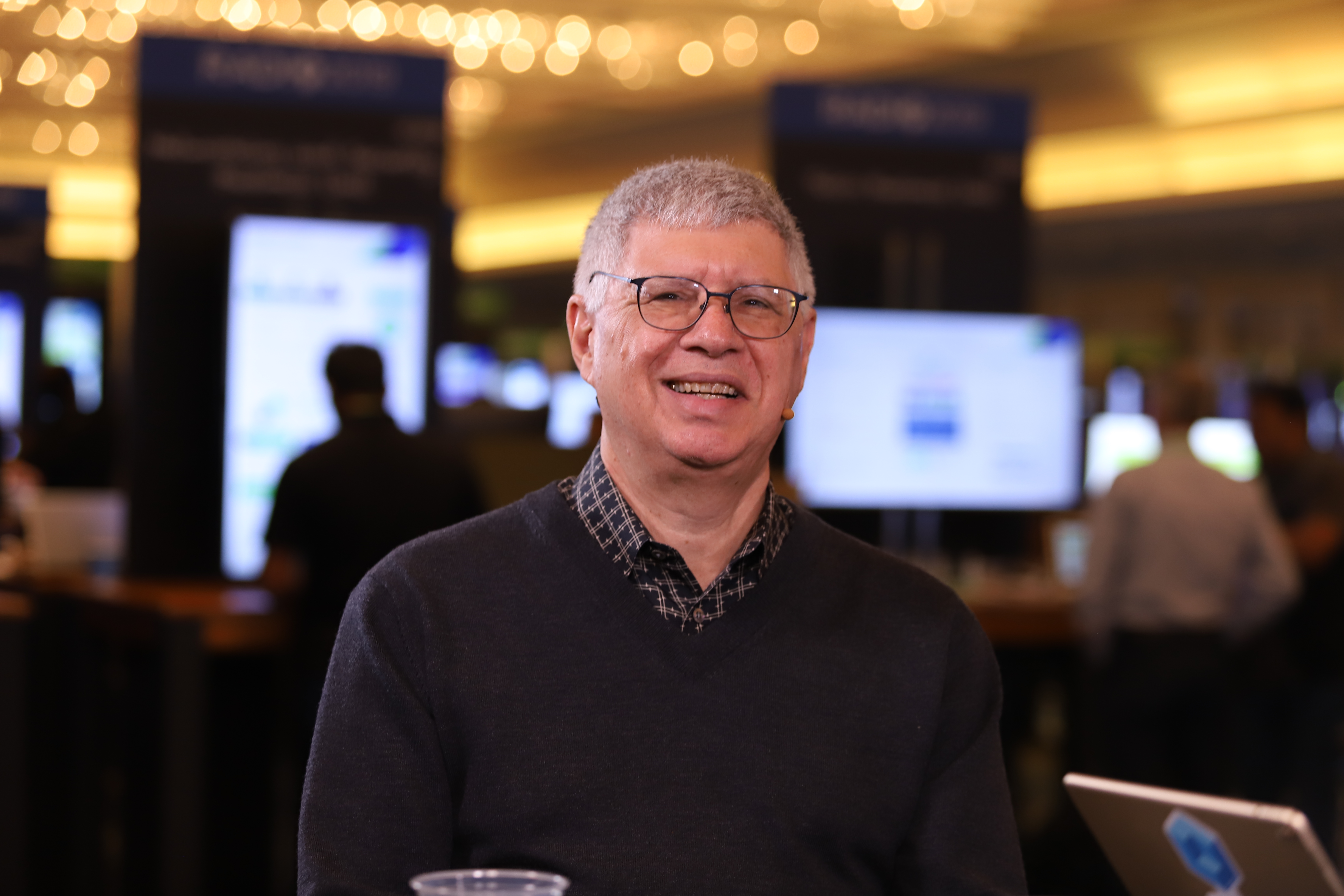
Successful software as a service companies spend about a quarter of their revenue on research and development each year to think through the latest technology solutions. So what’s it like inside VMware’s research and development world? A lot of filtering to detect rising signals and making sure that enterprises are set up for the future of tech, according to David Tennenhouse (pictured), chief research officer of VMware Inc.
“From where I sit, what I think happens is … we’ll look at what comes bottoms up and say, ‘Well, what’s the signal to noise?'” Tennenhouse said. “And then a key thing that we do … that’s different from some other companies is to stop and say, ‘What are enterprises going to need to do?’ Because at the end of the day, we’re an enterprise company, and our customers are enterprises, and … what they need is different.”
Tennenhouse spoke with John Furrier (@furrier) and Lisa Martin (@LisaMartinTV), co-hosts of theCUBE, SiliconANGLE Media’s mobile livestreaming studio, during the RADIO event in San Francisco. They discussed research and development in the context of the enterprise world (see the full interview with transcript here). (* Disclosure below.)
Realizing the huge difference between enterprises and hyperscalers, like Facebook or Google, can help create a niche with which it solves problems, according to Tennenhouse. For example, when it comes to machine learning, hyperscalers face very different issues than do enterprises.
“[Hyperscalers are] actually working on a very focused set of problems,” Tennenhouse said. “It’s ad serving, it’s the social network graph, it’s … cat photo recognition. But notice it’s a small number of problems. They do it at immense scale. A given enterprise probably wants to apply machine learning to a large number of problems. They’re not going to run each of those problems on a million servers. They’re … probably running those problems on tens or hundreds of [virtual machines], right? And so what’s the technology they need to address those problems?”
VMware has not only looked at machine learning, but it is investigating a number of topics that are going to be very important in the future — like blockchain and quantum computing. Because for every new technology that emerges, enterprises will have different concerns and issue with implementation, Tennenhouse noted.
“When the quantum computers do show up, we’re going to need to transition to new cryptography to ‘quantum resistant’ or ‘post quantum,'” Tennenhouse explained as another example. “[Enterprises] can’t wait ’till this shows up. It takes 10 years to change your crypto … but by the time they’re ready, it’s going to be too late to get started. But we could start working with our customers to work on crypto agility to change how they handle their cryptography.”
Watch the complete video interview below, and be sure to check out more of SiliconANGLE’s and theCUBE’s coverage of the RADIO event. (* Disclosure: TheCUBE is a paid media partner for the VMware RADIO 2019 event. Neither VMware Inc., the sponsor for theCUBE’s event coverage, nor other sponsors have editorial control over content on theCUBE or SiliconANGLE.)
Support our mission to keep content open and free by engaging with theCUBE community. Join theCUBE’s Alumni Trust Network, where technology leaders connect, share intelligence and create opportunities.
Founded by tech visionaries John Furrier and Dave Vellante, SiliconANGLE Media has built a dynamic ecosystem of industry-leading digital media brands that reach 15+ million elite tech professionals. Our new proprietary theCUBE AI Video Cloud is breaking ground in audience interaction, leveraging theCUBEai.com neural network to help technology companies make data-driven decisions and stay at the forefront of industry conversations.