 SECURITY
SECURITY
SECURITY



SECURITY

While cybersecurity isn’t yet foolproof against the bad guys, the field has certainly advanced in recent years. Data and machine intelligence are making threat detection easier and reducing the need for human labor.
Now if only we could say the same for security in the corporeal world. Public places such as sports arenas and college campuses don’t always have impressive security measures in place. Potential hazards can be severe and may include loss of human lives. Can a transfusion of the latest cybersecurity methods make them safer?
It’s a concern that’s all the more critical to address given the past week and a half, which saw mass shootings in public places in three different cities across the nation. And those were just the latest in a long string of shootings in recent years that have shone a spotlight on security in public spaces. In 2016, a shooting at an Orlando, Florida, nightclub claimed 50 lives, making it the deadliest attack by a lone shooter in United States history. The following year, a mass shooter in Las Vegas, Nevada, broke that record, killing 58 at a concert near the Mandalay Bay resort and casino.
The public and the media struggled to make sense of these crimes. Many wondered if security at each of the scenes could have done more to stop the perpetrators.
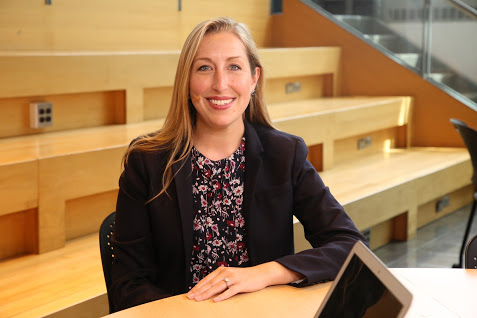
Julie Johnson (pictured), co-founder and chief executive officer of Armored Things Inc., was one of those wondering. Johnson co-founded the Armored Things in 2016. The tragedies of that year and 2017 influenced the company in its formative stages. There seemed to be so much at stake in the realm of public safety and security. Yet many public venues were not leveraging the latest technologies to enhance security.
“We realized that the world of security and operations was really stuck in the past,” Johnson said.
What are the public venues we visit relying on to keep us safe? Think manual solutions driven by human instinct, anecdotal evidence, walkie-talkies and video cameras. Johnson and her colleagues knew there had to be a better way.
Data and analytics could do a lot of things better than the methods on hand at many of these venues, according to Johnson. Consider how machine learning analyzes data in cybersecurity systems to catch hacks or how consumer applications like Google Maps leverage them to predict traffic, suggest fastest routes and the like. The same technologies can help universities, ballparks and corporate campuses keep people safe.
Johnson spoke with Dave Vellante and Paul Gillin, co-hosts of theCUBE, SiliconANGLE Media’s mobile livestreaming studio, during the MIT CDOIQ Symposium in Cambridge, Massachusetts. They discussed the overdue transfusion of advanced cybersecurity tech into the physical world (see the full interview with transcript here).
This week, theCUBE spotlights Armored Things in its Startup of the Week feature.
The cost of cybersecurity breaches has been well documented in the news. Public venues may also take a huge monetary hit if the public begins to view them as unsafe. In 2015, after the Paris terror attacks, event ticket sales in the French capital fell 80% from the prior year, according to industry representatives Prodiss. Prodiss made a public appeal for emergency funding of 50 million euros ($54.5 million) to offset the massive revenue loss.
The Paris attacks sent fear rippling through Europe and beyond. A 2015 survey by digital marketing platform SpinGo Solutions Inc. found that one in three Americans worried about terror at live events in wake of the attacks. And over half of the 1,037 respondents said live events needed to improve security.
Some of the latest cybersecurity technologies saving enterprises from costly data breaches may help secure physical domains. For example, anomaly detection and orchestrated response can help security staff at public venues detect and respond to danger.
Traditional means to securing venues, such as video and logs, aren’t obsolete. But when humans brains are the only tools that can monitor or make sense of them, inefficiency and error are likely. When analytics technology from the cybersecurity realm is trained to monitor them, it can more precisely pinpoint things to scrutinize. In fact, it can monitor not only video cameras, but also Wi-Fi access control, contextual data from public transit, weather, etc.
The unique thing about the physical world is that it has defined boundaries. People behave in accordance with those boundaries. Data analytics can learn typical patterns of behavior in a given environment, as well as behaviors that may be suspicious. This is the basic objective of Armored Things’s platform for real-time security and operations intelligence.
“Our goal is to get a better sense, predictively, of the leading indicators that tell you you have a problem,” Johnson said.
We often hear enterprise chief security officers say that the goal of cybersecurity software is not to eliminate human oversight. Rather, it is to assist people and point them toward issues to which they ought to pay attention. At Armored Things, the approach is remarkably similar.
“We can surface the things that you want the humans in the loop to pay attention to,” Johnson said. “So, we’re not trying to remove the humans; we’re trying to help them focus their time and make decisions that are backed by data in the most efficient way possible.”
With data to inform them, security staff can react in the smartest possible way in the physical world. “I want to know when a normal random environment starts to disperse in a certain way or if I have a bottleneck in my environment, because if I have that type of incident occur, I already know where my hotspots are, where my pockets of risk are, so I can address it that much more efficiently from a response perspective,” Johnson explained.
Management and security teams at public venues, campuses, and the like often have concepts about behavioral patterns. But they’ve typically lacked data and technology to prove those concepts, predict and prescribe based on them, Johnson pointed out. Having these tools and resources in hand not only allows them to potentially make venues safer; with hard data and analytics, they can tweak staffing arrangements, sales and marketing strategies and the like.
“There’s lots of other contextual information that can ultimately drive bottom-line or top-line revenue,” Johnson said.
Here’s the complete video interview, part of SiliconANGLE’s and theCUBE’s coverage of the MIT CDOIQ Symposium:
Support our mission to keep content open and free by engaging with theCUBE community. Join theCUBE’s Alumni Trust Network, where technology leaders connect, share intelligence and create opportunities.
Founded by tech visionaries John Furrier and Dave Vellante, SiliconANGLE Media has built a dynamic ecosystem of industry-leading digital media brands that reach 15+ million elite tech professionals. Our new proprietary theCUBE AI Video Cloud is breaking ground in audience interaction, leveraging theCUBEai.com neural network to help technology companies make data-driven decisions and stay at the forefront of industry conversations.