 SECURITY
SECURITY
SECURITY





SECURITY

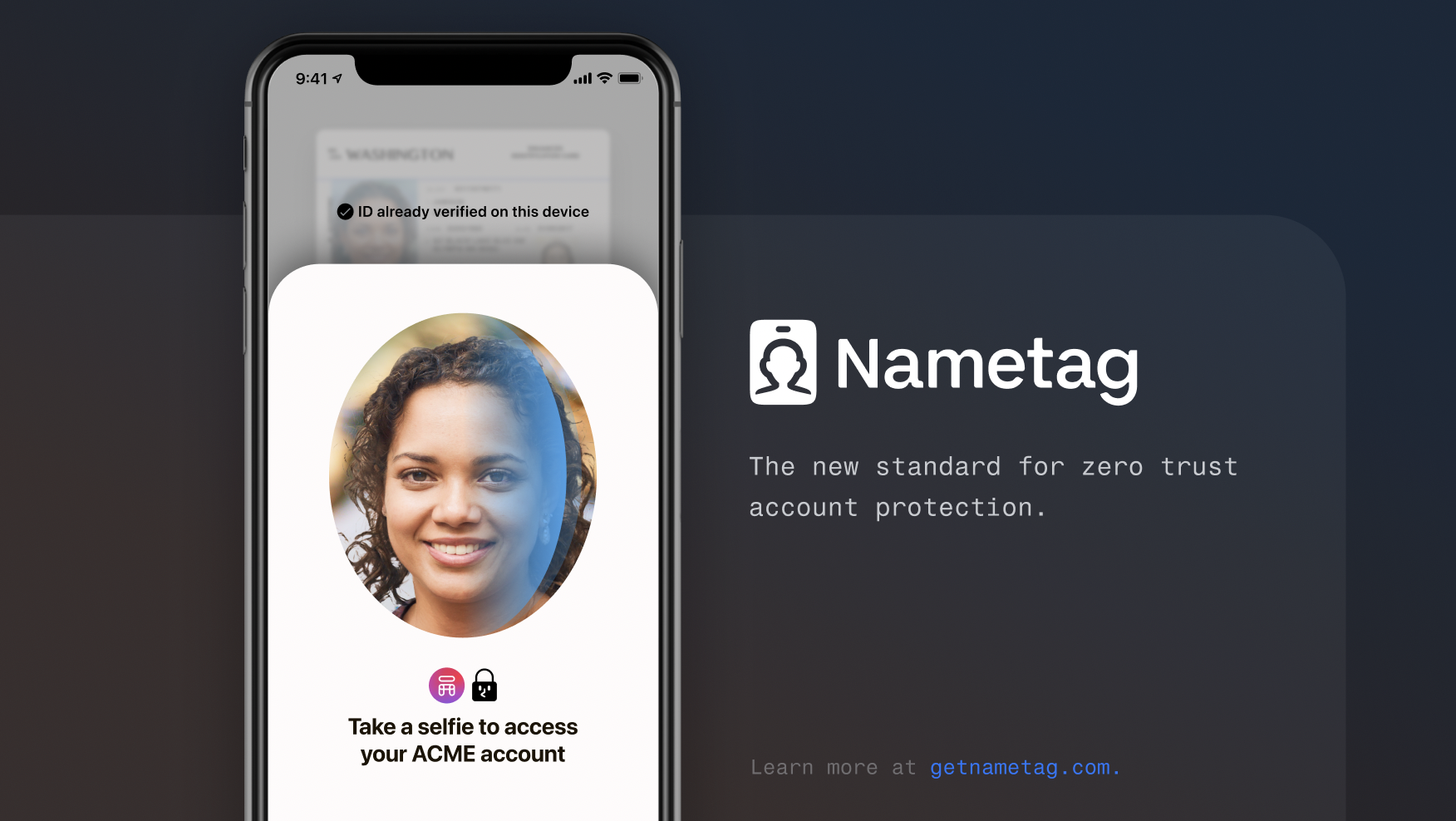
Identity verification platform startup Nametag Inc. today announced the launch of Nametag Signa and an expanded partnership with Okta Inc.
The new service seeks to address a growing challenge in artificial intelligence security: how to ensure that actions performed by AI agents are authorized by a verified human.
The solution comes at a time when AI agents are given increasing autonomy and access to sensitive resources and, as a consequence, create the need for enterprise information technology and security to know exactly who is behind particular AI actions, such as authorizing access to confidential information, placing a high-value order or changing payment instructions.
The new Signa offering introduces “Verified Human Signature” as a new tier of enterprise assurance for agentic AI and deepfake identity threats: auditable proof that an AI action was approved by an authorized person whose identity was verified via cryptographically attested identity verification.
“Effective AI security requires verification of both the human and nonhuman identities associated with AI,” explains Todd Thiemann, principal analyst at the Enterprise Strategy Group. “Enterprises are eager to deploy AI but typically lack adequate identity guardrails to protect themselves against its misuse. Solutions that embed human identity verification into AI workflows give enterprises a practical way to reduce AI risk without slowing AI adoption.”
The expanded partnership with Okta then comes into play. Signa pairs Okta’s policy engine for AI with Nametags Deepfake Defense identity verification technology to ensure that a Verified Human Signature is behind AI sessions and actions. Through the combination, IT and security teams can configure and assign authentication, sign-in and access request policies that require users to authenticate through Nametag in defined AI scenarios. The result, the company says, is an auditable chain of trust linking AI actions back to the humans responsible for them.
The solution aligns with developing AI frameworks like Model Context Protocol, Agent2Agent and Agent Payments Protocol to address important AI governance needs, including verified human sign-in for AI apps that prevents AI misuse by verifying the identity of every human accessing an AI application, along with verified human approval for AI actions that requires trusted human-in-the-loop verification of actions performed by AI agents.
“Agentic AI is a powerful business enabler, but security teams need to know who is behind AI actions,” said Aaron Painter, chief executive officer of Nametag. “Nametag’s introduction of Signa Human Signatures is a turning point in the conversation about AI security. Chief information security officers and chief information officers no longer have to choose between enabling AI innovation and preventing the next breach — they can do both.”
Nametag’s Deepfake Defense, which in part powers the new offering, was launched by the company in October 2024. It combines cryptographic attestation, biometrics and AI to block sophisticated fake IDs, manipulated videos and digital forgeries to ensure that fraudulent attempts using deepfakes are detected and prevented in real time.