 CLOUD
CLOUD
CLOUD
CLOUD






CLOUD

Sovereign cloud is taking on new importance as enterprises accelerate their artificial intelligence agendas and look for deployment models that balance innovation with clear lines of control.
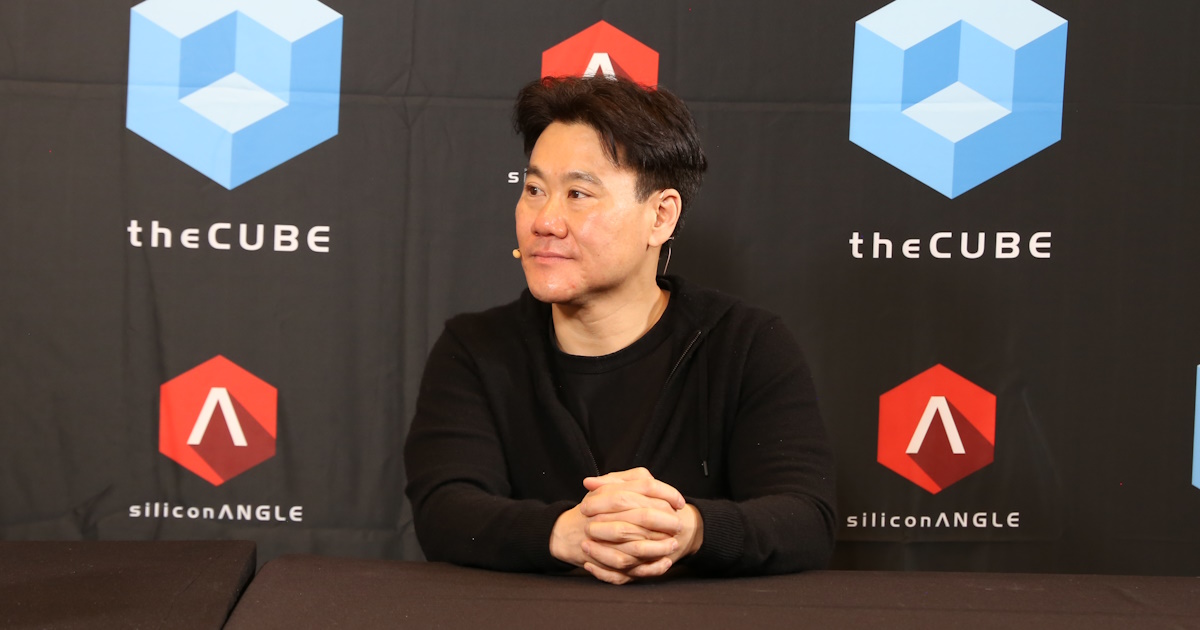
As AI takes on more of the work inside modern enterprises, leaders want confidence that these systems stay accountable and predictable. Sovereign cloud offers that balance by keeping organizations close to their data while still opening the door to advanced AI capabilities, according to Jerry Chen (pictured), partner at Greylock Partners.
“You can say cloud is dead, long live cloud,” Chen said. “It’s like you’re seeing a transformation from what Amazon and all the cloud vendors were before to what they will become, which is basically cloud plus AI.”
Chen spoke with John Furrier at AWS re:Invent, during an exclusive broadcast on theCUBE, SiliconANGLE Media’s livestreaming studio. They discussed how sovereign cloud is shaping enterprise AI strategy, driven by data gravity, observability needs and the growing push for customized model development.
Companies no longer look at AI as an experiment that sits on the edge of operations. They’re weaving it directly into day-to-day workflows, and that shift demands architectural clarity. Sovereign cloud offers it by giving teams a framework for deploying automation, agents and model-driven reasoning without losing visibility into where data resides or how it’s handled, Chen noted.
“Every vertical, every enterprise now has an AI strategy mandate,” he said. “You got to move from on-prem to cloud. The reason why speed matters and also as an investor matters is you have to take advantage of this curiosity, the forward leaning interests of your customers to actually adopt AI. If you’re not there to serve that need and be their AI thought partner, somebody else will.”
Vendors are adjusting just as quickly. AI-native companies need to support customers running sensitive workloads, and those customers want environments that behave consistently whether models are making decisions, generating reasoning steps or powering long-running agent processes. Sovereign cloud gives vendors a stable foundation to meet those expectations, especially in areas where reliability and transparency matter as much as performance, Chen explained.
“Chronosphere is a great story,” he added. “It is a company that basically sold observability to cloud-native companies at the largest scale, highest amount of data volumes, but they did it cheaper, faster, better than their competitors.”
Data gravity is pushing sovereign cloud forward as well. Many enterprises continue to operate systems on-prem because they simply cannot move them. Others treat their cloud storage as their “on-prem,” because that’s where their applications were born. Sovereign cloud works across both realities by letting organizations define governance based on their actual operating patterns rather than an idealized architecture, according to Chen.
“First and foremost, data gravity still exists,” he said. “One of the advantages of Amazon is all your data is in S3, all your data is in their databases. Data gravity still is true, on-prem, data gravity rules. That’s why there’s a bunch of applications still on-prem. What do you define as sovereign? It’s probably some privacy, some control, some governance, some visibility. You can basically solve all those problems in the cloud, like a VPC or BYOC environment can do those on-prem for sure. I think you will see a rise of on-prem stacks to solve that problem.”
Model personalization adds another layer of urgency. Enterprises want models that understand their data, their processes and their edge cases — not just the broad strokes of foundation models. That work requires environments where tuning, reinforcement learning and controlled experimentation can happen without creating compliance gaps. Sovereign cloud gives organizations the boundaries they need to adapt models safely and at their own pace.
“I totally believe in trading the models, be it like fine-tuning or the new trends, reinforcement learning,” Chen said. “Create these RL environments or do reinforcement learning on my data, my environment and a per enterprise, per business use case.”
Here’s the complete video interview, part of SiliconANGLE’s and theCUBE’s coverage of AWS re:Invent:
Support our mission to keep content open and free by engaging with theCUBE community. Join theCUBE’s Alumni Trust Network, where technology leaders connect, share intelligence and create opportunities.
Founded by tech visionaries John Furrier and Dave Vellante, SiliconANGLE Media has built a dynamic ecosystem of industry-leading digital media brands that reach 15+ million elite tech professionals. Our new proprietary theCUBE AI Video Cloud is breaking ground in audience interaction, leveraging theCUBEai.com neural network to help technology companies make data-driven decisions and stay at the forefront of industry conversations.