 EMERGING TECH
EMERGING TECH
EMERGING TECH


EMERGING TECH

Amazon.com Inc. has inked a $11.6 billion deal to acquire Globalstar Inc., a publicly traded operator of internet satellites.
The companies announced the transaction today. It values Globalstar at $90 per share, a 23% premium to the satellite operator’s last unaffected closing price. The acquisition is set to close in 2027 subject to regulatory approvals and the completion of certain upgrades to Globalstar’s internet constellation.
“By combining Globalstar’s proven expertise and strong foundation with Amazon’s customer-obsession and innovation, customers can expect faster, more reliable service in more places,” said Panos Panay, Amazon’s senior vice president of devices and services.
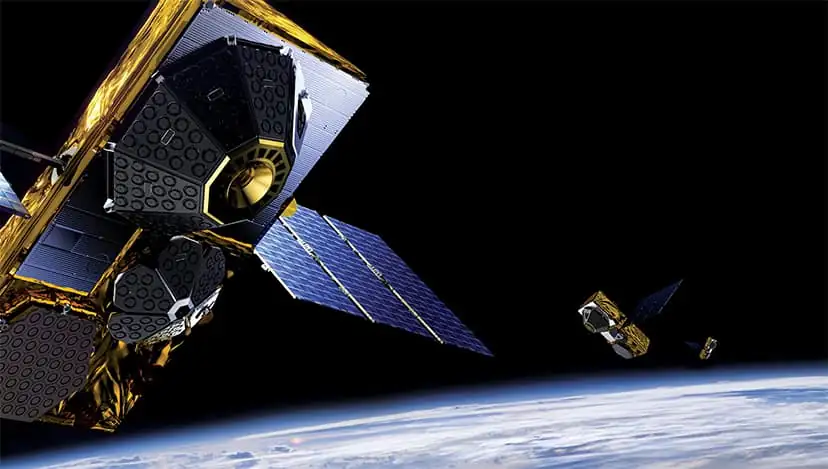
Globalstar operates low-Earth orbit satellites that provides wireless connectivity in far-flung locations. Users can connect to the satellites directly using devices such as smartphones. When Globalstar’s constellation receives a piece of data, it doesn’t send the traffic directly to the recipient but rather transmits it to a ground gateway station. That’s a facility tasked with forwarding packets to terrestrial internet networks.
Globalstar’s satellites transmit data to ground gateway stations using a technology called CDMA. CMDA sends multiple users’ traffic via the same frequency band, a set of adjacent radio frequencies. The technology mitigates interference by assigning a unique code to each user’s traffic. That code makes it easier for ground stations to distinguish different customers’ data from one another.
Last year, the company commissioned 48 new satellites for about $800 million. They will use a technology called beamforming to focus radio waves in the direction of user devices, an arrangement that boosts connection speeds.
Globalstar ordered the satellite following a $1.5 billion cash infusion from Apple Inc., which accounts for most of its revenue. Globalstar satellites power the Emergency SOS feature that ships with iPhones and the Apple Watch series. The capability enables users to contact emergency services even when they’re not within range of a cell tower.
Amazon said Globalstar satellites will continue to power Apple services following the acquisition. Additionally, the companies plan to collaborate on the development of new offerings that will use the e-commerce giant’s own internet constellation. Amazon Leo, as the orbital network is called, comprises more than 200 satellites.
Today’s acquisition will buy the company not only additional satellites but also supporting infrastructure. Globalstar operates two ground gateway stations around the world. Additionally, Amazon will obtain Globalstar’s valuable spectrum licenses.
The company’s spectrum licenses cover radio frequencies that facilitate direct-to-device connections. Such connections don’t require a standalone dish antenna, which makes them suitable for a wide range of use cases. Amazon said today that it plans to launch a direct-to-device satellite internet system in 2028.
The project is one of several planned upgrades to the company’s Leo constellation. The company will launch thousands of additional satellites over the next few years to expand the network’s capacity. According to Amazon, the new hardware will enable Leo to support hundreds of millions of customer devices.
Support our mission to keep content open and free by engaging with theCUBE community. Join theCUBE’s Alumni Trust Network, where technology leaders connect, share intelligence and create opportunities.
Founded by tech visionaries John Furrier and Dave Vellante, SiliconANGLE Media has built a dynamic ecosystem of industry-leading digital media brands that reach 15+ million elite tech professionals. Our new proprietary theCUBE AI Video Cloud is breaking ground in audience interaction, leveraging theCUBEai.com neural network to help technology companies make data-driven decisions and stay at the forefront of industry conversations.