 AI
AI
AI
AI




AI

The modern data stack might already be the new legacy. In response, Google Cloud is rebuilding for a world where AI agents — not humans — are the primary users of data infrastructure, unveiling an agentic data platform called Agentic Data Cloud designed for that new era.
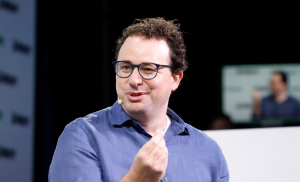
This is a fundamentally different architecture, according to Yasmeen Ahmad (pictured), managing director of product management, data and AI cloud at Google Cloud. The traditional stack was engineered around SQL engines and optimized for human analysis. Instead, the emergent agentic data platform must support vector search and reasoning, with thousands of tools and multi-step inference instead of a handful of brittle application programming interfaces.
“We’re no longer thinking about human personas like data scientists [or] data engineers,” Ahmad said. “We’re [considering] agents as the persona, because we really believe agents are going to be operating data platforms. There will be humans, but humans are taking a much higher-level orchestration role, not the doer role.”
Ahmad spoke with theCUBE’s Dave Vellante at Google Cloud Next, during an exclusive broadcast on theCUBE, SiliconANGLE Media’s livestreaming studio. They discussed how Google Cloud is evolving into an agentic data platform, why context is the missing layer in most enterprise AI architectures and what the cross-cloud lakehouse means for enterprises trying to avoid data lock-in. (* Disclosure below.)
Google Cloud’s agentic data platform is built on three interlocking layers: the AI Hypercomputer at the base, engineered for the latency and throughput demands of agent swarms; a cross-cloud lakehouse above that, built on Apache Iceberg; and Knowledge Catalog, sandwiched between raw data and the AI model. All of this, especially the cross-cloud layer, would have been unthinkable until recently, according to Ahmad.
“A year ago, if you asked me this, I don’t think it would have been possible,” Ahmad said, referencing cross-cloud capability. “Iceberg has become a de facto open standard. That is enabling both Google and our partner ecosystem to share data in ways and with ease that we just couldn’t before.”
The most critical layer is Knowledge Catalog — a context and intelligence layer between raw data and the AI model that Google found supplies the missing 50% accuracy that clean, well-structured data alone cannot, according to Ahmad. That context encompasses business meanings, entity relationships, access governance and ranked retrieval logic, which Google is now autogenerating for unstructured data using the same hybrid search stack that powers Google Search. Knowledge Catalog also connects to the “system of action” — the tools and skills that let agents move beyond data retrieval to execute orders in an ERP or activate campaigns in a CRM. Google launched Data Agent Kit to deliver that capability, packaging agents into modular tools and skills plugging directly into Cloud Code, VS Code and Gemini CLI.
“The models have gotten so good that if you give them tools and skills — data engineering tools, data science tools — the models can do a lot of hard, heavy-lifting for you,” Ahmad said.
While agents may have incredible capabilities, the cultural shift may be the hard part. Shopify’s VP of engineering has reframed leadership itself — asking his team to think of themselves not as owners of workflows but as managers of agents, Ahmad noted. Some human-centric workflows clearly aren’t being redesigned; they’re being deleted entirely.
“If you’re not adapting and getting onto that AI curve now, somebody out there is retransforming and redesigning your entire industry,” Ahmad said. “Everybody has in their hands these powerful, capable models to go invent the future.”
Here’s the complete video interview, part of SiliconANGLE’s and theCUBE’s coverage of Google Cloud Next:
(* Disclosure: TheCUBE is a paid media partner for Google Cloud Next. Sponsors of theCUBE’s event coverage do not have editorial control over content on theCUBE or SiliconANGLE.)
Support our mission to keep content open and free by engaging with theCUBE community. Join theCUBE’s Alumni Trust Network, where technology leaders connect, share intelligence and create opportunities.
Founded by tech visionaries John Furrier and Dave Vellante, SiliconANGLE Media has built a dynamic ecosystem of industry-leading digital media brands that reach 15+ million elite tech professionals. Our new proprietary theCUBE AI Video Cloud is breaking ground in audience interaction, leveraging theCUBEai.com neural network to help technology companies make data-driven decisions and stay at the forefront of industry conversations.