 AI
AI
AI
AI





AI

Agentic enterprise is moving artificial intelligence from isolated tools into systems that actively run business operations.
The transition reflects a broader shift in enterprise strategy, where organizations are embedding intelligence directly into workflows rather than layering it on top. This point to a growing divide between experimentation and execution, as companies rethink how AI integrates with infrastructure, governance and operational models. The focus is increasingly on durability and control, setting the stage for more autonomous systems across industries, according to John Furrier, executive analyst at theCUBE Research.
“We’re seeing interesting things happening right now with AI,” Furrier said. “The small, medium-sized market of the business is booming. It seems that the underserved market for a lot of this AI value [is] the growing businesses or the mid-market.”
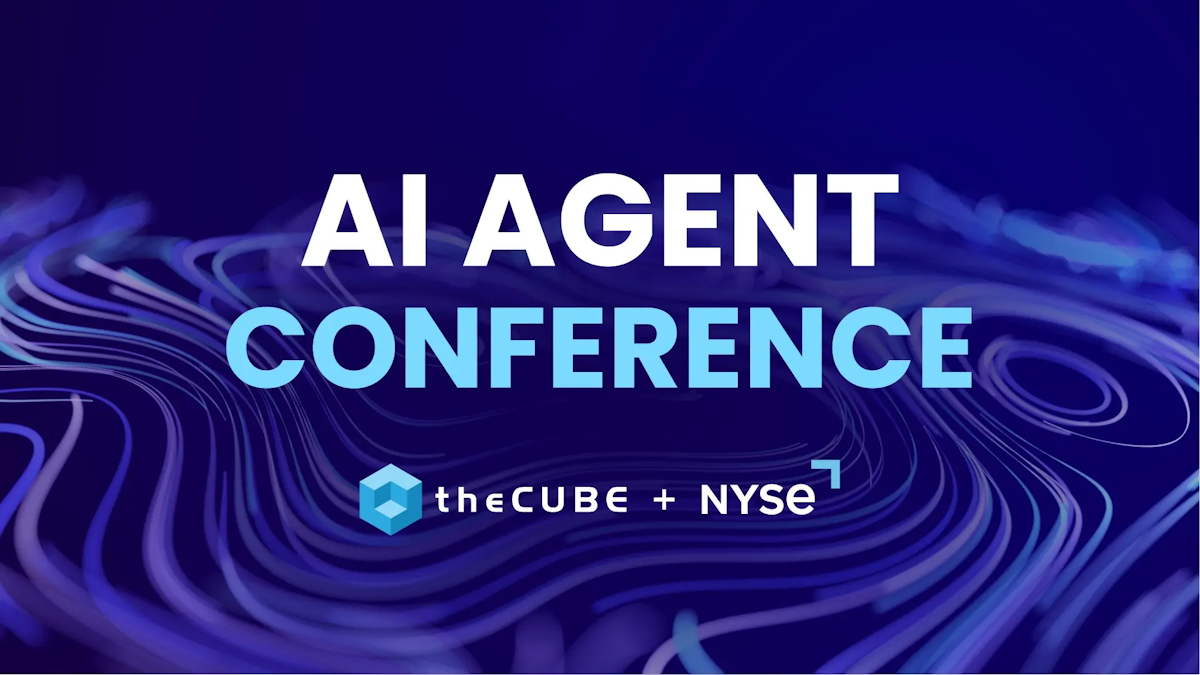
A new operating model is taking shape as enterprises move beyond isolated AI tools toward integrated, decision-capable systems. The AI Agent Conference will spotlight how organizations are embedding agents into workflows, with theCUBE’s on-demand analyst coverage dropping May 8. We examine how AI is evolving into autonomous systems embedded across enterprise operations.
The concept of the agentic enterprise centers on shifting software from passive systems into active participants in work. Rather than relying on human-driven workflows, organizations are beginning to deploy agents that can make decisions and execute tasks within defined guardrails, creating a more dynamic operating model, according to Simon Chan, chair and founder of the AI Agent Conference.
“I think agentic AI … the transformational point is now in the last century, in the last 20 years, software mainly was the system of records,” he told theCUBE. “It’s the workflows that users can interact through a browser. You do your work through a browser; you create workflows. Agentic AI agentic system is the system that we believe can make decisions by itself, take actions by itself and interact with your human teams. This is super, super exciting and transformational for every industry.”
As organizations experiment with these systems, technical approaches are diverging based on how agents interact with software environments. Some rely on structured integrations, while others take a more flexible approach, allowing agents to operate directly within user interfaces without extensive backend connections, according to Ang Li, co-founder and chief executive officer of Simular, an AI company developing autonomous, desktop-based computer agents designed to act as digital co-workers rather than just chat-based bots.
“In the current agent industry, we have two types of agents,” he added. “One is API agents. The other is called CUA, computer use agents. [With] API agents, you have all the softwares, coding, you do coding to connect all of the software in there. Computer use doesn’t require anything. Computer use only requires you to have a laptop or a computer that [has] the GUI on your interface.”
At the same time, demand pressures are accelerating adoption in industries where workforce constraints and rising complexity are forcing operational changes. Enterprises are starting to view agentic systems as a long-term solution to scaling expertise and maintaining output in constrained environments, according to Jin Chang, CEO of Fieldguide, an AI-native platform for audit and advisory firms.
“What we’re seeing is the top firms, the global firms, they’re really leaning into investing in agentic AI for the purpose of figuring out that operating model for the next two decades, because they see the writing on the wall,” he told theCUBE. “This is basic population replacement math. When you see that the population of practitioners isn’t keeping up with the demand for CPA services and the rising complexity involved, the writing’s on the wall.”
As these systems mature, the conversation is shifting from experimentation to measurable execution. The focus is no longer just on what agents can do, but how much work they can reliably take on within production environments, particularly in areas where speed, scale and consistency directly impact business outcomes, explained Anthony Sardain, CEO of Cavela, which offers an AI-powered platform for automated product sourcing and manufacturing, specifically targeting direct-to-consumer brands.
“What we do is we make that process a lot easier,” he said in an interview with theCUBE. “We automate away about 90% of the work for brands and handle absolutely everything from ideation all the way to delivery.”
Don’t miss theCUBE’s coverage of AI Agent Conference, available on-demand starting May 8.
We offer you various ways to watch theCUBE’s coverage of the AI Agent Conference, including theCUBE’s dedicated website and YouTube channel. You can also get all the coverage from this year’s events on SiliconANGLE.
SiliconANGLE’s “theCUBE Pod” is available on Apple Podcasts, Spotify and YouTube, which you can enjoy while on the go. During each podcast, SiliconANGLE’s John Furrier and Dave Vellante unpack the biggest trends in enterprise tech — from AI and cloud to regulation and workplace culture — with exclusive context and analysis.
SiliconANGLE also produces our weekly “Breaking Analysis” program, where Dave Vellante examines the top stories in enterprise tech, combining insights from theCUBE with spending data from Enterprise Technology Research, available on Apple Podcasts, Spotify and YouTube.
As a part of AI Agent Conference, theCUBE analysts will dig into how enterprises are moving beyond isolated AI tools toward agent-driven systems that actively run business operations. Coverage will explore how organizations are embedding decision-capable agents into workflows, navigating governance, infrastructure integration and control as AI becomes part of the execution layer. Join our coverage for more interviews and analysis from May 11 as theCUBE tracks how autonomous systems are taking shape across enterprise environments.
Support our mission to keep content open and free by engaging with theCUBE community. Join theCUBE’s Alumni Trust Network, where technology leaders connect, share intelligence and create opportunities.
Founded by tech visionaries John Furrier and Dave Vellante, SiliconANGLE Media has built a dynamic ecosystem of industry-leading digital media brands that reach 15+ million elite tech professionals. Our new proprietary theCUBE AI Video Cloud is breaking ground in audience interaction, leveraging theCUBEai.com neural network to help technology companies make data-driven decisions and stay at the forefront of industry conversations.