 AI
AI
AI
AI



AI

The rise of the AI factory is reshaping how organizations build and scale intelligence — and it’s putting AI infrastructure security squarely at the center of the conversation.
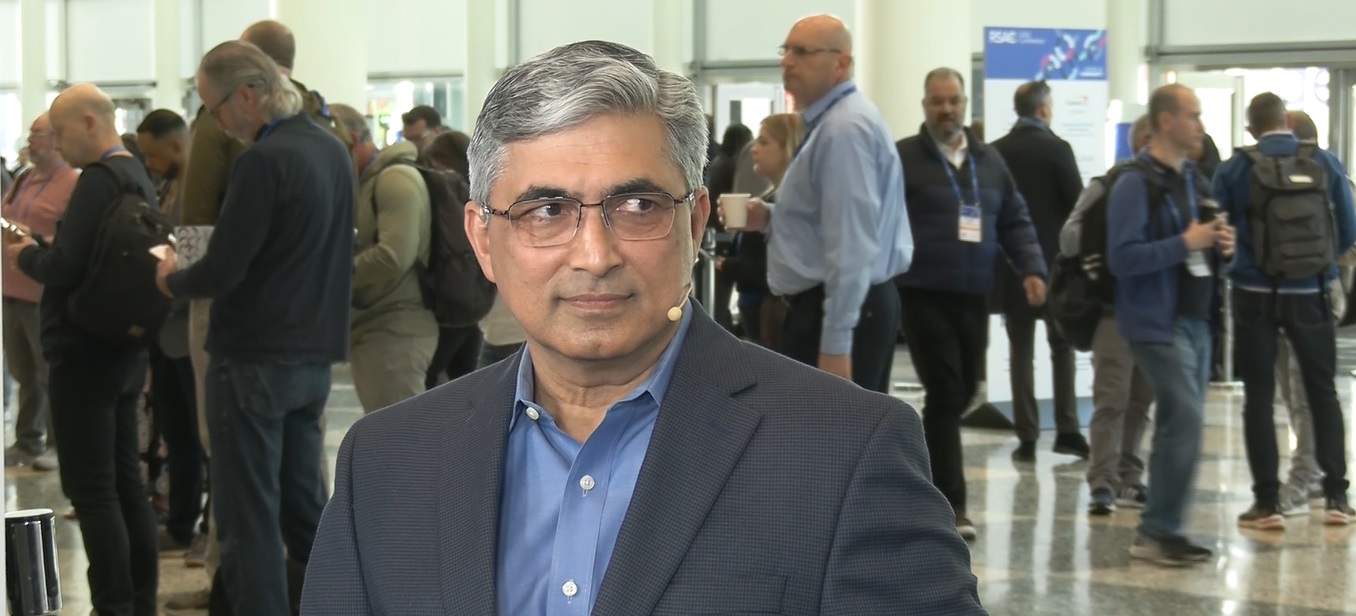
The current overhaul is fundamental, with AI factories being built as end-to-end solutions requiring a redesign in power, thermals and racks. At the same time, the data storage layer is being reimagined through AI data platforms that enable Retrieval-Augmented Generation and other emerging AI-related data elements, according to Mukund Khatri (pictured), fellow and vice president of systems architecture at Dell Technologies Inc. Central to that overhaul — and likely a defining topic at this year’s Dell Technologies World — is the growing threat surface that AI itself introduces.
“As you look at the AI, AI brings additional threats, newer threats,” Khatri said. “Interestingly, the LLMs look like code — they need to be protected like code — but they are essentially data, data that has secrets and [model] weights are secrets. Those are pretty precious.”
Khatri spoke with theCUBE’s Dave Vellante at the “Securing the AI Factory with Dell Technologies and Intel” event, during an exclusive broadcast on theCUBE, SiliconANGLE Media’s livestreaming studio. They discussed AI infrastructure security and the evolution of AI factories as end-to-end infrastructure systems. (* Disclosure below.)
As AI infrastructure grows more complex, so does the security challenge it presents. AI introduces new threats such as “living off the land,” where attackers exploit trusted tools and potentially AI agents by turning them against the organization, according to Khatri. As a result, capabilities such as lineage, provenance and observability, once optional, are now becoming essential requirements for secure AI systems. Central to that is the principle of least privilege — ensuring agents are granted only the minimum access they need to operate — a concept Dell has been building directly into its AI security architecture.
“The integrity of deployment scenarios — the monitoring, the observability — is going to be tremendously important as we move with agents. Identity has to be monitored and they have to operate in least-privileged mode,” Khatri said. “The deployments of least privilege for agents is going to be very, very critical.”
The threat horizon extends further still, with post-quantum cryptography emerging as the next major challenge for AI infrastructure security. When quantum computers become powerful enough, today’s encryption — embedded in virtually every system — could be broken, leaving organizations exposed, Khatri noted. That transition puts enterprises on a timeline — and the window to act is narrowing.
“All companies are getting aware. They need to be looking into their transition plans,” Khatri said. “Over the next two to three years, there’s a lot of transitions — new buys that customers do — and the entire software ecosystem has to transition. [It is] a very multi-year, complex, mandatory, redefining governance event.”
Here’s the complete video interview, part of SiliconANGLE’s and theCUBE’s coverage of the “Securing the AI Factory with Dell Technologies and Intel” event:
(* Disclosure: TheCUBE is a paid media partner for the “Securing the AI Factory with Dell Technologies and Intel” event. Neither Dell, the sponsor of theCUBE’s event coverage, nor other sponsors have editorial control over content on theCUBE or SiliconANGLE.)
Support our mission to keep content open and free by engaging with theCUBE community. Join theCUBE’s Alumni Trust Network, where technology leaders connect, share intelligence and create opportunities.
Founded by tech visionaries John Furrier and Dave Vellante, SiliconANGLE Media has built a dynamic ecosystem of industry-leading digital media brands that reach 15+ million elite tech professionals. Our new proprietary theCUBE AI Video Cloud is breaking ground in audience interaction, leveraging theCUBEai.com neural network to help technology companies make data-driven decisions and stay at the forefront of industry conversations.