






 AI
AI
AI
AI
AI

Adobe Inc. today introduced an artificial intelligence experience embedded in its ubiquitous PDF document reader and creator, Acrobat, to transform how people create, understand and share information.
The new experience, which Adobe calls the productivity agent, uses AI to automate tools and models to generate images, text and audio to generate materials including presentations, podcasts and social posts alongside chat interfaces for PDFs. Users can take otherwise static text and graphics content and have it tailored for different audiences automatically with the touch of a button.
The new agentic capabilities are available in the company’s Acrobat Express, a new lightweight experience retooled with the AI features, and Studio, which includes all the capabilities of Express along with AI PDF creation capabilities.
“We’re not just adding new features, we’re introducing a new format,” said Abhigyan Modi, senior vice president of Adobe Document Cloud. “For the first time, sharing documents means sharing an experience that’s tailored to your intended audience, whether that’s a client, a team or a million subscribers.”
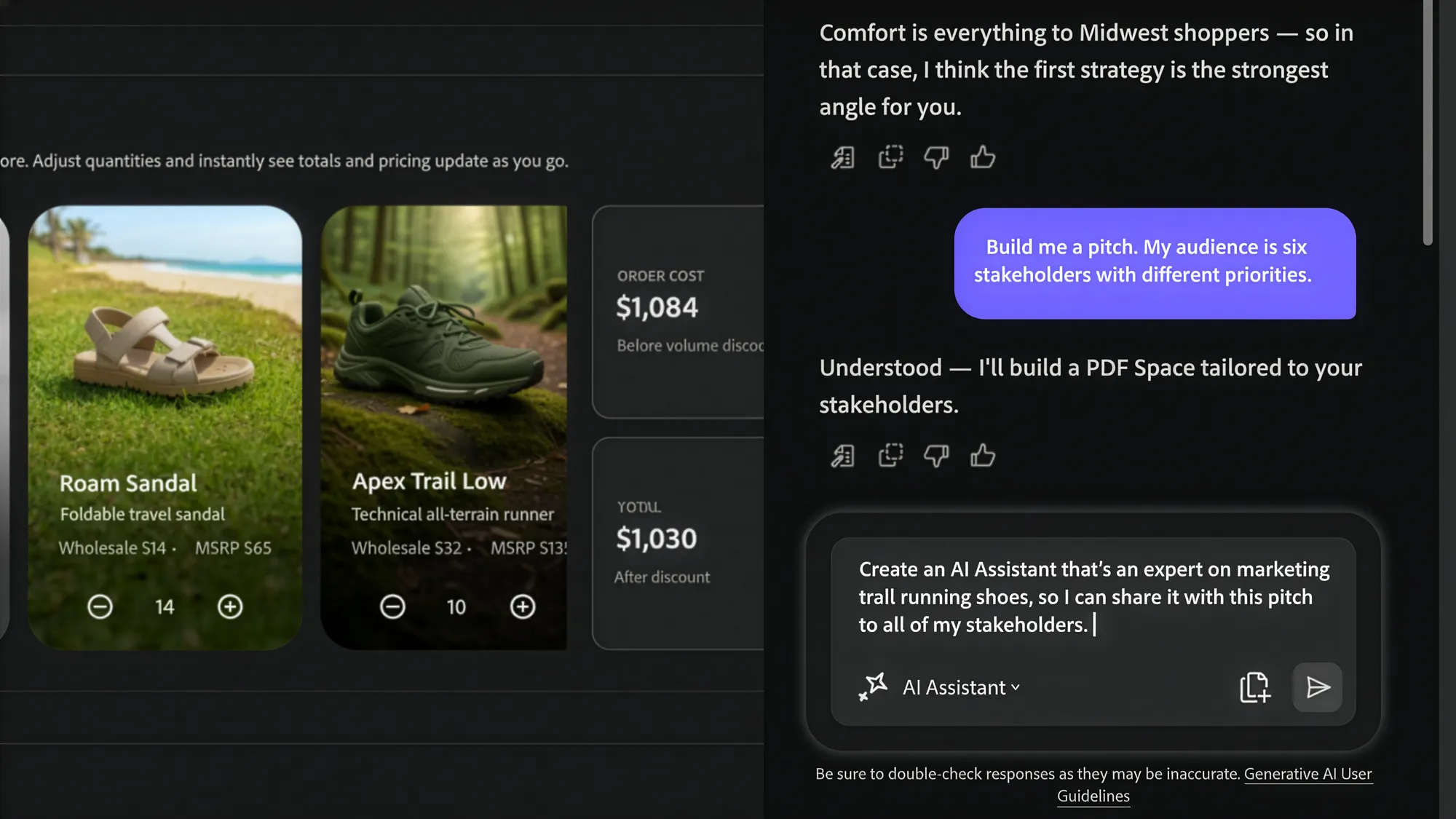
In the new format, senders can create what is called PDF Spaces. Using a Space, the agent takes PDFs, documents, notes, links, images and other elements into one place so that the sender can organize their thoughts. When the documents are updated, the shared experience is as well, so the recipients always have the most up-to-date information.
Users get access to an AI assistant that they can chat with in natural language to describe what they’re working on by explaining their goals and their audience. It will then look over the content and go along with the shared experience to answer questions, provide suggestions and help recipients get the correct information and guidance based on the intent of the sender.
Not all readers are looking to “read.” Some end users are on the go, and that means that they might want to get information through other formats. As a result, Adobe has introduced audio overviews that are automatically generated to help orient readers before they dive in. Summaries are fully editable by the sender. Users can also listen to the content as audio, or as a two-person podcast or a deep dive.
Of course, it wouldn’t be an Adobe product if users weren’t able to brand their end documents readily. Users can easily add their logo, color palette and other theme elements to create a proper on-brand experience.
The company said leading publishers and creators are already using the new productivity agent, including journalism outlet Vice News Group LLC, Jessica Yellin, the award-winning journalist and founder of News Not News, and pop-culture event planner and tastemaker Mindy Weiss.
Vice News said it’s using Spaces to develop immersive, on-the-ground reporting experiences for its readership by layering primary documents, research and supporting materials directly alongside published stories. The addition of the AI assistant then allows readers to dive deeper into articles, explore sources, follow complementary paths and engage deeper with reporting.
Support our mission to keep content open and free by engaging with theCUBE community. Join theCUBE’s Alumni Trust Network, where technology leaders connect, share intelligence and create opportunities.
Founded by tech visionaries John Furrier and Dave Vellante, SiliconANGLE Media has built a dynamic ecosystem of industry-leading digital media brands that reach 15+ million elite tech professionals. Our new proprietary theCUBE AI Video Cloud is breaking ground in audience interaction, leveraging theCUBEai.com neural network to help technology companies make data-driven decisions and stay at the forefront of industry conversations.