 EMERGING TECH
EMERGING TECH
EMERGING TECH


EMERGING TECH

Quantum computer maker Quantum Motion Ltd. today announced that it has raised $160 million in funding to enhance its silicon-based qubit technology.
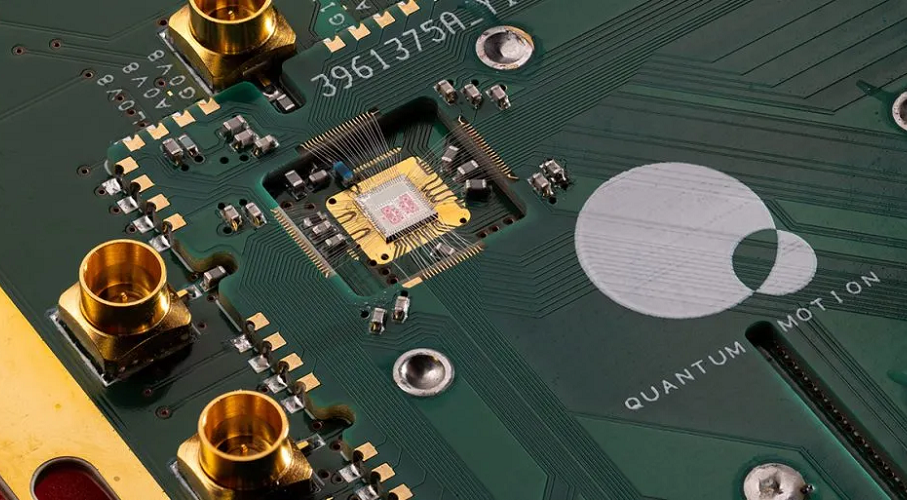
The Series C round was led by DCVC and Kembara. It comes about three years after the startup’s last raise. London-based Quantum Motion used part of that investment to build a quantum computer for its first customer, the U.K.’s National Quantum Computing Centre. The machine is the size of three server racks and contains a processor that measures a few millimeters across.
Researchers build qubits, the core components of a quantum processor, from a variety of materials. Some systems feature ion-based qubits, while others use miniature light emitters to perform calculations. Quantum Motion makes qubits from silicon-based CMOS circuits, the building blocks of all modern processors. The company says its approach offers several advantages over the competition.
There are many fabs dedicated to producing CMOS circuits. As a result, mass-producing chips won’t require Quantum Motion to build a plant or install new equipment in an existing facility. Furthermore, the company can design its qubits using standard semiconductor engineering software instead of custom tools.
“Quantum computing will only achieve its full potential if it can be built on a platform that scales, and we believe silicon is the strongest route to achieving that,” said Chief Executive James Palles-Dimmock.
Quantum Motion’s chip architecture shares certain similarities with conventional transistors. A transistor is built around a structure called a channel that transports electrons between two points. The movement of electrons through the channel is controlled by a component known as the gate. In many cases, the gate surrounds the channel.
The architecture is powered by gates that are attached to quantum dots. A quantum dot is a semiconducting crystal that measures a few dozen atoms across. Each crystal holds an electron that functions as a qubit. Data is encoded into a property of the electrons known as spin: different spin states correspond to different data values.
The task of encoding data into qubits and reading calculation results is managed by a dedicated processor. Usually, such processors have to be connected to the qubits they coordinate via a bulky set of cables. Those cables take up a significant amount of space, which complicates engineers’ work.
The chip architecture integrates qubits and control circuits into a single package. That reduces the need for cables, which saves space and thus makes it possible to build smaller quantum computers. The result is that the company’s systems can be installed in existing data centers without extensive facility upgrades.
The qubit control processor also provides other benefits. Hoxton, a version of the chip that Quantum Motion debuted last year, can read the output of qubits with 100 times higher sensitivity than competing technologies. It reads processing results using super-inductors, electric components that store energy in a magnetic field.
The company will use its newly raised funding to boost the processing capacity of its hardware. It hopes to deliver an “exponential increase” in the number of qubits that ship with its processors.
Support our mission to keep content open and free by engaging with theCUBE community. Join theCUBE’s Alumni Trust Network, where technology leaders connect, share intelligence and create opportunities.
Founded by tech visionaries John Furrier and Dave Vellante, SiliconANGLE Media has built a dynamic ecosystem of industry-leading digital media brands that reach 15+ million elite tech professionals. Our new proprietary theCUBE AI Video Cloud is breaking ground in audience interaction, leveraging theCUBEai.com neural network to help technology companies make data-driven decisions and stay at the forefront of industry conversations.