 AI
AI
AI
AI










AI

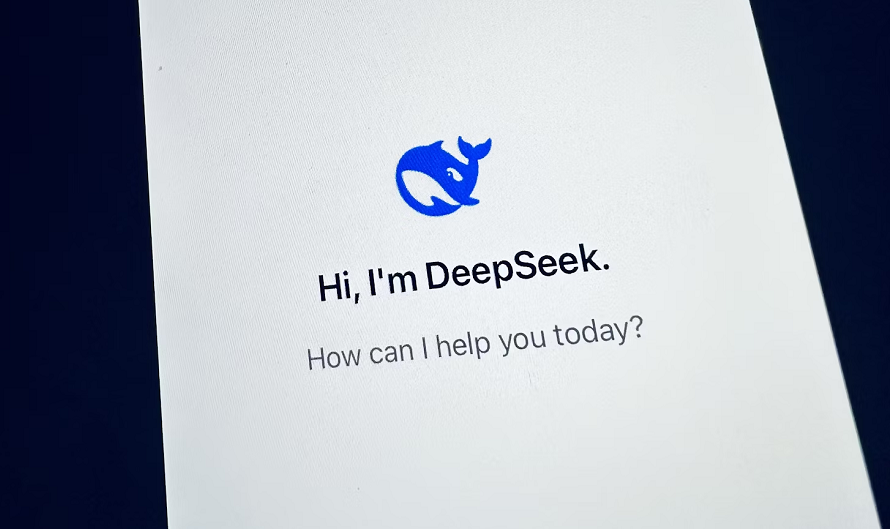
DeepSeek today debuted a new addition to its flagship V4 series of large language models.
On launch, V4 Flash Vision Exp is only available via the Chinese startup’s paid developer platform. The company may release a free version later on given that it has open-sourced many of its earlier models. Those models include V4 Flash, an algorithm released in April that forms the foundation of V4 Flash Vision Exp.
DeepSeek compared the two LLMs across seven benchmarks that contain text-based challenges. V4 Flash Vision Exp outperformed its predecessor across all the tests with the exception of one. The benchmark in question, Cybergym, evaluates LLMs’ ability to discover software vulnerabilities.
The area where V4 Flash Vision Exp provides the biggest performance improvement is image analysis. DeepSeek tested the model’s ability to process visual content using four different benchmarks. It scored more than 10% higher on two of the tests.
Notably, V4 Flash Vision Exp also bested Anthropic PBCC’s Opus 4.8 across two visual benchmarks called ALE and ZeroBench. The former evaluation contains more than 1,000 multi-step tasks that require LLMs to interact with applications, write code and interpret media files. ZeroBench, in turn, contains 100 image analysis tasks designed to be highly challenging for frontier LLMs.
DeepSeek hasn’t shared any information about V4 Flash Vision Exp’s architecture. However, the company’s Hugging Face page contains a detailed overview of the V4 Flash model from which the LLM is derived.
V4 Flash is a mixture of experts model with 284 billion parameters. It comprises multiple neural networks that each contain 13 billion parameters. When a user enters a prompt, the LLM only activates the neural network that is best suited to generate an answer. That approach uses significantly less hardware than activating the entire LLM.
Language models keep the information they use to answer prompts in a data structure called a KV cache. V4 Flash uses two techniques called HCA and CSA to compress the KV cache. According to DeepMind, the technologies reduce the amount of computing power needed to process prompts with 1 million tokens by 73%.
DeepSeek trained V4 Flash on 32 trillion tokens worth of training data. The company used an algorithm called Muon to speed up the training workflow. Muon reduces the amount of time required to calibrate an LLM’s hidden layers, the components that carry out the bulk of the processing involved in answering prompts.
V4 Flash is one of the two LLMs that DeepSeek released in April. The other model is called V4 Pro and features more than five times as many parameters. Given that V4 Flash Vision Exp is derived from V4 Flash, it’s possible that V4 Pro will eventually also form the basis of specialized models optimized for tasks such as image analysis.
Support our mission to keep content open and free by engaging with theCUBE community. Join theCUBE’s Alumni Trust Network, where technology leaders connect, share intelligence and create opportunities.
Founded by tech visionaries John Furrier and Dave Vellante, SiliconANGLE Media has built a dynamic ecosystem of industry-leading digital media brands that reach 15+ million elite tech professionals. Our new proprietary theCUBE AI Video Cloud is breaking ground in audience interaction, leveraging theCUBEai.com neural network to help technology companies make data-driven decisions and stay at the forefront of industry conversations.