 INFRA
INFRA



INFRA

Agentic workloads present a new operating challenge for enterprises putting artificial intelligence into production. As autonomous systems take on ongoing responsibilities, organizations must support decisions and actions across their data, applications and infrastructure.
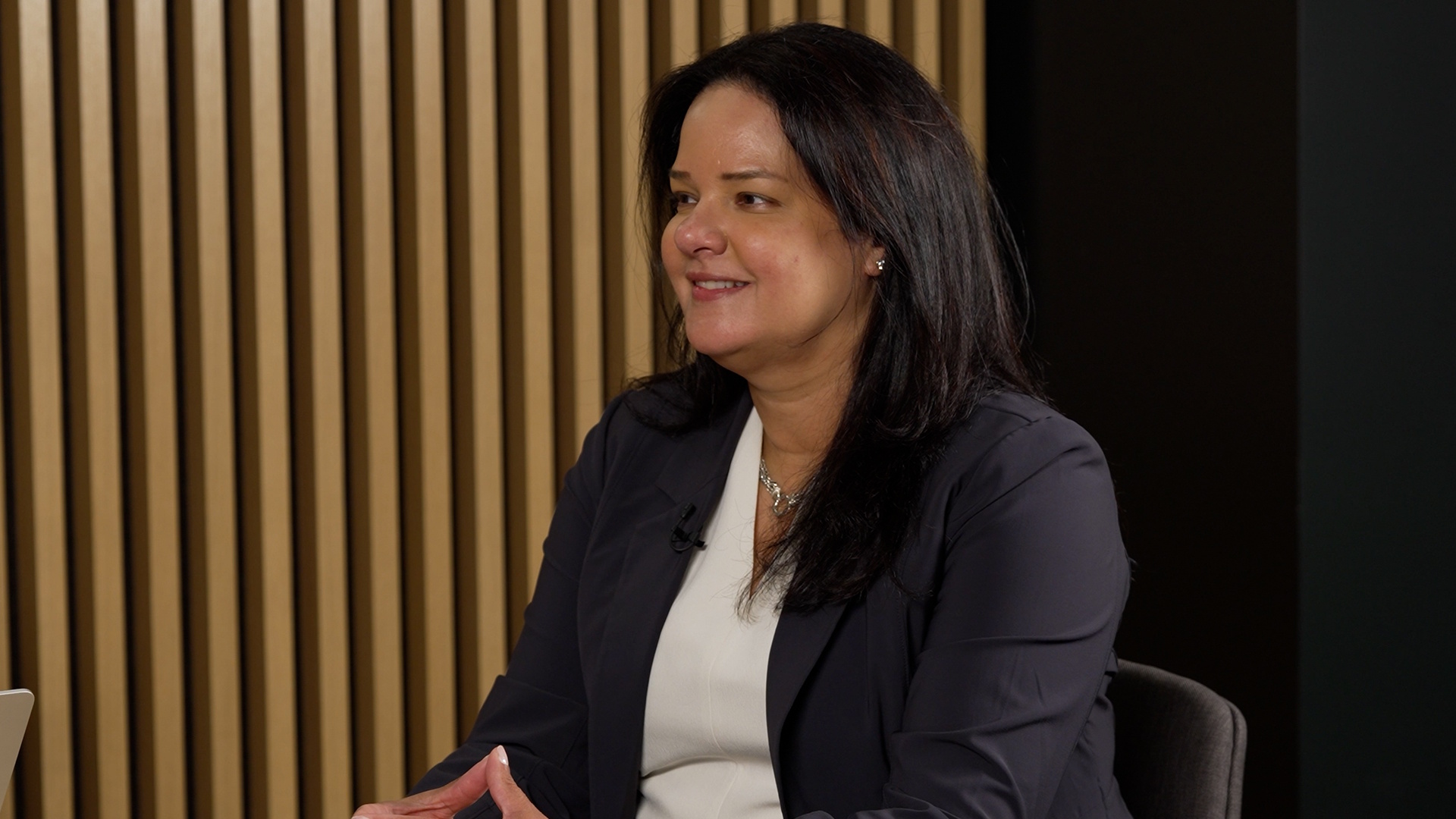
IBM Corp.’s approach draws on the experiences of clients scaling AI across their organizations. That work helped identify the requirements underpinning its AI operating model, according to Ritika Gunnar (pictured), chief performance marketing officer of IBM.
“As you’re more successful in using AI, especially as AI is taking action, you now have workloads that are continuously being utilized,” she said. “You are incented to be always on because those agents are always taking action for you.”
Gunnar spoke with theCUBE Research’s Dave Vellante and John Furrier for IBM’s AI Operating Model interview series in an exclusive interview on theCUBE, SiliconANGLE Media’s livestreaming studio. They discussed enterprise integration, data governance, human oversight and evaluating AI against business outcomes in preparation for IBM TechXchange 2026. (* Disclosure below.)
IBM’s AI operating model brings together four components that enterprises may already obtain from different providers. Applying them means accounting for established applications and business processes alongside emerging AI systems, Gunnar explained.
“You need to be able to integrate with your existing systems,” she said. “People aren’t going to run away from their SAP systems that exist, from their Salesforce systems that exist. What does it mean to integrate with those and have workloads that are representative of your past and your future together?”
The components have distinct roles: Data supplies current enterprise knowledge, workloads encompass applications and workflows, automation supports oversight and optimization, and hybrid cloud accommodates distributed operations. Their effectiveness depends on how they function together across agentic workloads, according to Gunnar.
“If you have your data and that data is feeding your systems, but you’re not really taking care of automation in a way where you have complete observability of all of your workloads with that AI infused, then you’re not necessarily having an optimal way of picking the right model or picking the right agents for those kinds of workloads,” she said.
The information supporting an agent’s decision may span operational systems, edge devices and context generated by other agents. Providing governed context requires enterprises to consider both the completeness of that information and how permissions travel with it, Gunnar explained.
“Our belief is if you can take data and if you can shift left a lot of the governance — a lot of the who has the right access to the right data at the right time — it becomes important because you flow that data in real time with the context and provenance of who actually has ownership of that data,” she said. “Therefore, the agents make much better decisions.”
Enterprises also depend on knowledge employees develop through experience rather than explicitly recording it in their systems. Prompts and other context can help convey that judgment, but capturing it remains an ongoing challenge, Gunnar pointed out.
“When you think about workloads today … there is a lot of it that will be autonomous in nature,” she said. “But in most cases, if you’re talking about your essential systems, you do have humans in the loop to be able to bring some of that tacit knowledge in place where the AI has not yet matured to be able to even get there.”
Agent activity generates logs of decisions and actions, while prompts record the instructions supplied to those systems. Together, that information supports an ongoing feedback loop between enterprise data and AI workloads, Gunnar explained.
“You can actually have multiple different permutations of that agent making a decision and having another set of eval loops actually doing an evaluation of, ‘Did that agent actually make the decisions?’” she said. “Would there have been a more performant way, a more accurate way, a more cost-effective way to be able to do that?”
Performance encompasses accuracy, timeliness and cost, with the intended business result guiding how those measures are assessed. Putting AI into production therefore requires organizations to examine the work itself alongside the technology supporting it, according to Gunnar.
“Make sure that you have all of these elements and that you’re really thinking about the outcomes, and you’re willing to start with what it means to take a look at the business process transformation,” she said. “That’s really where it’s at.”
Here’s the complete video interview, part of SiliconANGLE’s and theCUBE’s coverage of IBM’s AI Operating Model interview series:
(* Disclosure: TheCUBE is a paid media partner for IBM’s AI Operating Model interview series event. Neither IBM, the sponsor of theCUBE’s event coverage, nor other sponsors have editorial control over content on theCUBE or SiliconANGLE.)
Support our mission to keep content open and free by engaging with theCUBE community. Join theCUBE’s Alumni Trust Network, where technology leaders connect, share intelligence and create opportunities.
Founded by tech visionaries John Furrier and Dave Vellante, SiliconANGLE Media has built a dynamic ecosystem of industry-leading digital media brands that reach 15+ million elite tech professionals. Our new proprietary theCUBE AI Video Cloud is breaking ground in audience interaction, leveraging theCUBEai.com neural network to help technology companies make data-driven decisions and stay at the forefront of industry conversations.