











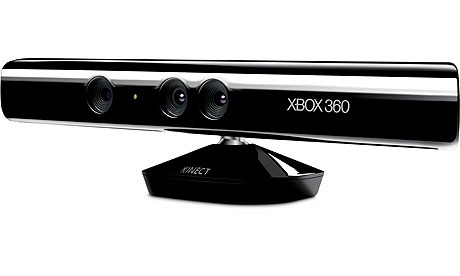
At E3, Microsoft made the first real-use demonstrations of Kinect (formerly known as Natal). Most of the discussion around the device so far has compared it to an evolved motion controller, a next step from the Wii remote or Sony’s Move controller. This is only the tip of the iceberg.
Kinect is not simply a controller replacement. It is the first time a single device brings 4 players in at the same time. Until now, four player gaming required buying several controllers, most of which you wouldn’t require most of the time (and therefore most people wouldn’t buy). It allows microphone support for multiple players without requiring you to buy and wear additional headsets. Kinect also allows recognition of the user, removing the need to login.
Basically, Kinect allows anyone to join a game without any extra barrier, learning curve, or hardware.
One aspect that surprised me about Microsoft’s stance with Kinect is its insistence not to brand it as a gaming device: the demos focused on showcasing the Xbox as a futuristic way to play and interact with music and movies through Zune, sports with its partnership with ESPN, and series through Hulu soon. Further demos focused on the social aspect the device brings.
None of the personalization features presented (customizing playlists, saving your favorite replays, your favorite series) are new. So what’s new?
One limit of gaming and computers has always been the relationship with the virtual elements. Using microphones, headsets, gamepads, keyboards, mice, logins and passwords creates a distance between the user and the application. What was so impressive about Minority Report’s computer interface was not that it was gesture driven, but that it looked so natural.
In a sense, playing a game traditionally on a 2D screen makes your enemies feel like objects. 3D screens give them depth and a sense of reality. Kinect could bring almost physical interaction with gaming assets.
Kinectimals showed a virtual pet, similar to Sony’s EyePet from last year, except with more “physical” interaction. The virtual baby tiger was similar to how I would have imaging when I was a child.
Where will this lead us? The demo of Forza 3 is a good starting point for reflection. By allowing you to look around and inside the car, realistic driving games such as Forza 3 or Gran Turismo 5 have the capacity to become a form of advertising, as well as test driving a car.
One could easily imagine trying on new clothes that would match your size, pick your favorite color and order it online. Or try on a new pair of glasses or make up.
As web and mobile services are gradually becoming apps sold in marketplaces, one may wonder if consoles will be a new space for home applications.
Support our mission to keep content open and free by engaging with theCUBE community. Join theCUBE’s Alumni Trust Network, where technology leaders connect, share intelligence and create opportunities.
Founded by tech visionaries John Furrier and Dave Vellante, SiliconANGLE Media has built a dynamic ecosystem of industry-leading digital media brands that reach 15+ million elite tech professionals. Our new proprietary theCUBE AI Video Cloud is breaking ground in audience interaction, leveraging theCUBEai.com neural network to help technology companies make data-driven decisions and stay at the forefront of industry conversations.