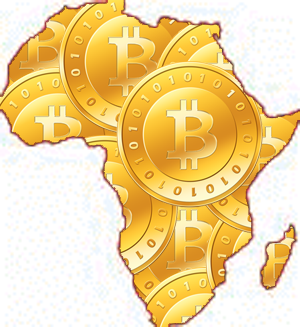












 As Internet technology continues to make deeper inroads into regions that lack infrastructure to support a strong banking system, very quickly virtual currencies can become more successful than banks. One region of the world that reflects this is Africa, where banks are weak, but mobile devices are becoming more and more ubiquitous in everyday life.
Recently, the Technology Review published by MIT ran a story about German software developer Rüdiger Koch, a consultant to the U.K.-based bitcoin exchange Intersango, who spoke at the Mobile Money Africa event in Lagos, Nigeria who sees Africa as a fertile ground for Bitcoin development.
There, Koch told the audience of businesspeople and government officials that Bitcoin could support a system of robust, low-fee mobile payments for anyone whose cell phone has a camera.
“Many of them were interested in how Bitcoin could be useful,” says Koch. His talk in Nigeria was intended to launch a dialogue that could lead Intersango or others to launch practical Bitcoin-based mobile payment systems for Africa. Koch has also visited several African embassies in Berlin to introduce government officials to the currency.
“It’s interesting to see how creative Africans can be about transferring money,” says Koch. “They really think seriously about a cashless society.” As a result of the lack of a powerful banking system, but a multitude of mobile devices, the African people have started to create their own cashless (and cash based) trading economy using text messages and mobile technology. Koch thinks that this development in their culture could be the foundation for the use of a functional virtual currency that would revolutionize the way Africans do business.
With the use of smart phones growing rapidly in some African countries, particularly Kenya, apps and cameras will be a common privilege of citizens. As a result, NFC and QR codes would become a source for being able to transfer funds from person-to-person without having to use a centralized infrastructure for trading currency. “People could exchange money when they meet on the street,” adds Koch.
In spite of how useful Bitcoin may be to Africa, there are still stumbling blocks. Primarily because while Bitcoin is becoming well known to small niche circles on the Internet, it is still relatively unknown to most of Africa.
Support our mission to keep content open and free by engaging with theCUBE community. Join theCUBE’s Alumni Trust Network, where technology leaders connect, share intelligence and create opportunities.
Founded by tech visionaries John Furrier and Dave Vellante, SiliconANGLE Media has built a dynamic ecosystem of industry-leading digital media brands that reach 15+ million elite tech professionals. Our new proprietary theCUBE AI Video Cloud is breaking ground in audience interaction, leveraging theCUBEai.com neural network to help technology companies make data-driven decisions and stay at the forefront of industry conversations.