

 NEWS
NEWS
NEWS
NEWS
NEWS

 At the fifth edition of Open Compute Project Summit in San Jose, California, a very powerful example of the success of Open Compute was the use-case presented by the Rackspace team.
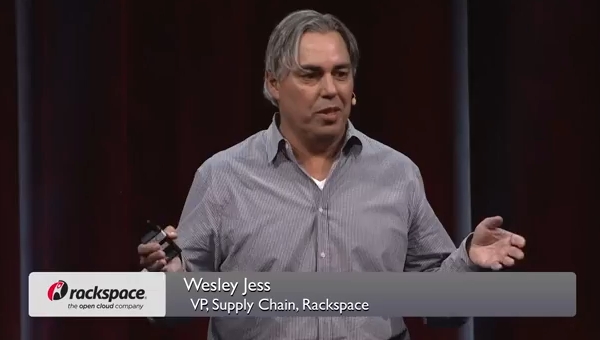
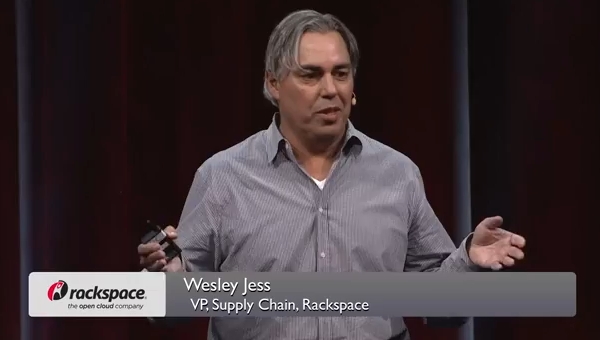
Wesley Jess, VP of Supply Chain, and Aaron Sullivan, Director and Principal Engineer of Supply Chain, walked the audience through Rackspace’s experience as a customer of Open Compute.
“We look at Open Compute as a natural extension of OpenStack. We basically see them vertically integrating together,” stated Jess in the beginning of the presentations. “It’s gone really well with us.”
“When we originally dug into Open Compute, everybody told us it was this ‘big, black box of awesome’,” recounted Jess.
Later on they started digging in what Open Compute really was regarding open source hardware, and the one thing that they were consistently told was “you can’t do this; it’s too hard for you; you don’t have the engineering staff.”
Why chose Open Compute, then?
“Early on it was about the economics. Later on we realized the economic reasons actually turn out to be outcomes. You get a lot by doing this,” added Jess.
In his opinion “the hardware selection process was like buying a car; there’s a lot of good options out there, but there are also many things you don’t need.”
 Staying with the automobile theme, Sullivan likened the big cloud companies building their own systems with cars at the races. But “that race can be costly and it might not take you where you want to go,” he warned.
Rackspace’s experience is a little bit different, clarified Sullivan: “You have the community as your crew; the engineering team and the community help you build a very powerful vehicle for your business.”
“Not everybody understands the Rackspace business model,” admitted Jess. The company has 200,000+ customers, each like an IT shop, having anywhere from one to 20 applications deployed in their environments. Rackspace’s customers run the gamut from the Fortune 100 companies to the small garage shops.
The most important thing is getting the best-fit infrastructure for your applications.
Rackspace has three core product offerings that really make up thier really hybrid portfolio:
.
.
They have the ability to:
.
.
There are of course diverse hardware needs, according to each product.
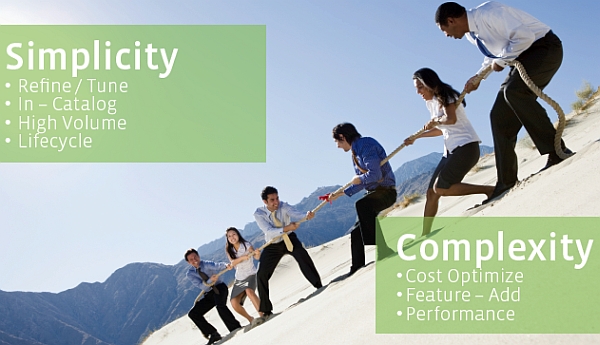
According to Sulivan, “it’s a tug of war. When you are in a service company that is delivering all these technologies for all these different applications you are in this constant battle between trying to maintain simplicity (so that you can scale your operation) and deal with the complexity that comes with wanting to drive the best kind of service.”
“By engaging with our component partners we’ve had access to early technologies and we gave them a lot of our customer feedback, which helped them shape their product roadmaps. One of the main benefits of OpenStack was speed,” explained Jess.
“We built our platform that met the needs of our business partners and that was faster and more efficient than anything at that time. But we ran into a problem: that particular system that went into production in that data center was built for a set of needs that our customers don’t have as much anymore,” said Sullivan.
“We needed to deliver a new type of system and we needed to do it really fast. When we finally figured out what we wanted, we went and adapted what we had. Three months into the process we developed a new system,” boasted Sullivan. “It just shows how quickly you can change. Changes usually required three quarters to a year to go through, with a lot of prep discussion in front.”
Jess and Sullivan wrapped up their presentation with a couple pieces of advice:
.
.
It is the impression of the Rackspace team that soon “we’re going to see dynamic hardware and new horizons, a world where hardware starts to move more like the pace of software – and maybe in some cases hardware is going to drive new capabilities in software.”
You can see the entire “Small Steps From Individual Participants Lead to Giant Steps in the Community” presentation here.
Support our mission to keep content open and free by engaging with theCUBE community. Join theCUBE’s Alumni Trust Network, where technology leaders connect, share intelligence and create opportunities.
Founded by tech visionaries John Furrier and Dave Vellante, SiliconANGLE Media has built a dynamic ecosystem of industry-leading digital media brands that reach 15+ million elite tech professionals. Our new proprietary theCUBE AI Video Cloud is breaking ground in audience interaction, leveraging theCUBEai.com neural network to help technology companies make data-driven decisions and stay at the forefront of industry conversations.