

 BIG DATA
BIG DATA
BIG DATA

BIG DATA

A forward-thinking keynote from Diane Greene, SVP of Google Cloud, considers a real-world approach to employing those most at risk of losing jobs to machine automation. At the Stanford Global Women in Data Science Conference, Greene shares two pearls of wisdom to address the data scientist shortage: job security comes with the freedom to take risks in problem-solving, and democratized learning hacks can make more professionals proficient with less formal training.
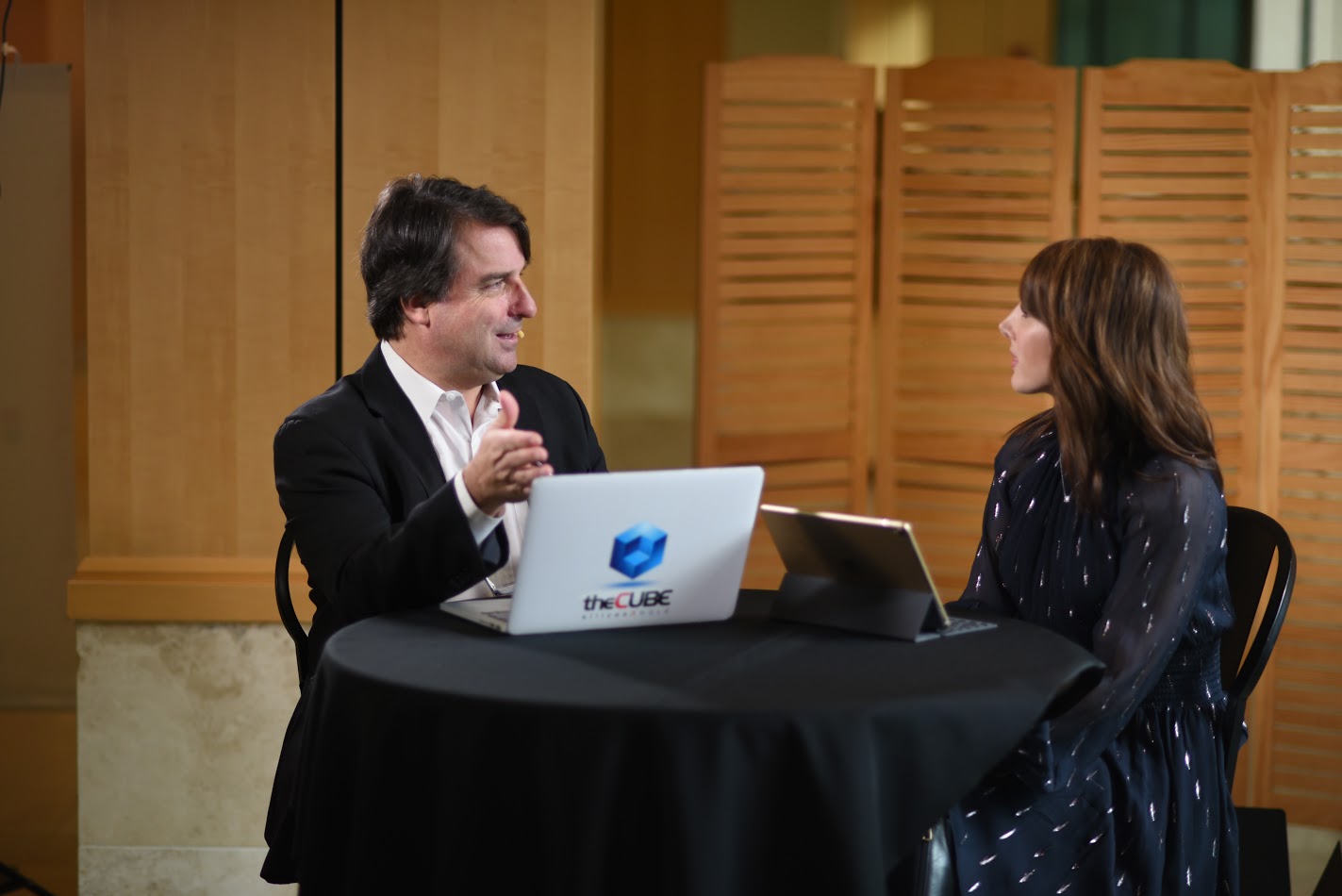
In a kickoff segment to SiliconANGLE Media’s live broadcast from WiDs with theCUBE, co-hosts John Furrier (@furrier) and Lisa Martin (@Luccazara) (pictured), discussed today’s keynote. (*Disclosure below.)
Furrier noted that according to Greene, there is a silver lining to the data scientist shortage — namely leeway for risk-taking. “She said, ‘Don’t worry about the little things like that, because if you’re in the data science field, if you get fired, you can get hired right away,'” Furrier explained.
Furrier went on to say that Greene, with her engineering background, encourages data scientists to go deep into the weeds. The deeper their knowledge, the more broadly they can spread out into horizontal solutions. Still, getting one data scientist to act like two or three is a tall order. No one denies the importance of the pipeline — from colleges, universities … and into the cloud.
There are three phases of computer science education, purported Furrier, noting the obvious as the brick-and-mortar college. Then there are online courses offered by Coursera Inc. and the like. Yet there is the emerging paradigm, which is based around social sharing.
“It’s not about school online; it’s about people who are smart together having hallway-like conversations where the acceleration of learning is done with peer groups and peer interaction,” he said, adding that Twitter, Facebook and theCUBE function as sharing spaces for learners.
Martin echoed the emphasis on social interaction for data scientists. “Being good at being able to analyze datasets is great, but you have to be able to communicate that. And this is a great network of very inspiring women and men as well, who are helping to really transform those hard skills,” she said.
Furrier related the way in which his own children go about learning new skills: “They get on YouTube, they learn a video and they apply it. They don’t go to school to learn how to do something. So there’s a lot of what I call conversion-rich content.”
He believes that AI and machine learning can also help foster more computer and data scientists in the future.
“This is where the machine learning, this AI augmentation, can really hit the sweet spot, because you can combine social interaction with learning and the application of whatever that is,” he concluded.
Watch the complete video interview below, and be sure to check out more of SiliconANGLE and theCUBE’s coverage of the Stanford Global Women in Data Science (WiDS) Conference. (*Disclosure: TheCUBE is a media partner at the conference. Neither Stanford nor other sponsors have editorial control over content on theCUBE or SiliconANGLE.)
Support our mission to keep content open and free by engaging with theCUBE community. Join theCUBE’s Alumni Trust Network, where technology leaders connect, share intelligence and create opportunities.
Founded by tech visionaries John Furrier and Dave Vellante, SiliconANGLE Media has built a dynamic ecosystem of industry-leading digital media brands that reach 15+ million elite tech professionals. Our new proprietary theCUBE AI Video Cloud is breaking ground in audience interaction, leveraging theCUBEai.com neural network to help technology companies make data-driven decisions and stay at the forefront of industry conversations.