
 NEWS
NEWS
NEWS
NEWS
NEWS

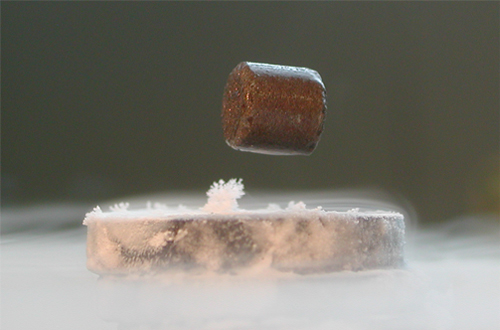
 Superconductivity was first discovered by Dutch physicist Heike Kamerlingh Onnes in 1911, intiated when metals, such as tin or lead, are cooled to a temperature within a few degrees of absolute zero -273.15 deg C, (-459.67 deg F. It does not naturally occur, however, since the lowest temperature ever recorded on Earth is only -85 degrees C. Superconductivity allows heat to flow without resistance, thus no heat is produced and no energy is lost.
The breakthrough in superconductivity enters the picture back in 1986 when IBM scientists, J. Georg Bednorz and K. Alex Muller, discovered the first high-temperature superconductor using a ceramic material. It created loud buzzes in the field of physics and one year later, they were awarded the Nobel Prize for Physics.
The concept of the discovery was that Bednorz and Muller managed to pull of superconductivity using an oxide material and at a temperature that’s 50 percent higher than what was then believed. Their discovery was contained in a paper they titled “Possible High Tc Superconductivity in the Ba – La – Cu – O System.” It’s pretty impressive, how the two IBM scientists managed to discover the material, even though they were already discarded. Since the discovery of superconductivity, scientists yearend for something that can superconduct beyond -253.15 degrees Celsius. Even with the discovery of new materials, it only improved by a few degrees. Cutting back the temperature by 50 percent is such a breakthrough.
“This discovery is quite recent – less than two years old – but it has already stimulated research and development throughout the world to an unprecedented extent,” Taken from the speech of Professor Gosta Ekspong of the Royal Swedish Academy of Sciences at the Nobel Prize award ceremony on 10 December 1987(3).
Superconductivity is currently being applied, but not yet in on a massive scale. Some current uses include the wire from American Superconductor. It’s also used on the Magnetic-resonance-imaging scanner (MRI), as well as on Magnetic Levitating Trains or (Maglev), currently being tested in Asia. It also plays a great part in maneuvering trillions of protons at the Large Hadron Collider at CERN.
Support our mission to keep content open and free by engaging with theCUBE community. Join theCUBE’s Alumni Trust Network, where technology leaders connect, share intelligence and create opportunities.
Founded by tech visionaries John Furrier and Dave Vellante, SiliconANGLE Media has built a dynamic ecosystem of industry-leading digital media brands that reach 15+ million elite tech professionals. Our new proprietary theCUBE AI Video Cloud is breaking ground in audience interaction, leveraging theCUBEai.com neural network to help technology companies make data-driven decisions and stay at the forefront of industry conversations.