














 Following the data collected by Apple and Google through their location tracking services, both companies are now facing legal actions and questioning against them. Just yesterday, both of them faced lawmakers at a Senate hearing focused on concerns about how companies are tracking and storing consumers’ location and other data through their smartphones. The lawmakers are concerned iPhone and Android smartphones are gathering and supplying subscriber location information to the companies, using some mobile applications.
Here are a few of the comments by Senate members:
“Who has our information and what are they doing with it?Our federal laws do far too little to protect this information.”
“The collection, use and storage of location and other sensitive personal information has serious implications regarding the privacy rights and personal safety of American consumers.”
The situation has lead to updating federal privacy laws that will help protect consumers and their personal information on internet. The Federal Trade Commission is especially active in the issue from the moment when complaints were posted again Apple as well as Google by users for using their personal information without prior consent.
 This has in fact became a big issue as it also lead Apple to update its iOS Patch 4.3.3 software, and addresses many of the issues people had with the iPhone tracking. This update will conduct several changes including reducing the size of the cache, no backing of cache up to iTunes, and deleting the cache entirely when Location Services is turned off.
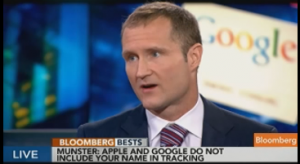
After the Senate hearing raised questions around Google and Apple’s allowance of location-based apps that enable drivers to circumvent DUI check points, both OS owners agreed to look into the matter. The pressure is intensifying from both ends, with government looking to regulate this emerging market, and consumers seeking a better understanding of the ways in which it effects their daily lives. Piper Jaffray analyst Eugene Munster calls the hearings a witch hunt, out to get Google and Apple as mobile platforms position their economies around consumer data.
For Google, the legal question over consumer privacy is a global one. The company also faced a raid on its South Korean offices due to the same reason. Here’s an excerpt from an article in eWEEK that triggered this raid by South Korean police,
Seoul’s Metropolitan Police Agency (SMPA) descended on Google’s office May 3 looking into allegations that Google’s AdMob platform was used to illegally collect private data about users’ geographical locations. Google purchased AdMob for $700 million last May to help developers insert ads within their applications.
Well, this clearly reflects that data privacy is becoming a big question mark in the mobile and technology segment, especially when we are becoming more and more wireless.
Support our mission to keep content open and free by engaging with theCUBE community. Join theCUBE’s Alumni Trust Network, where technology leaders connect, share intelligence and create opportunities.
Founded by tech visionaries John Furrier and Dave Vellante, SiliconANGLE Media has built a dynamic ecosystem of industry-leading digital media brands that reach 15+ million elite tech professionals. Our new proprietary theCUBE AI Video Cloud is breaking ground in audience interaction, leveraging theCUBEai.com neural network to help technology companies make data-driven decisions and stay at the forefront of industry conversations.