

2009
Douglas Jordan
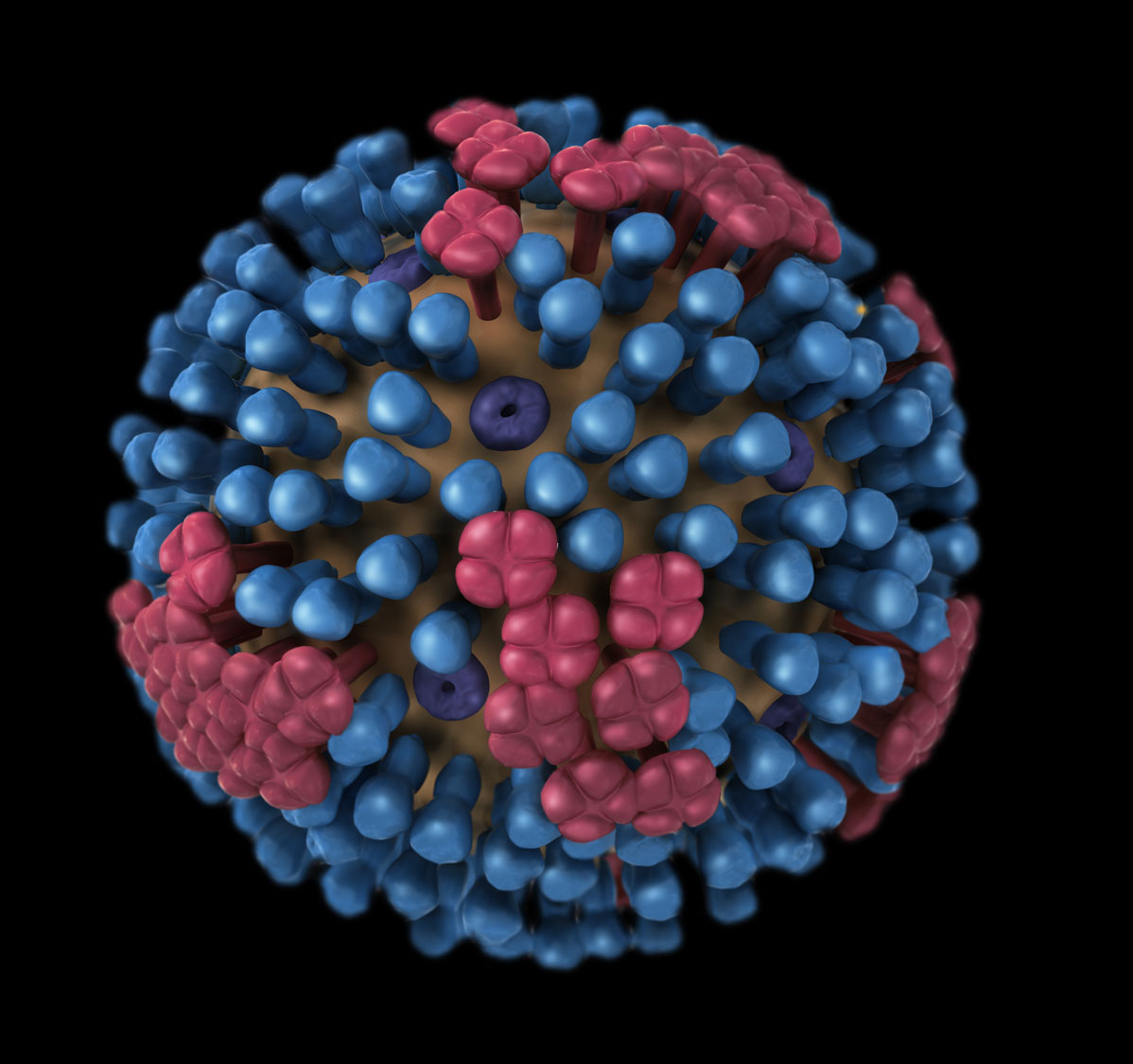
This picture provides a 3D graphical representation of a generic influenza virionâs ultrastructure, and is not specific to a seasonal, avian or 2009 H1N1 virus. See PHIL 11828 for a view of this virus in which a portion of the virionâs protein coat, or âcapsidâ, has been cut away, revealing its inner nucleic acid core proteins, as well as a key identifying the organismâs protein constituents.
There are three types of influenza viruses: A, B and C. Human influenza A and B viruses cause seasonal epidemics of disease almost every winter in the United States. The emergence of a new and very different influenza virus to infect people can cause an influenza pandemic. Influenza type C infections cause a mild respiratory illness and are not thought to cause epidemics.
Influenza A viruses are divided into subtypes based on two proteins on the surface of the virus: the hemagglutinin (H), and the neuraminidase (N). There are 16 different hemagglutinin subtypes and 9 different neuraminidase subtypes. Influenza A viruses can be further broken down into different strains. Current subtypes of influenza A viruses found in people are influenza A (H1N1) and influenza A (H3N2) viruses. In the spring of 2009, a new influenza A (H1N1) virus emerged to cause illness in people. This virus was very different from regular human influenza A (H1N1) viruses and the new virus has caused an influenza pandemic.
Influenza B viruses are not divided into subtypes. Influenza B viruses also can be further broken down into different strains.