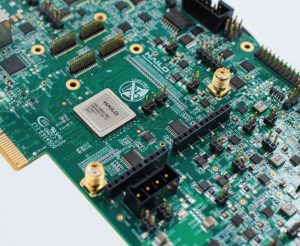



 Metal-as-a-Service (MAAS) isn’t just my new band name – it’s both the name of and concept behind Canonical’s new physical server provisioning tool, bringing “cloud-like semantics for on-demand capacity” and simplifying the deployment of big data and cloud services even as data center design reaches “hyperscale” density.
MAAS, available for testing in the forthcoming Ubuntu 12.04 Server LTS Beta 2, is designed to enable the mass deployment of infrastructure like Hadoop, Cloud Foundry, OpenStack, CloudStack and Load Balanced Web on physical server farms without the necessity of a virtualization layer.
Canonical tends to use phrases like “cloud-like” a lot when describing MAAS and its functionality, and indeed, it’s compatible with Juju, Ubuntu’s cloud deployment tool. MAAS handles infrastructure orchestration, Juju does the same for applications and workloads, and all of a sudden the Ubuntu ecosystem has a complete solution for the quick deployment of OpenStack infrastructure.
I won’t go too much further in-depth into MAAS and its technical capabilities here. But in a statement, Ubuntu founder and Canonical product and design leader Mark Shuttleworth describes MAAS as “a new way of thinking about physical infrastructure. Compute, storage and network are commodities on the metal just as they are commodities in the cloud. MAAS lets you treat farms of servers as a malleable resource for allocation to specific problems, and for re-allocation on a dynamic basis.”
To boil all of the above down to a single concept, MAAS is a way to abstract the compute layer and keep systems administrators from worrying about every single core on every single server on every single rack in every single data facility. And credit where credit’s due, Canonical’s idea that a cloud stack can have a layer of physical resources under what we’ve come to accept as the infrastructure layer is a new one that could have some interesting ramifications and speed up cloud deployments for a subset of users.
But there’s enough confusion in the cloud as it is, and MAAS doesn’t really seem to do anything that alleviates real problems facing cloud management and orchestration – CIOs have a wide range of cloud provisioning and automation tools available to them these days. And even if it solved a problem, it would only really apply to those bleeding-edge, “hyperscale” data centers mentioned above.
Always, always remember: It’s strategic business value, not hypotheticals, that should drive service adoption, whether you’re getting software, infrastructure or metal.
Support our mission to keep content open and free by engaging with theCUBE community. Join theCUBE’s Alumni Trust Network, where technology leaders connect, share intelligence and create opportunities.
Founded by tech visionaries John Furrier and Dave Vellante, SiliconANGLE Media has built a dynamic ecosystem of industry-leading digital media brands that reach 15+ million elite tech professionals. Our new proprietary theCUBE AI Video Cloud is breaking ground in audience interaction, leveraging theCUBEai.com neural network to help technology companies make data-driven decisions and stay at the forefront of industry conversations.