



 NEWS
NEWS
NEWS
NEWS
NEWS

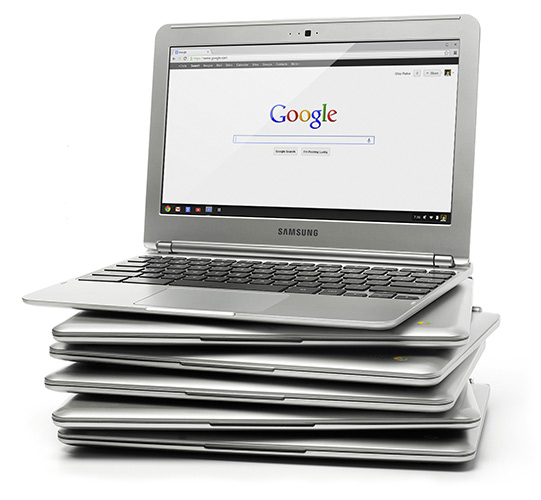
 Google is rumored to be working on its own branded notebook featuring a touchscreen, capping off a fresh wave of similar devices, according to reports.
The story was first reported by the China Times and later picked up by TechCrunch, and claims that the internet search firm has already placed a large order with Taiwan-based manufacturer Compal for the touchscreen netbooks. Previously, the orders have always been placed by vendors such as Acer and Samsung – hence, the rumors that Google is doing the ordering itself has led to speculation that the next batch of Chromebooks will be 100% produced by Google.
Such a move is not at all far-fetched, even though it would infuriate the likes of Samsung and Acer who have just come up with their own, non-touchscreen devices. Indeed, touchscreen Chromebooks would appear to be the logical next step since the emergence of Microsoft’s much vaunted Windows 8 devices, and given that company’s move into the hardware arena with the Surface tablet, who better to lead the way than Google itself?
In addition, the Chromium development site has previously posted mockups of tablet interfaces in the past, and last year, Google admitted that a tablet version of its Chrome operating system was under development (though no products were ever mentioned).
Another reason to think the story could well be true is that many of the Chrome OS web applications are already perfectly suited for touchscreens – one example being Tweetdeck.
Of course, we mustn’t forget that consumers have gone touchscreen crazy of late. Be it Apple iPads, the new Windows 8 tablets and laptop/tablet hybrids, or a whole assortment of Android-based tablets and devices, it seems that everyone is itching to get their hands on a touchscreen of some sort.
Indeed, Chromebooks are probably the closest competitor that tablets have at the moment. Forget the so-called ‘Phablets’; Google’s netbooks are the next best thing as far as casual computing goes. Introducing a touchscreen version would only serve to bolster their appeal.
The only problem I have with the story is that Google’s purported timeframe seems highly ambitious. China Times says that Google plans to release its first touchscreen Chromebooks before Christmas, which would seem highly unlikely even if the story is true. But in any case, it would seem that it’s only a matter of time before we do see a touchscreen enabled Chromebook hit the shops.
Support our mission to keep content open and free by engaging with theCUBE community. Join theCUBE’s Alumni Trust Network, where technology leaders connect, share intelligence and create opportunities.
Founded by tech visionaries John Furrier and Dave Vellante, SiliconANGLE Media has built a dynamic ecosystem of industry-leading digital media brands that reach 15+ million elite tech professionals. Our new proprietary theCUBE AI Video Cloud is breaking ground in audience interaction, leveraging theCUBEai.com neural network to help technology companies make data-driven decisions and stay at the forefront of industry conversations.