


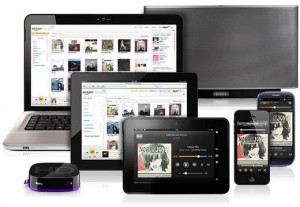
 Audiophiles now have a new way to get their music fix with the recent launch of Amazon MP3.
Amazon MP3 is an HTML5-based web store that caters specifically to Android and iOS devices such as the iPhone, iPad, Kindle Fire as well as Apple’s iPod. For iOS users the MP3 store isn’t an app, but does need an app to work. Here’s where the Amazon Cloud Player comes into play, so even iOS users can enjoy the music they’ve purchased.
As for Android, the MP3 store is actually available as an app that combines Amazon MP3 and Amazon Cloud. This lets you buy music on your device and stream music via the app. You can also enjoy listening to your favorite tunes even without cellular or WiFi connection via its offline feature. Plus, it can connect via Bluetooth so you can stream music to your car’s radio or home audio system.
But could Amazon compete with the likes of iTunes, Google Play, Rhapsody and Spotify? Let’s compare.
Amazon MP3: Kindle Fire, Android devices, iPad, iPhone, iPod Touch, Sonos, and Macs and PCs with Amazon Cloud Player.
iTunes: iPhones, iPads, iPod Touch, Macs, PCs, home entertainment system via Air Play
Google Play Music: Google Play Music app is available for Android devices running version 2.2 and above; Google Play web player available for iOS devices, browsers such as Chrome, Firefox, Safari and Internet Explorer 7 and above.
Spotify: Microsoft Windows, Mac OS X, Linux, Telia Digital-tv, iOS, Android, BlackBerry, Windows Mobile, Windows Phone, S60 (Symbian), webOS, Squeezebox, Boxee, Sonos, WD TV, Roku, MeeGo, and TiVo
Rhapsody: Android, iOS devices, BlackBerry, Verizon Wireless, Windows PCs, Control4, Sonos, TiVo,Onkyo, Pioneer, Denon, Vizio, Philips, and DRM compatible devices.
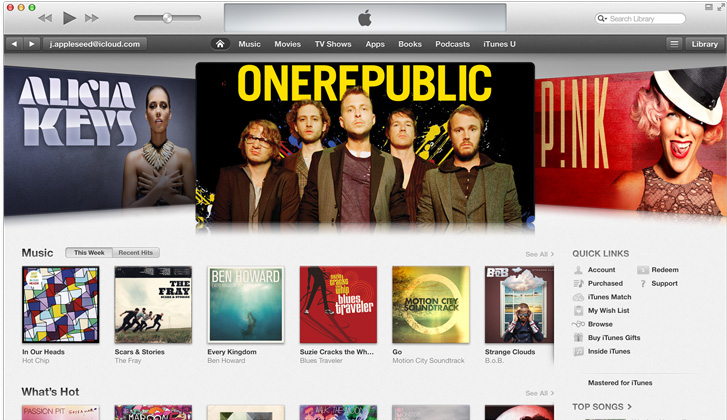
Amazon MP3: Over 20 million songs from various artists, genres and price. There are also free songs up for grabs.
iTunes: 26 million high quality DRM-free songs
Google Play Music: Millions of songs
Spotify: Approximately 20 million songs as of December 2012
Rhapsody: Over 16 million songs
Amazon MP3: With Amazon Downloader the songs downloaded from Amazon MP# are automatically added to iTunes or Windows Media player.
iTunes: Anything bought or downloaded is stored in iTunes
Google Play Music: Organize songs via Google Play Music Manager which is compatible with Mac OS X 10.5 and above, Windows XP and above, and Linux (Debian/Ubuntu/Fedora/openSUSE).
Spotify: Catalog, Playlists
Rhapsody: Rhapsody Music Software

Amazon MP3: Before purchasing songs, downloaders are given 30-second samples by clicking the Play button besides the songs so one never has to worry about purchasing the wrong song.
iTunes: Because of cloud, anything purchased on iTunes becomes available with other Apple gadgets provided they are connected to the cloud. The Genius feature helps people discover new things by giving recommendations based on previous downloads or purchases.
Google Play Music: With cloud, listening to music can be enjoyed in PCs, Android smartphones or tablets, anytime, anywhere
Spotify: Listen using any device because of cloud, it also has radio feature that delivers great songs previously undiscovered by you. Spotify becomes your personal DJ.
Rhapsody: Also has a radio that lets you choose what songs or albums you want to listen to. It can also recommend what to listen to based on your previous choices.
Amazon MP3: Yes
iTunes: Yes
Google Play Music: Yes
Spotify: Yes
Rhapsody: Yes

Amazon MP3: US only
iTunes: 119 countries
Google Play Music: US, France, Germany, Italy, Spain, and the UK
Spotify: Australia, Austria, Belgium, Denmark, Finland, France, Germany, Republic of Ireland, the Netherlands, New Zealand, Norway,Spain, Sweden, Switzerland, the United Kingdom, and the United States. The premium service is also offered in Estonia, Greece, Italy, Poland, Portugal, and Romania, but never the free version.
Rhapsody: US only
Because iTunes is available in more countries and offers more songs than the other services, it is in many ways ahead of its competitors. Recent features for song match, as well as growing support from other music services like Spotify for iTunes songs, has made iTunes a much more open system than it used to be. If you use a number of iOS devices, especially in the home, then iTunes is a simple way to manage your media across devices.
However, the same can be said for Android users, who now have smartphones, tablets and home entertainment devices to support the inclusive Google Music offering. Amazon, of course, supports both iOS and Android.
Moving away from the device/service combos from Apple and Google, accessibility gets a little trickier. Spotify and Rhapsody don’t have their own smartphones, tablets or set top boxes to ensure easy accessibility in such a broad sense. While they have apps for all major platforms and a growing number of partnerships for accessibility beyond handheld devices, native Apple or Android is the way to go.
Support our mission to keep content open and free by engaging with theCUBE community. Join theCUBE’s Alumni Trust Network, where technology leaders connect, share intelligence and create opportunities.
Founded by tech visionaries John Furrier and Dave Vellante, SiliconANGLE Media has built a dynamic ecosystem of industry-leading digital media brands that reach 15+ million elite tech professionals. Our new proprietary theCUBE AI Video Cloud is breaking ground in audience interaction, leveraging theCUBEai.com neural network to help technology companies make data-driven decisions and stay at the forefront of industry conversations.