






After a month of UK police threatening torrent sites, today the British government announced the creation of a brand new unit dedicated to cracking down on intellectual property offenses.
The Intellectual Property Crime Unit will be funded with 2.5 million in public funds and is set to launch in September. Their work will be targeted at those said to be illegally profiteering on the back of content creators’ work. Earlier this month the City of London police began sending out letters to file-sharing sites warning their operators to shut down or face legal consequences.
Intellectual Property Minister, Lord Younger announced the creation of a new police unit dedicated to fighting copyright infringement in the digital domain. The ‘Intellectual Property Crime Unit’ is scheduled to launch in September.
British Airways will introduce reusable luggage tags with Kindle-like e-paper displays next year.
After checking in online, passengers will be able to use the British Airways app to create a luggage tag for their journey. At launch, the tags are unlikely to use near field communication to deliver information, and British Airways wants to make them compatible with all smartphones.
Tags were developed in tandem with consultancy firm Designworks, but the design hasn’t been finalized yet. After the test period, the company will finalize the design — likely switching the NFC tech for something more standard like Bluetooth — before launching the final version of their bag tags in 2014.
Other companies, such as Airbus, are experimenting with high-tech baggage trackers with built-in GPS, but Johnson says British Airways didn’t see the benefit of such tags, given that GPS has to be switched off in transit. Instead, British Airways is focused on reducing the time spent at airports, estimating that passengers will be able to drop their bags off in just 35 seconds using the new tags.
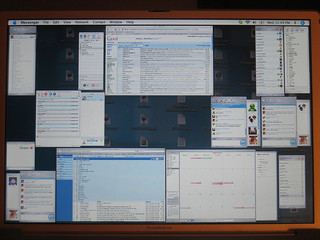 Facebook is looking to improve their messaging services with a new feature codenamed “Host Chat”. Reminiscent of the old AOL chat rooms, it aims to allow Facebook users to branch out and meet friends of friends.
The obvious benefit for Facebook is that it supports their strategy of driving high amounts of time-on-site.
Users might browse the news feed or friends’ profiles for longer and see more ads to fill time while they gab in chat rooms.
The leak comes as Facebook is fighting a war for messaging. It’s own cross-platform chat competes with text messaging, Apple’s iMessage, and now Google’s new unified messaging system Hangouts. The stakes are high as messaging generates huge amounts of engagement, direct monetization opportunities through ads and sticker sales, and valuable data on who someone’s closest friends are.
There’s always a possibility that the feature gets scrapped, so know the details might change if Facebook decides if it is worthy of a wide release.
A small American company has plans to take frequent snapshots of the Earth from space, and they’re going to do it using their own fleet of satellites.
Launching cameras into space is typically very expensive, and usually something only nations can afford, but the California-based Planet Labs wants to accomplish the feat without breaking the bank, using some creative methods.
With any space flight, the heavier the load, the more it will cost to get off the ground, and in order to solve this problem, Planet Labs had to make each of their 28 rockets as small as possible. Each rocket, called a Dove, will carry just enough fuel to carry their payload to their destination high above Earth.
The Doves from test launches were able to deliver three cameras at once, but the firm hasn’t quite announced how many they plan to launch with each rocket. The cameras themselves were also engineered to be efficient as well. They come in an affordable ten centimeter wide, lego-like block called a CubeSat, that is capable of both shooting and transmitting medium resolution photos.
If everything goes off without a hitch, a fleet of CubeSats could be orbiting the Earth as soon as December. Once operational, the pictures will be used for everything from updating online maps and traffic jams, to monitoring the ice caps and deforestation.
 Google has announced a new Google Maps pilot program that lets third-party organizations borrow the Google Street View Trekker to contribute imagery back to the Maps service. Groups outside of Google will soon be able to use the Street View Trekker, a wearable backpack outfitted with an Android device and a 15-lens camera system on top to capture images of the world around them.
The Trekker is portable, allowing users to gather images while maneuvering through tight and narrow spaces, including locations only accessible by foot.
Each lens is angled in a different direction so the images can be stitched together into a complete 360-degree panoramic view. As a user walks while wearing the device, photos are taken roughly every 2.5 seconds.
Google has a lot to gain from the program with end results that could produce a more comprehensive and useful Google Maps service. A company spokesperson says “This program is part of our ongoing effort to make it possible for anyone to contribute to Google Maps.”
If you’re a tourism board, non-profit, government agency, university, research organization or other entity interested in borrowing a Street View Trekker to capture and share imagery Google is accepting applications today with plans to open up the pilot program to other organizations in the coming months.
For this and more news, be sure to catch us every weekday morning on NewsDesk with Kristin Feledy.
Support our mission to keep content open and free by engaging with theCUBE community. Join theCUBE’s Alumni Trust Network, where technology leaders connect, share intelligence and create opportunities.
Founded by tech visionaries John Furrier and Dave Vellante, SiliconANGLE Media has built a dynamic ecosystem of industry-leading digital media brands that reach 15+ million elite tech professionals. Our new proprietary theCUBE AI Video Cloud is breaking ground in audience interaction, leveraging theCUBEai.com neural network to help technology companies make data-driven decisions and stay at the forefront of industry conversations.