

 NEWS
NEWS
NEWS
NEWS
NEWS

 The Royal Swedish Academy of Sciences announced the names of three researchers chosen to receive the Nobel Prize in Chemistry in 2013. Michael Levitt, a British-US citizen of Stanford University; US-Austrian Martin Karplus of Strasbourg University; and US-Israeli Arieh Warshel of the University of Southern California will share the prize.
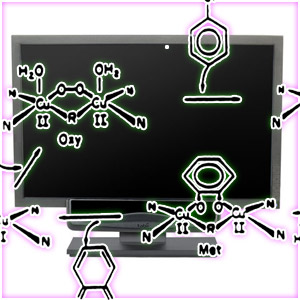
The three scientists developed research on multiscale models for complex chemical systems. The three work in American universities. In the research, Karplus, Levitt and Warshel have laid the foundation for the programs used today all over the world to understand and predict chemical processes. Models made to the computer in chemistry have become a key resource for research, especially in recent years.
The Royal Swedish Academy of Sciences, awarding the prize of $1.25 million to the trio said their work had effectively taken chemistry into cyberspace.
“The Nobel Laureates in Chemistry 2013 have made it possible to map the mysterious ways of chemistry by using computers,” said the Royal Swedish Academy of Sciences. “Today the computer is just as important a tool for chemists as the test tube. Detailed knowledge of chemical processes makes it possible to optimise catalysts, drugs and solar cells.”
Research Project
Chemical reactions occur at very high speed, in milliseconds electrons moving from one atom to another, and classical chemistry has always struggled in keeping track under similar reactions. Map each individual step of a chemical process proved to be an impossible task for a long time to realize. Thanks to the studies of Karplus, Levitt and Warshel, it was possible to create models and computer programs that allow you to see in slow motion chemical reactions, while also providing their evolution.
The three researchers were able to take advantage of the enterprise at the same time very complicated classical physics (space and time considered as absolute entities) and the more complex quantum physics. Before drawing up their system, chemists had to choose which one to use for their studies and experiments.
Using the techniques, researchers can compute visualize chemical events, such as emission control catalysts with or photosynthesis in green leaves. Martin Karplus, Michael Levitt and Arieh Warshels works were groundbreaking because they managed to get Newton’s classical laws of physics to work with the fundamentally different quantum physics.
The classical physics strength was that the calculations were simple and could be used to model very large molecules. The limitation was that they were unable to simulate chemical reactions. Anyone who wanted to follow a course of events, instead got to use quantum physics. However, these calculations required a tremendous computing power and could therefore only be used on small molecules.
“In short, what we developed is a way for computers to take the structure of a protein and then to eventually understand how exactly it does what it does,” Warshel told.
The resulting insights of the researchers are helping to develop new medicines; for example, their work is being used to determine how a drug could interact with a protein in the body to treat disease, said Marinda Li Wu, president of the American Chemical Society.
The approach has applications in industrial processes, such as materials science, the design of solar cells or catalysts used in cars. It can also be used to mimic the process of photosynthesis by which green leaves absorb sunlight and produce oxygen.
Support our mission to keep content open and free by engaging with theCUBE community. Join theCUBE’s Alumni Trust Network, where technology leaders connect, share intelligence and create opportunities.
Founded by tech visionaries John Furrier and Dave Vellante, SiliconANGLE Media has built a dynamic ecosystem of industry-leading digital media brands that reach 15+ million elite tech professionals. Our new proprietary theCUBE AI Video Cloud is breaking ground in audience interaction, leveraging theCUBEai.com neural network to help technology companies make data-driven decisions and stay at the forefront of industry conversations.