








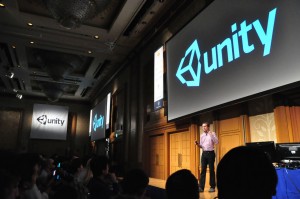
 If you want to make games for Nintendo Co Ltd’s handheld systems, now might be a good time to start learning your way around the Unity Engine. At its Unite 2015 Tokyo event in Japan, Unity Technologies announced that its popular video game engine will soon support development for the confusingly-named New Nintendo 3DS and New Nintendo 3DS XL.
“The new Unity platform support allows Nintendo’s in-house developers and 3rd party developers to use Unity’s powerful engine and development environment to create games and apps for the New Nintendo 3DS and New Nintendo 3DS XL,” Unity Technologies said in a statement. “It also opens the door for tens of thousands of studios and over 4 million developers using the Unity development platform to bring exciting new mobile and social games, introduce their amazing existing games to a new audience, and create new games using innovative functions of the New Nintendo 3DS and New Nintendo 3DS XL systems.”
The new handhelds’ “innovative functions” include additional controls, such as shoulder buttons and a c-stick, as well as built in Amiibo support, face-tracking 3D, improved processing power and data sharing, and more.
Unity is a very popular game engine, especially in the indie development community. Unity provides a relatively simple path for cross-platform development, meaning game makers can release their titles on multiple systems at once with little additional work. Unity Technologies partnered with Nintendo in 2012 to bring Unity development to the Wii U console, and Nintendo told IGN that over 50 Wii U games used Unity.
In March 2015, Unity Technologies released version 5.0 of its engine for free, with access to premium features like analytics tools and performance reporting available for a monthly subscription fee. Around the same time, Epic Games announced that Unreal Engine 4 would also be free to use, with a couple of key differences.
There is no pay gate for Unreal Engine 4’s features, with even the engine’s source code included in the free access, but Epic takes a cut of developers’ revenue on games made with UE4. Meanwhile, Unity’s premium features require a monthly fee, but Unity Technologies does not take royalties from either its subscribers or its free users.
Support our mission to keep content open and free by engaging with theCUBE community. Join theCUBE’s Alumni Trust Network, where technology leaders connect, share intelligence and create opportunities.
Founded by tech visionaries John Furrier and Dave Vellante, SiliconANGLE Media has built a dynamic ecosystem of industry-leading digital media brands that reach 15+ million elite tech professionals. Our new proprietary theCUBE AI Video Cloud is breaking ground in audience interaction, leveraging theCUBEai.com neural network to help technology companies make data-driven decisions and stay at the forefront of industry conversations.