



 NEWS
NEWS
NEWS
NEWS
NEWS

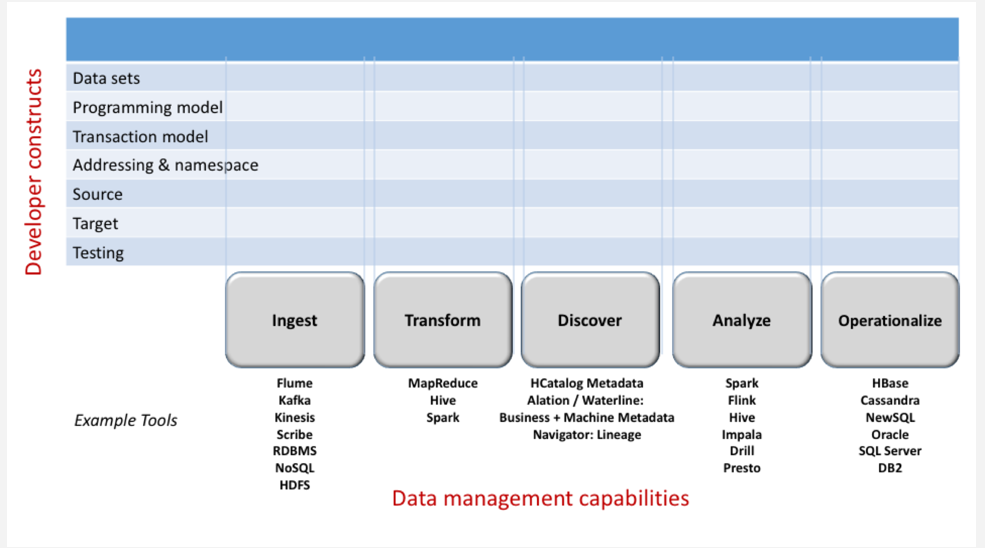
Big data technologies differ from traditional RDBMS in one basic and very important respect, writes Wikibon Big Data & Analytics Analyst George Gilbert. RDBMS technology was vertically integrated, with each vendor developing its core technology and adding to it over time. Big data technology, in contrast, has never been controlled in that manner. The people and companies that developed big data components deconstructed the DBMS in order to address specific use cases, such as capturing huge amounts of semi-and unstructured data. Few of these companies were software vendors, so they released the technologies into the open source community, triggering an explosion of development or other tools, each with its own management, ways of addressing the data and access controls (see graphic above).
Today, the proliferation big data tools and use cases is expanding more rapidly than even the experts can track. The big data platform companies provide some help by pre-packaging sets of tools into a unified stack, but the individual components still often require different skill sets. These are nothing like the fully unified stacks of the RDBMS systems.
Managing this situation is difficult at best for corporate IT groups, who often lack the new skill sets that each of these tools requires for use. Big data has great potential value, but realizing that potential starts with selecting the right set of tools to meet the needs of the specific use case and then learning to use that particular subset of the entire big data ecosystem.
Wikibon Premium users can read the full analysis here. To learn about subscribing, look here.
Support our mission to keep content open and free by engaging with theCUBE community. Join theCUBE’s Alumni Trust Network, where technology leaders connect, share intelligence and create opportunities.
Founded by tech visionaries John Furrier and Dave Vellante, SiliconANGLE Media has built a dynamic ecosystem of industry-leading digital media brands that reach 15+ million elite tech professionals. Our new proprietary theCUBE AI Video Cloud is breaking ground in audience interaction, leveraging theCUBEai.com neural network to help technology companies make data-driven decisions and stay at the forefront of industry conversations.