

It’s well and good to say that a container can simplify the running of an application — singular. But what about when we’re talking about hundreds or thousands of applications? Many enterprises have so many applications to manage now that even with containers, it can be difficult to hold the reins. Some say an orchestration layer can help, but the catch is that the business may have to give up some control.
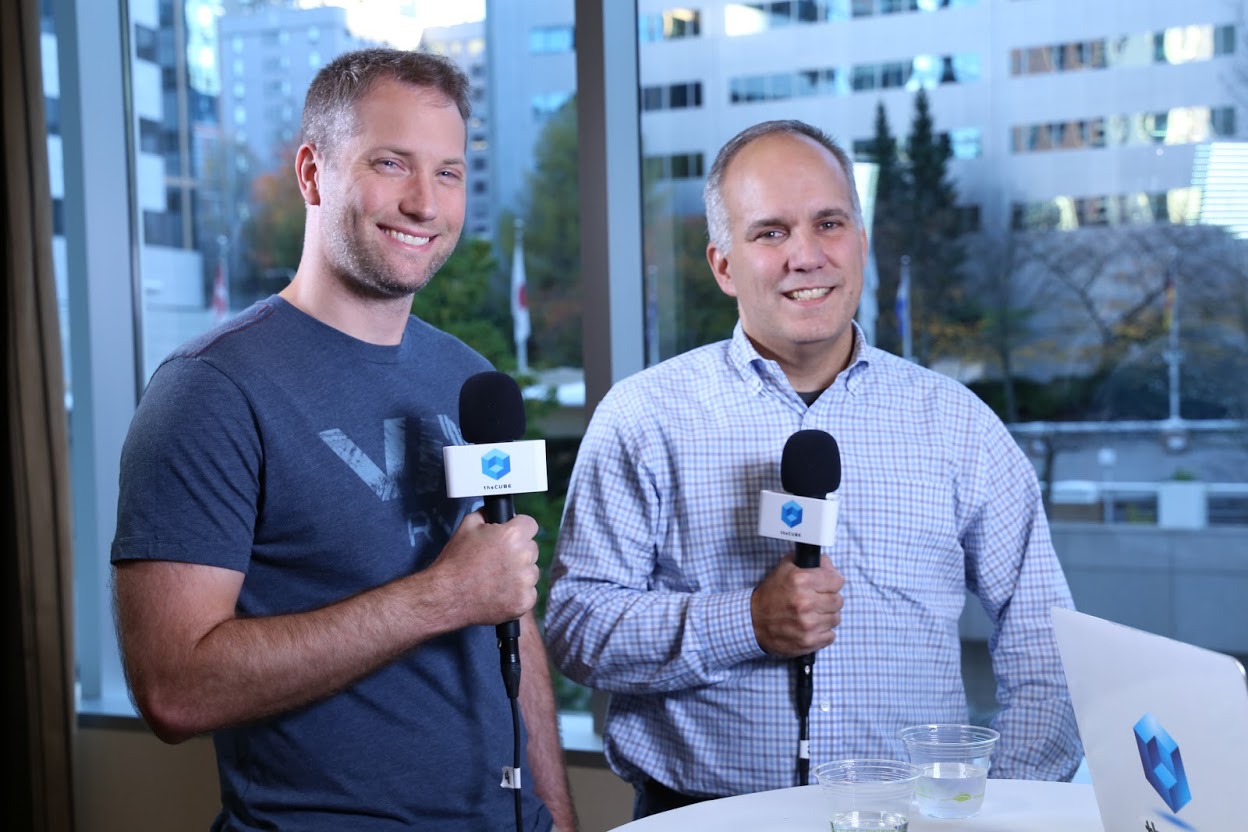
Joe Fernandes, senior director of Product Management at Red Hat Inc., and Clayton Coleman, lead engineer, OpenShift, at Red Hat, spoke to John Furrier (@furrier),host of theCUBE, from the SiliconANGLE Media team, during KubeCon 2016.
Fernandes said that they were there for the Docker container project from the beginning; they came to the same conclusion as some others involved: “You needed an orchestration layer to manage those containers across all these servers, across the different clouds,” he said.
Fernandes said that Red Hat OpenShift offers the orchestration layer enterprises need while still allowing them control at a deeper layer.
“They can go down to directly access the Kube [Kubernetes] API, the Docker API — so we eliminate that sort of block in terms of making the platform too opinionated where customers can’t do what they want to do with it,” he explained.
Coleman said that getting developers out of “plumbing” gives value back to customers. Developers’ tasks, he said, are “to build applications, to serve customers, to make revenue — those challenges benefit from abstractions.”
Ferrnandes added, “Unlike virtualization or infrastructure as a service, containers is really about the application — how do you abstract and enable application development versus how do you just abstract the hardware?”
*Disclosure: The Linux Foundation and other companies sponsor some KubeCon 2016 segments on SiliconANGLE Media’s theCUBE. Neither The Linux Foundation nor other sponsors have editorial control over content on theCUBE or SiliconANGLE.
Watch the complete video interview below, and be sure to check out more of SiliconANGLE and theCUBE’s coverage of KubeCon 2016.
Support our mission to keep content open and free by engaging with theCUBE community. Join theCUBE’s Alumni Trust Network, where technology leaders connect, share intelligence and create opportunities.
Founded by tech visionaries John Furrier and Dave Vellante, SiliconANGLE Media has built a dynamic ecosystem of industry-leading digital media brands that reach 15+ million elite tech professionals. Our new proprietary theCUBE AI Video Cloud is breaking ground in audience interaction, leveraging theCUBEai.com neural network to help technology companies make data-driven decisions and stay at the forefront of industry conversations.