

Machine learning has led to breakthroughs in fields such as speech recognition and language translation, but mere mortals and even coders often still aren’t sure how to use it and what to do with it.
Now Google Inc., one of the leaders in machine learning, which enables computers to learn without explicit programming, has opened up a new project to show how it works.
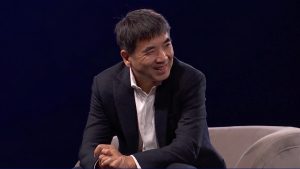
Welcome to Google’s machine learning playground: A.I. Experiments. Google, which introduced the playground at a machine learning day in San Francisco today, calls it a “showcase for simple experiments that let anyone play with this technology in hands-on ways, through pictures, drawings, language, music, and more.” Alex Chen, creative director at the Google Creative Lab, an internal agency that handles most of Google’s product marketing, said during a presentation today that “given the steep learning curve for this stuff, we’re introducing A.I. Experiments to make it feel less intimidating” to coders who want to tinker with AI.
The project provides eight examples of AI in action, four of which are interactive right now. The other examples are only explained, but people can also download the code to see how the magic happened. The fun, though, is just fooling around with what might best be described as games.
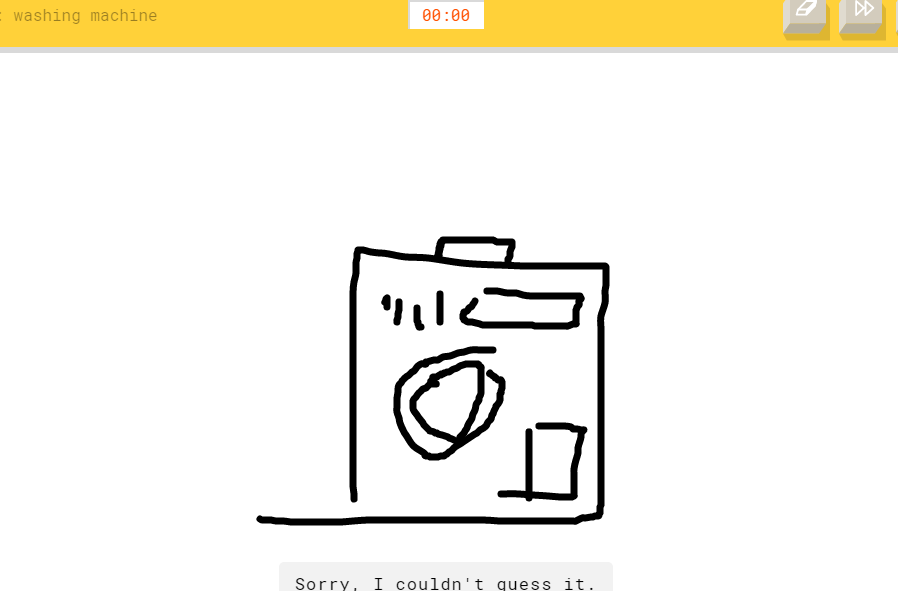
One of these includes an AI which will ask you to start drawing something while all the time trying to guess what that sketch is. The game, called Quick, Draw, basically digital Pictionary you can play by yourself, uses machine learning to figure out your badly drawn items. Just use your mouse to create the sketch. I played with this for quite some time, and either the machine needed to learn a lot more or the sketches were hardly mirror images.
The AI was often way off, understandably when “cactus” looked more “male genitals,” but it performed well with words such as “streetlight” and “sweater.”
Another experiment, Giorgio Cam, could be big with kids, but didn’t do much for me. You use your phone to take a photo and Google’s AI tries to recognize the image in the photo. It will also produce some lyrics relating to that image. Infinite Drum Machine allows you to take everyday sounds and using AI it will put together a coherent beat. And Bird Sounds could be useful for budding bird lovers who can’t yet put a face to much other than a “cock-a-doodle-do,” though for now it’s little more than a graph that arranges similar bird sounds near each other.
Perhaps the most useful could be the Thing Translator. You can take a photo of something and ask to hear what it is called in another language.
If you don’t like any of them, you can submit your own experiment.
Support our mission to keep content open and free by engaging with theCUBE community. Join theCUBE’s Alumni Trust Network, where technology leaders connect, share intelligence and create opportunities.
Founded by tech visionaries John Furrier and Dave Vellante, SiliconANGLE Media has built a dynamic ecosystem of industry-leading digital media brands that reach 15+ million elite tech professionals. Our new proprietary theCUBE AI Video Cloud is breaking ground in audience interaction, leveraging theCUBEai.com neural network to help technology companies make data-driven decisions and stay at the forefront of industry conversations.