




 APPS
APPS
APPS
APPS
APPS

Despite racking up numerous Fortune 500 clients since launching in 2014, Slack Technologies Inc. believes that its service could still do better among the corporate crowd. The startup is putting this theory to the test today by launching a new tier of the messaging platform that is specifically designed with multinational firms in mind.
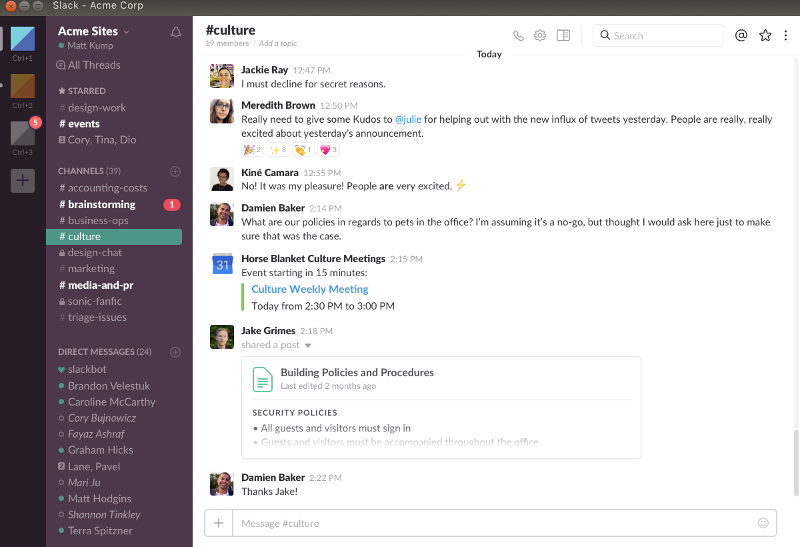
Enterprise Grid, as the offering is called, tackles the challenges that have until now made it difficult to use Slack on a large scale. The main obstacle was that communications are centralized in a single chat room, which is convenient for individual teams but starts becoming cumbersome when other units need to be brought into the discussion. It’s possible to add only so many channels before the interface becomes overcrowded, which has required each department to create its own isolated instance.
The result, Slack Vice President of Product April Underwood told TechCrunch, was that chief information officers who adopted the service to simplify collaboration ended up seeing units keep using emails to communicate with one another. Enterprise Grid provides a solution by enabling companies to bring all of their chat rooms under a unified management layer. This in turn allows information technology personnel to ensure that everyone is on the same frequency.
On the front-end, the platform’s centralized architecture enables the creation of cross-departmental chat channels and lets users directly contact peers from other teams. Moreover, Slack is reportedly planning to add a universal search function that will make it possible to look for messages across an entire organization. It’s set to be joined by analytics capabilities that are likely intended to help managers find ways of improving productivity.
On the back-end, meanwhile, Enterprise Grid provides the ability to centrally enforce security policies across departmental chat rooms. Administrators can require workers to use two-factor authentication with the help of a service such as Okta or Auth0, back up communications to a third-party archiving system and have messages deleted after a certain period of time.
The latter additions should be particularly appealing to companies in regulated industries with strict rules for handling customer records. To clear a path into these segments, Slack has made its service compliant with the HIPAA medical record regulation and the financial sector’s comparable FINRA guidelines.
The plan appears to be bearing fruit. Slack claims that Enterprise Grid has already been adopted by banking giant Capital One Financial Corp. as well as PayPal Holdings, IBM Corp. and “dozens” of other companies.
Support our mission to keep content open and free by engaging with theCUBE community. Join theCUBE’s Alumni Trust Network, where technology leaders connect, share intelligence and create opportunities.
Founded by tech visionaries John Furrier and Dave Vellante, SiliconANGLE Media has built a dynamic ecosystem of industry-leading digital media brands that reach 15+ million elite tech professionals. Our new proprietary theCUBE AI Video Cloud is breaking ground in audience interaction, leveraging theCUBEai.com neural network to help technology companies make data-driven decisions and stay at the forefront of industry conversations.