 INFRA
INFRA
INFRA
INFRA







INFRA

It’s all about containers at Red Hat Summit 2017, taking place this week in Boston, Massachusetts. Red Hat Inc. has spent a great deal of time talking to customers about the importance and value of containers for DevOps and adding microservices. Organizations at the event are talking about developing mission-critical applications for new applications and microservices, as well as existing legacy applications on Red Hat’s open-source container application platform OpenShift.
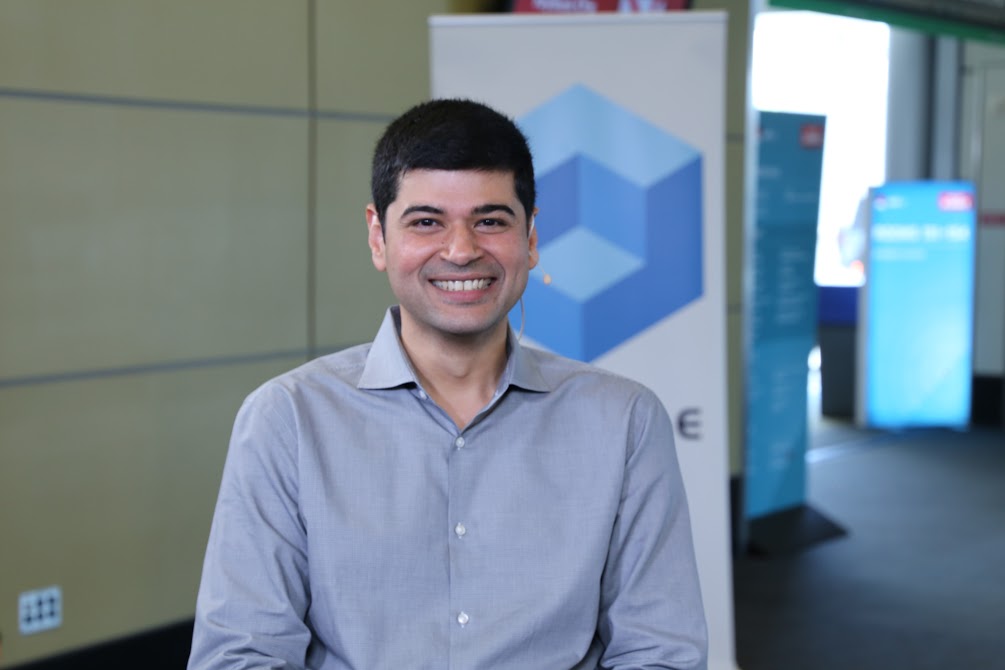
“We’ve spent far more time trying to ensure that people understand that containers are real, in terms of the adoption level we are seeing. They are being run in production and at scale and across a variety of industries,” said Ashesh Badani (pictured), vice president and general manager of the Cloud Business Unit at Red Hat.
Rebecca Knight (@knightrm) and Stu Miniman (@stu), co-hosts of theCUBE, SiliconANGLE Media’s mobile live streaming studio, examined the role of containers in the enterprise with Badani during the event to uncover where customers find value in choosing a platform. (*Disclosure below.)
When customers make strategic choices about containers, they are looking for scale and factoring integrating existing development tools and the type of infrastructure to build, according to Badani. It’s still a hybrid world, so customers want OpenShift in this kind of cloud environment, whether it’s on Amazon, Google or Azure, he added.
This week Red Hat announced that Amazon Web Service Inc. services would integrate with the OpenShift platform. Badani stated that the cloud giant would be adding new services, which will increase value for OpenShift customers and AWS, which will benefit from new clients. He mentioned that the open-source platform has customers running in the AWS cloud and on-premises, and Red Hat will provide them the ability to consume services from Amazon as if they were running it on Amazon.
“By being able to have a relationship with Amazon and have almost a native experience of those services through OpenShift, regardless of the underlying infrastructure OpenShift runs, is a very powerful value proposition for our customers,” Badani stated.
OpenShift customers are demanding simplicity, flexibility and ease of development; however, many are confused in an industry that changes day-to-day and they want to know where it will stop.
“I don’t think it stops. The question is: ‘At what point of time do you jump in and embrace the change?’ DevOps is about continuous change; embrace it, evolve, fail fast and get up and have the organization be in a sort of continuous learning [cycle],” Badani concluded.
Watch the complete video interview below, and be sure to check out more of SiliconANGLE’s and theCUBE’s independent editorial coverage of Red Hat Summit 2017. (* Disclosure: Red Hat Inc. sponsors some Red Hat Summit segments on SiliconANGLE Media’s theCUBE. Neither Red Hat nor other sponsors have editorial control over content on theCUBE or SiliconANGLE.)
Support our mission to keep content open and free by engaging with theCUBE community. Join theCUBE’s Alumni Trust Network, where technology leaders connect, share intelligence and create opportunities.
Founded by tech visionaries John Furrier and Dave Vellante, SiliconANGLE Media has built a dynamic ecosystem of industry-leading digital media brands that reach 15+ million elite tech professionals. Our new proprietary theCUBE AI Video Cloud is breaking ground in audience interaction, leveraging theCUBEai.com neural network to help technology companies make data-driven decisions and stay at the forefront of industry conversations.