 AI
AI
AI
AI






AI

Process mining software company Celonis SE said today it has snapped up the Massachusetts Institute of Technology-linked decision intelligence startup Ikigai Labs Inc., planning to use it to power a new “context model” developed by Celonis that’s designed to function as a real-time digital twin of its customers’ business operations.
Celonis says enterprises are facing a critical challenge in their efforts to successfully deploy artificial intelligence agents at scale. There’s an urgent need to ensure AI doesn’t have any “blind spots” in their understanding of how businesses operate, as any deficiencies would almost certainly undermine their potential.
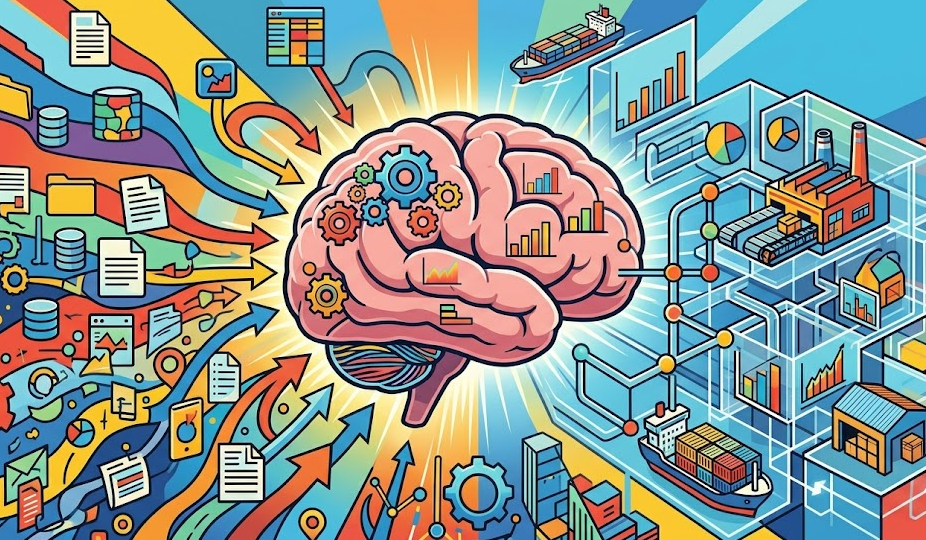
The new Context Model is meant to eliminate these blind spots by providing a “dynamic, real-time digital twin of operations,” effectively translating all business processes into a language that AI can understand. It’s built on process data and business knowledge derived from every application, system, device and interaction across an organization, and is designed to provide the “operational clarity” AI needs to reason correctly, the company added.
Celonis Chief Product Officer Dan Brown described the problem in more detail in a blog post, explaining that AI models don’t have any idea of how specific invoices are related to an organization’s shipping records, because the data is usually proprietary, kept private and fragmented across multiple systems and apps. “But without that deterministic foundation – the ground truth of your operational reality – no AI agent can be trusted to make reliable real-time decisions and take actions that effectively drive your business outcomes,” he said.
Founded in 2019, Ikigai is led by its Chief Executive and Chief Technology Officer Devavrat Shah, who also holds a professorial chair of AI at MIT. Specializing in processing and analysing structured data, it sells a generative AI platform based on “large graphical models” that help AI systems to understand the nuances of proprietary enterprise data.
Celonis President Carsten Thoma told Computer Weekly in an interview that his company has been working on developing the Context Model for over two years. The goal was to create a “holistic business graph” that serves as the brains of a company’s AI operations. “We knew from our own insights that application landscapes are super-fragmented, that data lakes are competing, that AI is on the horizon, but that some of the AI is very hard to deploy in an efficient manner,” he said.
Celonis considered what enterprises might need to overcome these problems and realized that it already had a key piece of the puzzle with its flagship process intelligence platform, Thoma said. But some of the pieces were missing from its stack – notably the large graphical model that it’s acquiring now with Ikigai. “AI is only as good as the context it has,” Thoma said. “Every organization needs to give its enterprise AI a holistic, living model of how a business truly operates. This has never been possible until now.”
With Ikigai, Celonis can offer its customers a “control tower and platform for operational context and intelligence,” Thoma said. “It is important to understand we are domain agnostic and system agnostic from the operational context model [point of view] because other vendors talk about specific domains.”
Shah, who is now the chief scientist for enterprise AI at Celonis, said AI needs to be able to understand the peculiarities of enterprise data. “Ikigai has proven foundation model technology for structured data at scale; Celonis has encoded enterprise processes,” he explained. “Together, we provide the fullest operational representation of business reality.”
To emphasize its point, Celonis rolled out a number of early adopters of the Context Model, including the healthcare services firm Cardinal Health LLC. That company’s CTO, Jerome Revish, explained that the industry simply cannot accept AI systems that are “only right most of the time.”
“Precision is paramount. We use AI as a tool to accelerate operational insight – process context enables agents to support our team in acting with precision,” he added. “Defining guardrails then gives us the confidence to act. Ultimately, context is what makes the difference between AI that’s impressive in a demo and AI that’s trusted and safe to deploy.”
Celonis customers will benefit from the platform’s zero-copy integrations with public clouds like Amazon Web Services, as well as data lakes such as Databricks and Microsoft Fabric. It also offers connectors to Oracle Corp.’s database and other enterprise platforms. In addition, it features integrations with agentic development platforms including Amazon Bedrock, Anthropic PBC’s Claude Cowork, IBM Watsonx Orchestrate, Microsoft Copilot and Agent365 and Oracle Cloud Infrastructure Enterprise AI.
Celonis isn’t alone in the business process mining and process intelligence field. Its main rivals include SAP SE’s Signavio, IBM Process Mining and UiPath Inc. But Ashu Garg of Foundation Capital, an early investor in Ikigai, said that Celonis now has a big advantage over those rivals.
“This is our context graph thesis made real. Celonis has built the deepest operational understanding of how enterprises actually function – as a live, process-native model of how work happens, why it breaks and what should happen next,” he said. “With the acquisition of Ikigai Labs, they’ve added the decision intelligence and simulation capabilities that make it truly effective.”
Support our mission to keep content open and free by engaging with theCUBE community. Join theCUBE’s Alumni Trust Network, where technology leaders connect, share intelligence and create opportunities.
Founded by tech visionaries John Furrier and Dave Vellante, SiliconANGLE Media has built a dynamic ecosystem of industry-leading digital media brands that reach 15+ million elite tech professionals. Our new proprietary theCUBE AI Video Cloud is breaking ground in audience interaction, leveraging theCUBEai.com neural network to help technology companies make data-driven decisions and stay at the forefront of industry conversations.