


 CLOUD
CLOUD
CLOUD
CLOUD

CLOUD

When companies talk about mission-critical applications, they’re talking about what makes their money. Businesses want to take their mission-critical applications to the cloud, but can they trust their most important assets to the performance and security of “out there?”
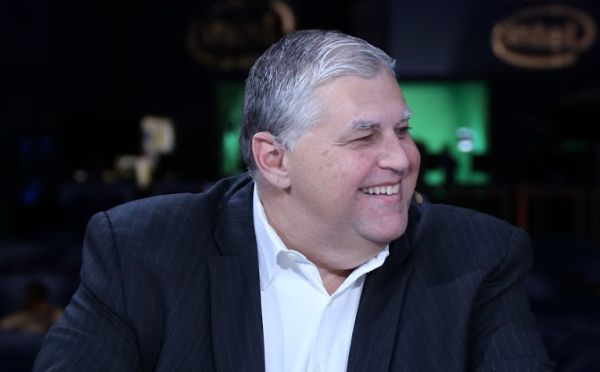
This uncertainty has created a market for companies that can bring that performance and trust. “When you’re an entrepreneur, you build what you know and sell it to whom you know,” said Rodney Rogers (pictured), chairman and chief executive officer of Virtustream Inc.
Rogers had stopped by theCUBE, SiliconANGLE’s mobile live-stream studio, during Dell EMC World in Las Vegas, Nevada, to talk about solving the problem of running mission-critical applications in the cloud. (* Disclosure below.)
During his visit, Rogers answered questions from theCUBE’s cohost Rebecca Knight (@knightrm) and guest host Keith Townsend (@CTOAdvisor) concerning bringing mission-critical to the cloud, their secret sauce, and Virtustream’s business focus.
The core of Virtustream’s success lies in building software to run a cloud infrastructure as a service. This service focuses on solving the problem with applications that demand a lot of Input/Output resources as they scale up. Public clouds are not, in general, well-suited to this demand, Rogers explained. The company’s goal was to create a system that can run at public cloud economics while controlling throughput to service the application environment.
This allows businesses to put their critical applications in production in a cloud with the assurance that the programs won’t fight for resources. “We are confident in our IP and our first-mover position for this type of marketplace,” Rogers said.
The secret behind discovering this market is very basic. Virtustream looked for a market demand to service. They saw an emerging space in cloud automation around supporting legacy and mission-critical applications. With other companies focused on application development, this space represented a market where Virtustream could compete without fear.
Virtustream’s IP is based around two levels. The first is infrastructure automation, which is agnostic to applications. The second layer is application control, which is very specific to a given application. These two layers mean their software can run any application, but especially suits those with a high I/O challenge, Rogers said. From this foundation, the company has since built along horizontal lines, expanding to a number of other applications.
Watch the complete video interview below, and be sure to check out more of SiliconANGLE’s and theCUBE’s independent editorial coverage of Dell EMC World 2017. (* Disclosure: TheCUBE is a paid media partner for Dell EMC World. Neither Dell nor other sponsors have editorial influence on content on theCUBE or SiliconANGLE.)
Support our mission to keep content open and free by engaging with theCUBE community. Join theCUBE’s Alumni Trust Network, where technology leaders connect, share intelligence and create opportunities.
Founded by tech visionaries John Furrier and Dave Vellante, SiliconANGLE Media has built a dynamic ecosystem of industry-leading digital media brands that reach 15+ million elite tech professionals. Our new proprietary theCUBE AI Video Cloud is breaking ground in audience interaction, leveraging theCUBEai.com neural network to help technology companies make data-driven decisions and stay at the forefront of industry conversations.