

 BIG DATA
BIG DATA
BIG DATA
BIG DATA

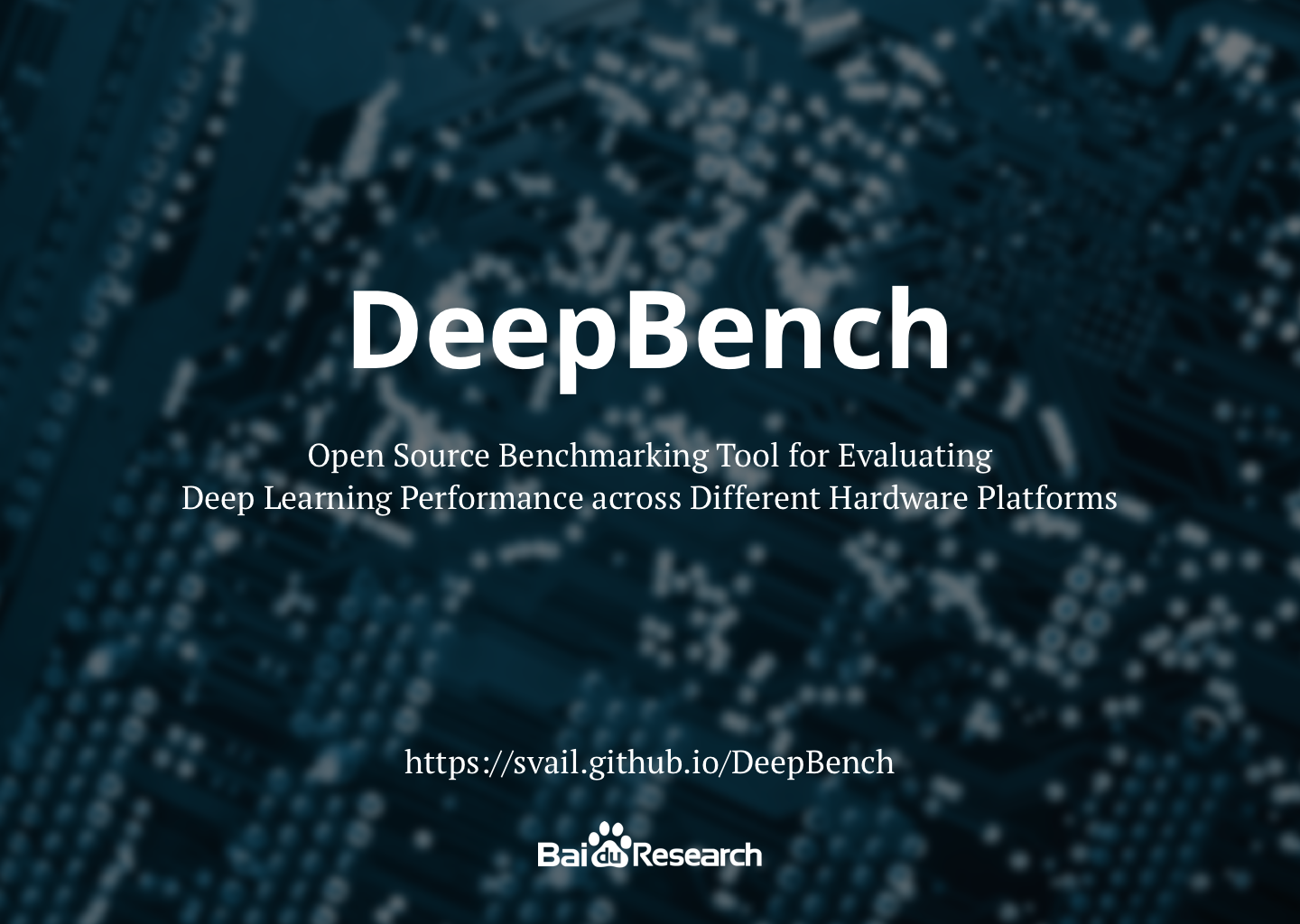
Less than a year after debuting a way to measure how well various processor chips can train computers to learn using neural network models, Baidu Inc. today updated the benchmark tool to gauge how well the chips actually run those models for jobs such as speech and image recognition.
Deep Bench, which the Chinese Internet giant released last September, has become one of the standard ways for both chip makers and companies using machine learning to measure how well the particular mathematical operations used in deep learning run on various chips, such as graphics processing units.
Deep learning neural networks are roughly modeled on aspects of how the brain works, so systems can learn without being specifically programmed. The software is responsible for breakthroughs in speech and image recognition, robotics and self-driving cars in recent years.
Baidu had hinted that it would supplement the benchmark to measure “inference,” deep learning researchers’ name for using a trained model to make predictions on a new data set. But it’s more difficult and time-consuming to do than measuring training, so it took awhile to develop.
“There are many applications that have been enabled by deep learning and each of them have their unique performance characteristics and requirements,” Baidu researchers wrote in a blog post on the new features of the open-source benchmark. Also, there are several computing platforms on which the models can be deployed, such as Nvidia Corp.’s and Advanced Micro Devices Inc.’s GPUs, Intel Corp.’s central processing units as well as ARM processors used in Apple Inc.’s iPhone and the miniature computer Raspberry Pi.
Baidu isn’t hiding why it’s pushing Deep Bench forward. “We’re using Deep Bench to communicate our needs to the hardware community,” said Sharan Narang, systems researcher at Baidu’s Silicon Valley AI Lab.
That way, Baidu doesn’t have to go to the lengths of Google Inc., which felt compelled to create its own deep learning-focused chip, the Tensor Processing Unit. “Strategically it’s very important to the company,” Narang said.
Baidu has been aggressive about building expertise in machine learning, despite the departure in March of Chief Scientist Andrew Ng, a leading machine learning researcher. In March, it also opened a second AI research center in Silicon Valley and in May it bought a computer vision startup called xPerception Technology Inc. that was started by two former employees at hot augmented-reality Magic Leap Inc.
Support our mission to keep content open and free by engaging with theCUBE community. Join theCUBE’s Alumni Trust Network, where technology leaders connect, share intelligence and create opportunities.
Founded by tech visionaries John Furrier and Dave Vellante, SiliconANGLE Media has built a dynamic ecosystem of industry-leading digital media brands that reach 15+ million elite tech professionals. Our new proprietary theCUBE AI Video Cloud is breaking ground in audience interaction, leveraging theCUBEai.com neural network to help technology companies make data-driven decisions and stay at the forefront of industry conversations.