

 EMERGING TECH
EMERGING TECH
EMERGING TECH
EMERGING TECH

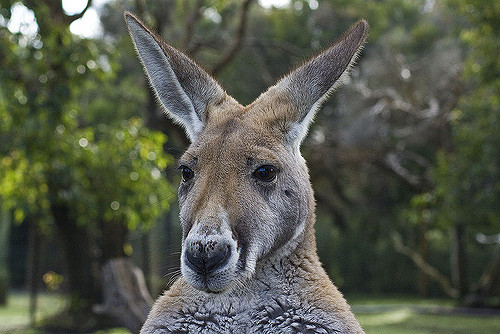
The Volvo Car Group’s animal detection system in its self-driving car can handle most animals, but the hopping around of Australia’s most famous marsupial is giving the system fits.
Volvo said the technology, the “Large Animal Detection system,” had no problems with other animals such as deer or caribou. But after testing in Australia, Volvo found the strange movements of the kangaroo posed a unique problem.
Australia’s technical manager for Volvo, David Pickett told ABC News Australia, “We’ve noticed with the kangaroo being in mid-flight … when it’s in the air it actually looks like it’s further away, then it lands and it looks closer.”
Pickett said the detection system had first been tested in Sweden on moose, but then the ante was upped when the team were sent to Tidbinbilla Nature Reserve in Canberra to pit the system against kangaroos.
The problem of the detecting them is critical, given that statistics suggest that almost 90 percent of road accidents in Australia involve kangaroos. In 2016 Australian Associated Motor Insurers Ltd. said it had analyzed data from around 19,000 collisions with animals, and nine out of 10 were roo-related. “Wildlife is unpredictable and often drivers will not get any warning before an animal appears in front of them,” a spokesperson for AAMI said.
Kevin McCann, managing director of Volvo Australia, told The Guardian that by 2020 the problem of detecting the kangaroo’s movements would be solved. “A driverless car does not yet exist, and developing technology to recognize kangaroos is part of that development,” he said.
Most companies working on self-driving tech give a dateline of 2020-21 when the cars will be ready for mass transportation. However, there are many bumps to overcome.
One such bump is minimizing harm when the car must make a what could be called a moral decision regarding what it should hit. Accidents have occurred, including one involving an Uber autonomous vehicle in March this year in Arizona, as well as accidents in 2016 involving a Google Lexus and also a devastating collision involving a Tesla car driving on autopilot.
Support our mission to keep content open and free by engaging with theCUBE community. Join theCUBE’s Alumni Trust Network, where technology leaders connect, share intelligence and create opportunities.
Founded by tech visionaries John Furrier and Dave Vellante, SiliconANGLE Media has built a dynamic ecosystem of industry-leading digital media brands that reach 15+ million elite tech professionals. Our new proprietary theCUBE AI Video Cloud is breaking ground in audience interaction, leveraging theCUBEai.com neural network to help technology companies make data-driven decisions and stay at the forefront of industry conversations.