



 EMERGING TECH
EMERGING TECH
EMERGING TECH
EMERGING TECH

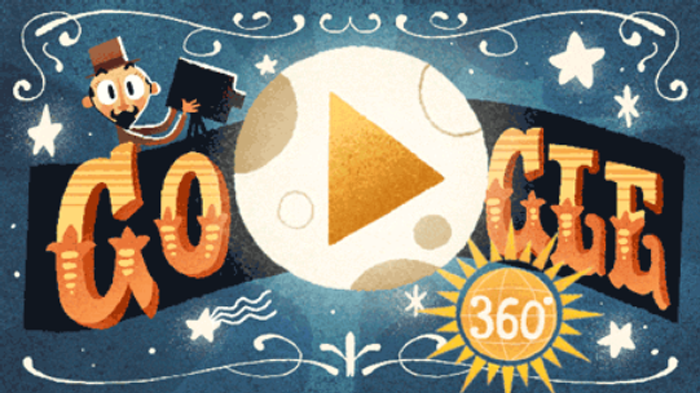
Google Inc. today released its first virtual reality Google Doodle with an adorable short 360-degree video featuring scenes inspired by French film director and illusionist Georges Méliès.
Google Doodles are a regular feature that the search giant releases to celebrate holidays, birthdays, big events and people on its otherwise spare main search page. Since they began a decade ago, the Doodles have been fixed images and sometimes animations.
In recent years, Doodles have explored various modes of animated media and even interactivity – and now they’ve moved into VR. Today’s Doodle is a 360-degree VR video that created in collaboration with the Google Spotlight Stories, Google Arts & Culture and Cinémathèque Française teams.
Visitors to Google’s front page can view the video from their 2-D browser without any special equipment and use their mouse to rotate the scene. Those with VR head-mounted displays at their disposal can load it up using their own VR software and immerse themselves in the 3-D short animated film as well.
As a work of art, it celebrates the life and works of French film director Georges Méliès and today is the release date of what is considered one of his greatest masterpieces, a film called “À la conquête du pôle (The Conquest of the Pole, 1912).”
Viewers of the Doodle may recognize the iconic image of an unhappy moon with a human face who has had a rocket embedded in one eye from Méliès’ film “Le Voyage dans la Lune (A Trip to the Moon, 1902).” In this film, Méliès predicted humanity’s eventual landing on the moon — though humanity would find no spear-wielding aliens there, thankfully for the crew of the Apollo 11 mission.
This may be the first time that Google has produced a VR Doodle for its front page, but it is only a tiny slice of Google’s foray into VR. Google is already well known for its work to bring low-cost and consumer-friendly VR hardware to market with its release of Google Cardboard, a head-mounted VR display for smartphones that made entirely out of cardboard and cheap Fresnel lenses. The company also announced and launched its own standalone VR headset, the Google Daydream View.
The company has also worked to enhance the VR software market for developers and artists. With Tilt Brush, 3-D artists can use a VR canvas to create freeform animations and artwork in all three dimensions. Google’s VR developer portal offers tools for Android and iOS devices as well as game engines like Unity and Unreal for programmers to build applications in VR.
This Google Doodle is an example of Google’s work in VR content. With Google Earth VR the company provided a way for people to explore 3-D spaces from around the world with a headset, and with Google Expeditions, students can visit faraway places on virtual field trips.
At the end of April, Google also announced a partnership with NBCUniversal to produce VR content for TV shows. The two companies will be working together to produce extra content airing alongside core NBC programming that would notably expand the sparse market for VR content.
This Google Doodle is probably a good indication of the talent and capabilities available at Google to produce content. Looking at Google’s past trends with Doodles – increasing the number of animated and interactive releases over the years – this will most likely be the first of many to come to its front page.
Support our mission to keep content open and free by engaging with theCUBE community. Join theCUBE’s Alumni Trust Network, where technology leaders connect, share intelligence and create opportunities.
Founded by tech visionaries John Furrier and Dave Vellante, SiliconANGLE Media has built a dynamic ecosystem of industry-leading digital media brands that reach 15+ million elite tech professionals. Our new proprietary theCUBE AI Video Cloud is breaking ground in audience interaction, leveraging theCUBEai.com neural network to help technology companies make data-driven decisions and stay at the forefront of industry conversations.