 INFRA
INFRA
INFRA
INFRA









INFRA

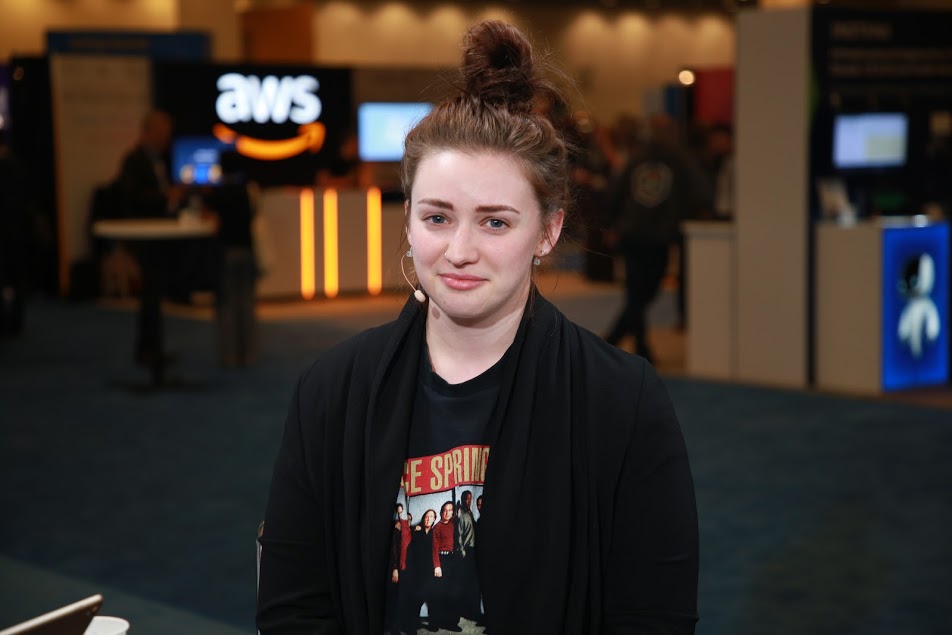
Many companies are making the change to containers’ virtualized software management technology, and Amazon Web Services Inc. is helping its customers take the leap. Portability, efficiency and speed of these containers were the reasons Abby Fuller (pictured), senior technical evangelist at AWS, said she switched to containers as a customer before she ever worked for AWS.
Businesses beginning the transition to container technology, however, face a few challenges, according to Fuller. Organizational changes occur at the same time as infrastructure changes, which means companies may have to “break down” a bit.
“A lot of people are decomposing; they’re going with microservices at the same time as they’re going with containers,” Fuller said. “And I think wrapping your head around that kind of decomposition is the first big challenge.”
Fuller spoke with Lisa Martin (@LuccaZara), co-host of theCUBE, SiliconANGLE Media’s mobile livestreaming studio, and guest host John Troyer (@jtroyer), chief reckoner at TechReckoning, during the DockerCon event in San Francisco. They discussed AWS’ methods for helping customers with container technology, as well as Fuller’s role in the industry and her advice for newcomers to technological fields. (* Disclosure below.)
Running a managed container on AWS first requires picking an orchestration tool, Elastic Container Service (ECS) or Elastic Container Service for Kubernetes (EKS). If ECS is chosen, there are more choices offered, according to Fuller.
The containers can either be run in Elastic Compute Cloud (EC2), which manages, clusters and hosts, or in Fargate mode, where things are managed at the container level and there is no cluster management. Furthermore, Fargate is more of an underlying technology that enables complete management at the container level, not at the cluster level, Fuller explained.
Finally, Fuller offered some advice to newcomers entering into technological careers: “Don’t be afraid to have mentors and communities and peers that can help you, because it’s the best way to participate, whether you have a [computer science] job or not,” she said. “There are so many nontraditional paths to tech, and I think every one is equally valuable.”
Watch the complete video interview below, and be sure to check out more of SiliconANGLE’s and theCUBE’s coverage of the DockerCon event. (* Disclosure: Amazon Web Services Inc. sponsored this segment of theCUBE. Neither AWS nor other sponsors have editorial control over content on theCUBE or SiliconANGLE.)
Support our mission to keep content open and free by engaging with theCUBE community. Join theCUBE’s Alumni Trust Network, where technology leaders connect, share intelligence and create opportunities.
Founded by tech visionaries John Furrier and Dave Vellante, SiliconANGLE Media has built a dynamic ecosystem of industry-leading digital media brands that reach 15+ million elite tech professionals. Our new proprietary theCUBE AI Video Cloud is breaking ground in audience interaction, leveraging theCUBEai.com neural network to help technology companies make data-driven decisions and stay at the forefront of industry conversations.