









 EMERGING TECH
EMERGING TECH
EMERGING TECH
EMERGING TECH

Amazon.com Inc. has been stocking up on delivery vans, cargo plans and internally developed courier robots to support its increasingly ambitious growth plans. Now, the online retail giant is adding satellites to its shopping list.
Regulatory filings uncovered today by GeekWire reveal that Amazon is working on a project to put a constellation of internet satellites into low Earth ex orbit. The company said in a statement following the report that its objective is to bring connectivity to “tens of millions of people” worldwide who currently lack web access.
The initiative, which Amazon has codenamed Project Kuiper, seeks to launch a total of 3,236 satellites. About a quarter will fly at an altitude of 367 miles, 1,296 satellites will be released 379 miles above the planet and the remaining 1,156 will deploy in a 391-mile orbit.
Operating at low Earth orbit has several major advantages. For starters, it should enable Amazon’s internet satellites to provide lower latency than traditional communications constellations, which fly at the higher geosynchronous orbit and therefor take longer to beam packets down to the surface. The shorter distances also mean it will take fewer resources to carry the satellites up to their perches.
Amazon’s constellation will cover most of the globe when the project is complete. According to the company, its satellites will beam down internet access to a swath of the planet that is home to 95 percent of the world’s population.
Amazon has set up a subsidiary called Kuiper Systems LLC in Washington D.C. to oversee the operation. In addition, the company is reportedly hiring specialists at its Seattle headquarters to support development. But there’s currently no information about the project’s budget or time table, possibly because it’s still in an early stage.
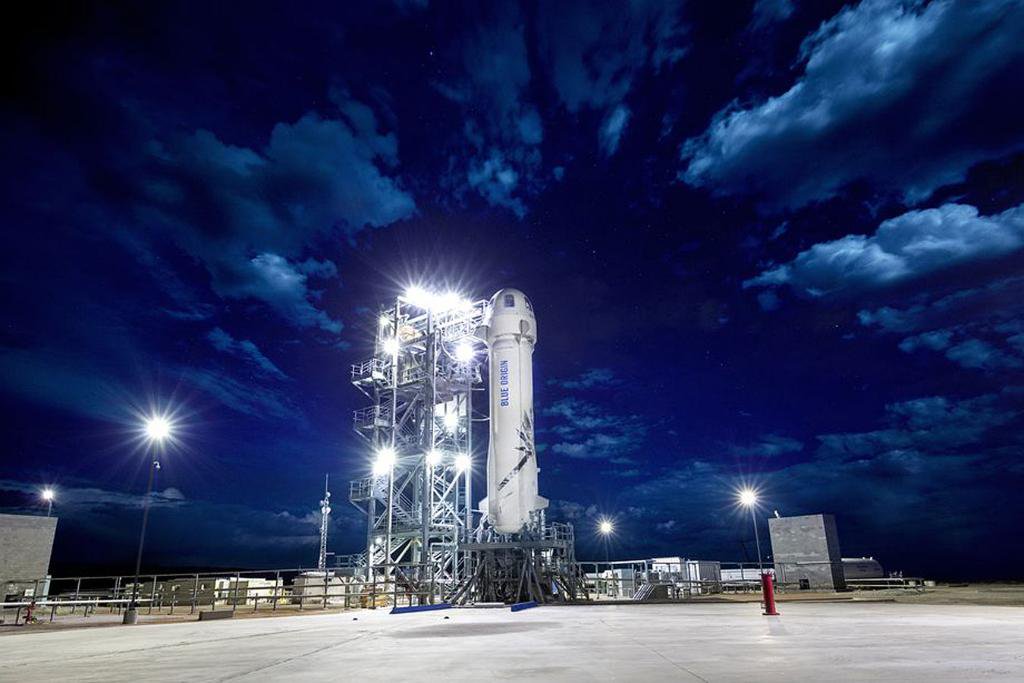
One big question that does seem to have an answer, though, is the matter of how the satellites will be launched. Blue Origin LLC, Amazon Chief Executive Jeff Bezos’ private space venture, is developing a reusable rocket that will be capable of carrying cargo to orbit.
Amazon’s satellites will have plenty of company. Elon Musk’s SpaceX Corp., SoftBank Group Corp.-backed OneWeb Ltd. and Telesat Inc. are all working on their own low-altitude broadband networks that will similarly include thousands of individual satellites. Telesat recently teamed up with Alphabet Inc. to license technology from the search giant’s Loon subsidiary for its project.
Support our mission to keep content open and free by engaging with theCUBE community. Join theCUBE’s Alumni Trust Network, where technology leaders connect, share intelligence and create opportunities.
Founded by tech visionaries John Furrier and Dave Vellante, SiliconANGLE Media has built a dynamic ecosystem of industry-leading digital media brands that reach 15+ million elite tech professionals. Our new proprietary theCUBE AI Video Cloud is breaking ground in audience interaction, leveraging theCUBEai.com neural network to help technology companies make data-driven decisions and stay at the forefront of industry conversations.