


 INFRA
INFRA
INFRA
INFRA

INFRA

We raise our daughters to be fearless, to stand strong and proud. We tell them they are equal to men and encourage them to become engineers, scientists, programmers and mathematicians. We tell them to put themselves and their careers first.
Yet children are an unspoken side track in achieving this mantra, a vague possibility for later. And biology is powerful. While girls are encouraged to be independent, the number of older women choosing to have babies is on the rise. A 2016 study by the Pew Research Center found that 86% of women ages 40 to 44 are mothers, compared with 80% in 2006.
Unfortunately for these mothers, while school and social culture are preparing women to go out and conquer the world, the gender imbalance of workplace culture has stagnated. The image of an ideal employee is still someone who is able to stay late with no notice, work weekends, and take off on business trips around the globe at any time. Juggling carpool schedules or frantic calls to babysitters are seen as signs of a less committed worker.
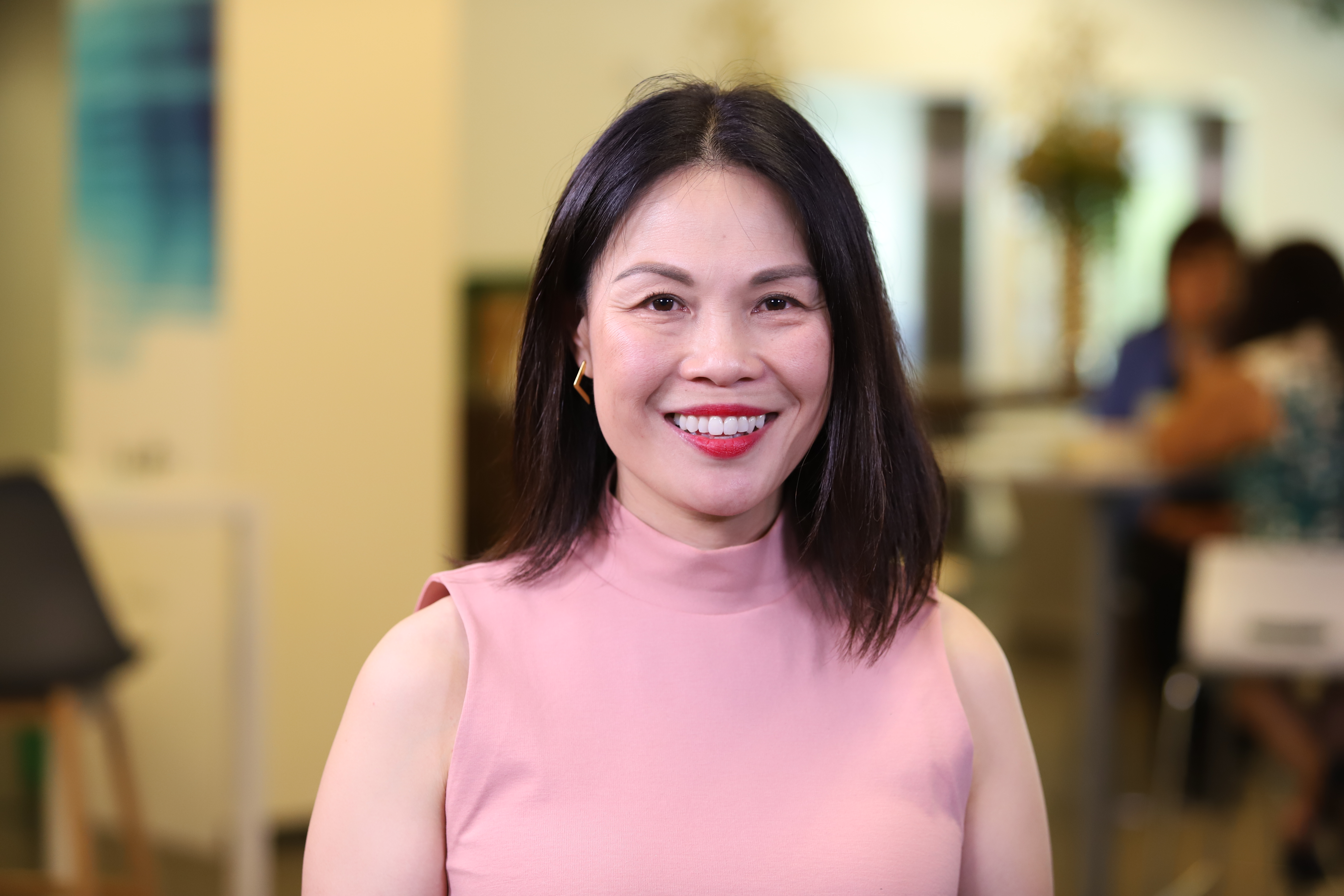
“The workplace hasn’t really evolved. It was built for an era that has gone,” said Tina Lee (pictured), founder and chief executive officer of MotherCoders, a nonprofit organization that helps women with kids on-ramp to careers in tech so they can thrive in a digital economy. “The reality is that now more than half of families are dual-income earners.”
Lee spoke with Lisa Martin (@LisaMartinTV), host of theCUBE, SiliconANGLE Media’s mobile livestreaming studio, during the Women Transforming Technology Conference in Palo Alto, California. They discussed Lee’s life journey and the struggles faced by working mothers and mothers wanting to return to the workforce (see the full interview with transcript here). (* Disclosure below.)
This week, the CUBE spotlights Tina Lee in our Women in Tech feature.
Challenge is a way of life for Lee. Her parents divorced when she was young, leaving her to be raised by her grandmother in San Francisco’s Chinatown. The instability of her childhood taught her that she could overcome adversity and gave her the strength to takes risks in her adult life.
Lee was the first generation of her family to go to college, but she didn’t stop with a bachelor’s degree. Instead, she continued on to get a master’s in business administration from Mill’s College and a master’s in education, learning, design and technology from Stanford University’s Graduate School of Education.
Working as a tech recruiter gave Lee her first glimpse into gender inequality. In an online interview for the Sheleader show, she recounts how she was representing a working mother who insisted on asking for a lower salary than a male candidate up for the same position. At the time she didn’t understand why, but when she became a mom, she got it.
“She was discounting because she knew she couldn’t be the ideal worker. She knew that she had a hard stop every day at a certain time,” she explained. “It’s not because she didn’t feel that she deserved more; she was discounting because she wanted the flexibility.”
The inequality in responsibility for domestic tasks was first quantified by Marilyn Waring in her 1988 book “If Women Counted: A New Feminist Economics.” Over 30 years later, the uncounted workload borne by women is still a contentious subject. Melinda Gates recently published a blog post titled “The massive, hidden cost of women’s unpaid work” in which she talks about the need to recognize and share the burden of caring for a family.
“There’s this unspoken understanding that if you’re a mom and you talk about your kids [at work], you kind of shoot yourself in the foot,” Lee told theCUBE. She pointed out how this makes women think twice about speaking out on other matters.
“If you are constantly in a position where you have to hide yourself, you can just imagine how that would impact the way your creativity would come out or ideas you would share,” she said.
Like many women, Lee didn’t consider having a family during her twenties and early-thirties. Career came first, and she just assumed that she would never have children. Then, her proverbial clock started ticking.
Lee’s first daughter was born when she was 37. Although accomplished and confident in the workplace, Lee found she was completely unprepared for the transition to motherhood. Determined to keep her tech skills current, she continued to go to meetups. However, this became increasingly harder, especially after her second daughter was born. Unable to keep up with changes in the field, her self-esteem plummeted as her skills became rusty. Like more than half the women in tech careers, she was forced to step away from her career to take care of her family.
Lee knew she had to do something to change the status quo. Not only for herself, but for other mothers struggling to remain in, or return to, the workforce.
Lee created a Google form asking if there were other moms interested in tech meetups. Over a hundred women replied in less than a week. The concept was simple; provide a space where mothers could get together, learn the latest technology, and support each other. Free childcare was an essential element.
These meetups evolved into MotherCoders, a registered nonprofit corporation with the vision of gender equality and the mission of helping mothers to hone their tech skills.
Lee saw that the tech sector needs workers, and moms need jobs. “We are just not enabling all this innovation and source of power that are locked up in moms, both inside and outside of the workforce,” she stated.
MotherCoders offers networking events and workshops where moms can meet up, form friendships, and gain support. Training courses offer mothers a chance to learn a new skill, gather industry knowledge, and become a valued tech employee. Graduates of the training have gone on to careers in fields such as software engineering, web development, and data analysis. Some have even become tech entrepreneurs and started their own businesses.
MotherCoders is based in Los Angeles but recently expanded to offer training and events in New York City. Training is open to all mothers and caregivers of young children, whatever their gender or relationship to the child.
“The pain, the biases; it runs across our culture to be honest. And when you’re trying to hack culture, it’s all about storytelling; it’s all about figuring out how do I make this resonate to people. How do I turn their stories into actionable steps that can be taken?” Lee concluded.
Watch the complete video interview below, and be sure to check out more of SiliconANGLE’s and theCUBE’s coverage of the Women Transforming Technology Conference. (* Disclosure: TheCUBE is a paid media partner for the Women Transforming Technology Conference event. Neither VMware Inc., the sponsor for theCUBE’s event coverage, nor other sponsors have editorial control over content on theCUBE or SiliconANGLE.)
Support our mission to keep content open and free by engaging with theCUBE community. Join theCUBE’s Alumni Trust Network, where technology leaders connect, share intelligence and create opportunities.
Founded by tech visionaries John Furrier and Dave Vellante, SiliconANGLE Media has built a dynamic ecosystem of industry-leading digital media brands that reach 15+ million elite tech professionals. Our new proprietary theCUBE AI Video Cloud is breaking ground in audience interaction, leveraging theCUBEai.com neural network to help technology companies make data-driven decisions and stay at the forefront of industry conversations.