




 CLOUD
CLOUD
CLOUD
CLOUD
CLOUD

Microsoft Corp. has finally revealed user numbers for its Teams service, likely confirming what was first reported in a survey in December: It’s now more popular than rival Slack Inc.
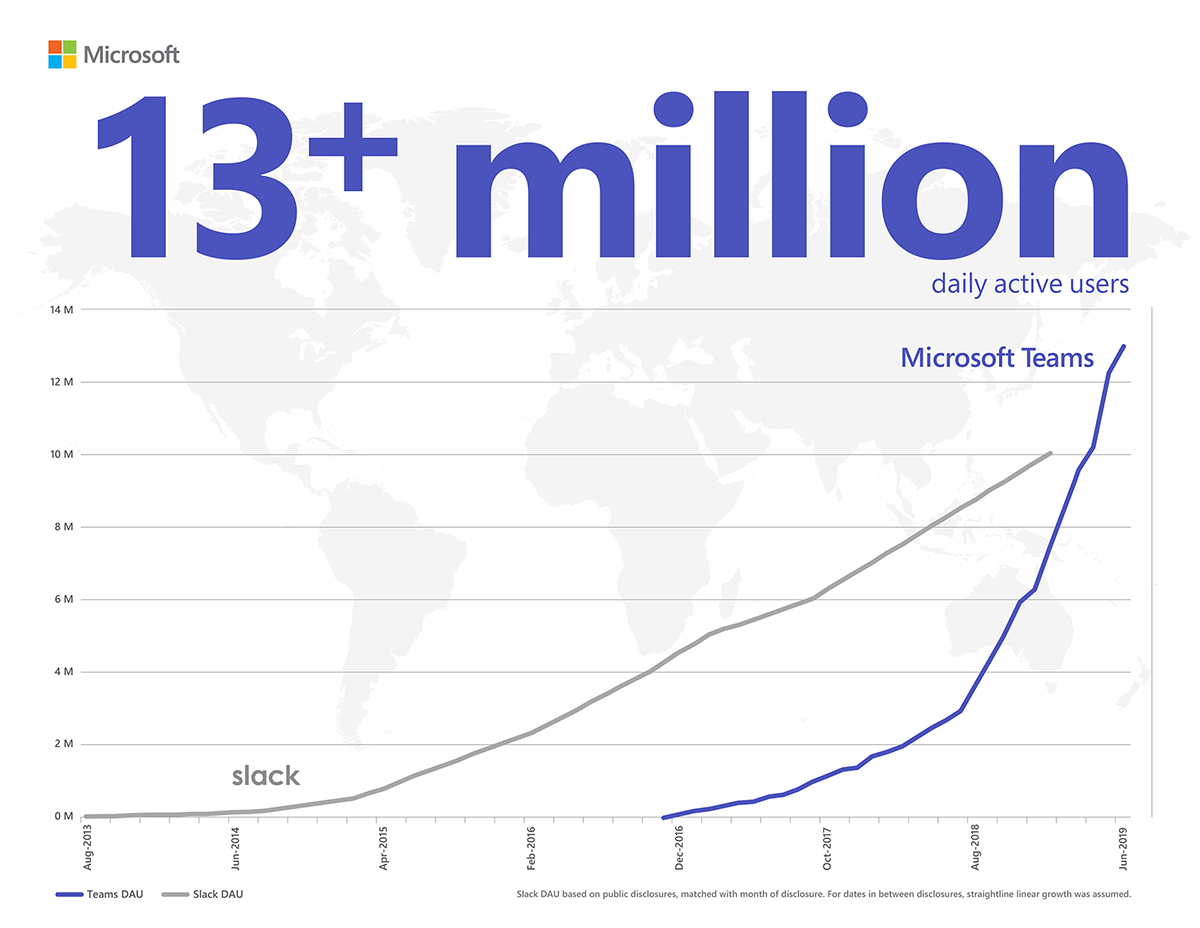
More than 13 million people were using Microsoft Teams on a daily basis as of June, with more than 19 million people using the service weekly, Microsoft said today. By comparison, Slack reported it had 10 million daily users in January.
The comparison of the two services isn’t one made by the media alone. Microsoft featured a chart (pictured) showing its user numbers next to Slack’s. Even without recent figures from Slack, the chart clearly shows much higher growth for Microsoft Teams.
The ascendancy of Teams in the workplace collaboration market has been remarkable. Launched with fanfare out of a closed beta test in March 2017, it was predicted to be a success from day one.
Where the two services differ, however, is the companies to which they appeal. As The Verge pointed out, Microsoft bundles Teams with Office 365, giving the service a clear advantage with big business. Slack, which is a separate paid service, remains popular with small businesses that may not have Office 365 subscriptions.
Microsoft didn’t provide an update on how many businesses were using Teams, but as of March the number was more than 500,000 organizations, including 91 percent of Fortune 100 firms.
Along with the release of user numbers, Microsoft also announced a number of new features from Teams.
At the top of the list is the introduction of prioritized communications, including priority notifications and read receipts. A new announcement feature is now available along with the ability to post a single message in multiple channels at the same time.
For those using Teams to manage employees, a new time clock feature allows workers to clock in and out of their shifts via the Teams mobile app. Communication to team members is also improved by a new targeted communication option that allows messages to be sent to all people in the same role.
Constant innovation and new additional features in Teams have been a hallmark of the service from its inception. Slack has not been quiet in adding new features either, but by comparison it has been left in the dust as Microsoft Teams continues to evolve. Although both still remain workplace collaboration tools, it could be argued that the innovation at Teams may also be a key factor behind its rapid growth.
Support our mission to keep content open and free by engaging with theCUBE community. Join theCUBE’s Alumni Trust Network, where technology leaders connect, share intelligence and create opportunities.
Founded by tech visionaries John Furrier and Dave Vellante, SiliconANGLE Media has built a dynamic ecosystem of industry-leading digital media brands that reach 15+ million elite tech professionals. Our new proprietary theCUBE AI Video Cloud is breaking ground in audience interaction, leveraging theCUBEai.com neural network to help technology companies make data-driven decisions and stay at the forefront of industry conversations.