



 EMERGING TECH
EMERGING TECH
EMERGING TECH

EMERGING TECH

Someone once said that in the future everything will take five seconds — except getting your license at the DMV; that will pretty much always take forever. Sites that must service large numbers of people aren’t famous for instant gratification. Could new technology do the tailoring and individualizing the staff can’t do?
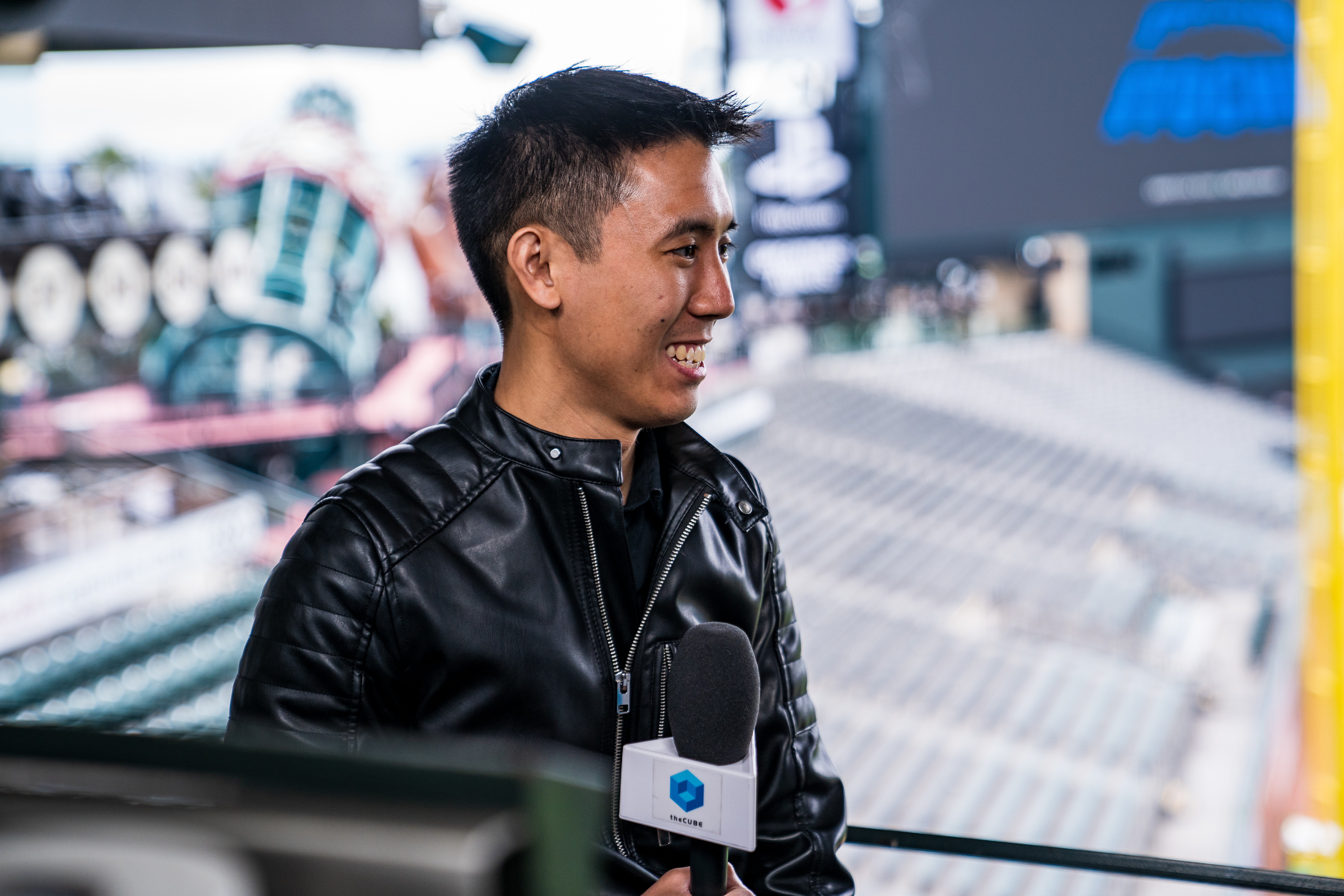
There’s a lot of work to be done making customer experience in large venues more customer-focused, according to Albert Ng (pictured), founder and chief executive officer of Misapplied Sciences Inc. Airports, sports arenas, and the like can’t cater to each individual’s wishes second-by-second.
“You feel like cattle in a herd,” Ng said. “It’s not tailored for you in any way.”
Ng spoke with Jeff Frick, host of theCUBE, SiliconANGLE Media’s mobile livestreaming studio, during the recent Sports Tech Tokyo World Demo Day in San Francisco. They discussed how Misapplied Sciences’ custom technology will alter customer experience in large venues and arenas (see the full interview with transcript here).
This week, theCUBE spotlights Misapplied Sciences in its Startup of the Week feature.
To be sure, there have been some attempts to bring 21st-century gratification to large venues and arenas. Sports stadiums, for example, are increasingly investing in tech to get fans off the couch and out to the ball park. A full 59% of Americans prefer to watch games on TV instead of in the stadium (32%), according to research from YouGov PLC.
“We are seeing tremendous demand from stadium developers looking for cutting-edge technology strategy,” said Don Loudermilk, senior vice president of JLL Project and Development Services, as quoted by Jones Lang LaSalle IP, Inc. “Their interest is fueled by a combination of benefits, from improvements to the guest experience, to improved marketing, security and facility operations.”
Venues may use Wi-Fi and device data to immerse fans in the games. For example, Chicago’s Wrigley Field is mining fans’ data to personalize their experience and make them special, targeted offers.
Countless travelers would love to see long lines and other hold-ups and hassles cut from the airport experience. They can purchase a membership to Clear, which uses biometrics at kiosks in some airports and stadiums. Users that verify their identity with a fingerprint or iris scan can bypass some lines. They could go through airport security in under five minutes, the company told theCUBE.
Services like these tend to make things, from smartphone applications to mall kiosks, the mediators between the user and the venue. Since users must interact with this mediator, it is typically not a seamless experience. Misapplied Sciences is taking a radically different approach to tailoring individual’s experiences. The company aims to alter things in the venue itself — automatically and intuitively — to suit individuals.
“You’re not looking down at a smartphone; you’re not wearing any special glasses to see everything that you want to see. We can have the entire stadium come alive just for you,” Ng said.
Ng once worked as a researcher for Microsoft Corp. in its Applied Sciences group. The name “Misapplied Sciences” is a spin on that. “We’re a little bit more whimsical as a company in that we take technologies that weren’t intended for the ways that we apply them and we ‘misapply’ those technologies to create new innovations,” he said.
In fact, the startup does not just repurpose existing technologies. To bring its vision of a personalized venue to life, it had to custom build its own technologies from scratch. Consider digital display technology — the large LED displays in stadiums, digital signage and the like.
“What’s unique about our displays is, you can have a crowd of people, all looking at the same display at the same time, yet every single person sees something completely different. You don’t need to have any special glasses or anything like that. You look at your displays with your naked eyes, except everyone gets their own personalized experience,” Ng said.
How is this possible? The personalization is in the company’s bleeding-edge pixel technology. It required new optics, high-performance computing, a custom-made processor, computer vision and software user interfaces, to name a few. Much of the tech under the hood is designed to reduce the calculations or rendering required from a normal computer. Using the platform, venues can run large display screens and control hundreds of different views using a normal PC. The company toiled in stealth mode for about four years perfecting the product.
“It’s a full-stack technology,” Ng said.
Each of the pixels can control the color of light that it sends out in different directions. At once, a single pixel can emit green light toward one fan in a stadium and red light toward the person sitting right next to him or her. The first individual perceives green, while the other person perceives red. It’s possible to control what each pixel looks like from up to a million different angles. This means that totally different images can be rendered for different viewers. One person sees a cat, for example; someone else sees a dog.
Misapplied Sciences’ pixel technology also allows for the personalization of experiences in places like airports.
“Imagine you go up to the giant flight board and instead of a list of 100 flights, you see only your own flight information in big letters, so you can see it from 50 feet away. You can have arrows that light your path towards your particular gate. The displays could let you know exactly how many minutes you have to board, places for you to eat and shop [that are] convenient for you,” Ng said.
This ability to personalize a variety of experiences stretches to other venues like shopping malls, stadiums, etc.
“Imagine the stadium knowing whether you’re a home-team fan or away-team fan. Or your fantasy players. You can see it all on the jumbotron or any of the displays that are in the interstitial areas,” Ng explained.
Misapplied Sciences will have its first public installation in an airport in 2020.
Here’s the complete video interview, part of SiliconANGLE’s and theCUBE’s coverage of Sports Tech Tokyo World Demo Day:
Support our mission to keep content open and free by engaging with theCUBE community. Join theCUBE’s Alumni Trust Network, where technology leaders connect, share intelligence and create opportunities.
Founded by tech visionaries John Furrier and Dave Vellante, SiliconANGLE Media has built a dynamic ecosystem of industry-leading digital media brands that reach 15+ million elite tech professionals. Our new proprietary theCUBE AI Video Cloud is breaking ground in audience interaction, leveraging theCUBEai.com neural network to help technology companies make data-driven decisions and stay at the forefront of industry conversations.