




 AI
AI
AI
AI
AI

Facebook AI, the social media giant’s artificial intelligence research division, announced today that it has met a milestone in the creation of a bot that can play Hanabi, a cooperative card game involving imperfect information, with near-perfect results.
This milestone is important because games such as Hanabi represent real-world situations where an AI must participate in complex tasks with humans, discern intentionality from human actions and make decisions based on imperfect information.
This bot not only improves on previous AI systems but exceeds the capabilities of elite human players, as judged by experienced players who evaluated it.
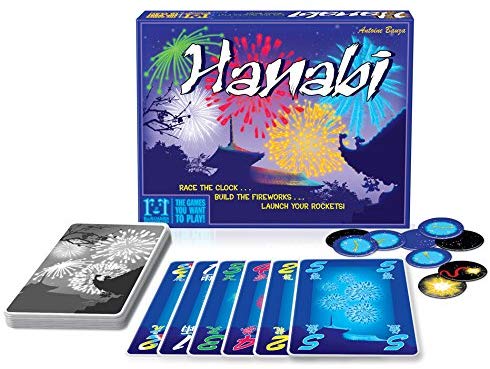
Hanabi is a complex cooperative card game that involves colored cards with numbers on them in a game that is described a lot like group solitaire. The name “Hanabi” is taken from the Japanese word for fireworks and this is also related to the objective of the game.
Published in 2010 by Asmodée Éditions from French game designer Antoine Bauza, Hanabi is a game where players are aware of other peoples’ hands but not their own. Players are limited in the type of information they can share with other players based on what they can see. This information is then used to decide what cards to play and what to discard. A winning round represents a successful firework show.
Earlier this year, AI researchers at Deepmind and Google Brain proposed this game as a new frontier in AI research because of the combination of cooperative play and imperfect information in a multiplayer setting. Effective Hanabi players must create a “theory of mind” about other players and understand intentionality using limited information. This sort of predictive capability and intentionality modeling would be necessary for smart agents to work with humans in situations where communication is difficult due to a lack of understanding or access to information is poor.
The bot achieves its superhuman ability by using a real-time search method similar to the depth-limited search technique used by Pluribus, a poker-playing bot that can beat professional players at six-player no-limit Texas Hold’em.
Search algorithms used for perfect-information games such as backgammon, chess and Go do not work in imperfect information games such as Hanabi. In games such as chess, a bot can simulate all of the possible outcomes based on knowing the positions and abilities of every piece on the board, but with Hanabi the bot must account for many possible “world states” that are not immediately apparent when making a decision.
To do this, Facebook AI applied a search strategy using a concept of multi-agent search, which involves the bot attempting to model the search decisions of teammates based on what information it has available. This increases the odds that its search algorithm takes into account the intentions of other players, who had previously given hints as to what cards were visible on the playing field.
Previously in the field of AI research, most breakthroughs were focused on adversarial zero-sum environments. Although that has been useful for developing better AI algorithms, these situations do not match most computer-human interactions – such as those that would be used by consumers and businesses, which would rely more heavily on cooperation between human and machine intelligence.
Moving forward, Facebook AI researchers hope to apply this new AI model to other cooperative environments and applications such as those that are neither fully cooperative nor fully competitive.
Potential examples include negotiating with humans, moderating communication between humans, providing information based on understanding intentionality, such as smart agent suggestions, and other situations where an AI must access multiple sources of information and infer intent.
Support our mission to keep content open and free by engaging with theCUBE community. Join theCUBE’s Alumni Trust Network, where technology leaders connect, share intelligence and create opportunities.
Founded by tech visionaries John Furrier and Dave Vellante, SiliconANGLE Media has built a dynamic ecosystem of industry-leading digital media brands that reach 15+ million elite tech professionals. Our new proprietary theCUBE AI Video Cloud is breaking ground in audience interaction, leveraging theCUBEai.com neural network to help technology companies make data-driven decisions and stay at the forefront of industry conversations.