
 CLOUD
CLOUD
CLOUD
CLOUD

CLOUD

The challenge confronting many information-technology network administrators these days is not connecting to multiple clouds; it’s managing the infrastructure demands once they’ve arrived there.
Day one is easy. Day two? Not so much.
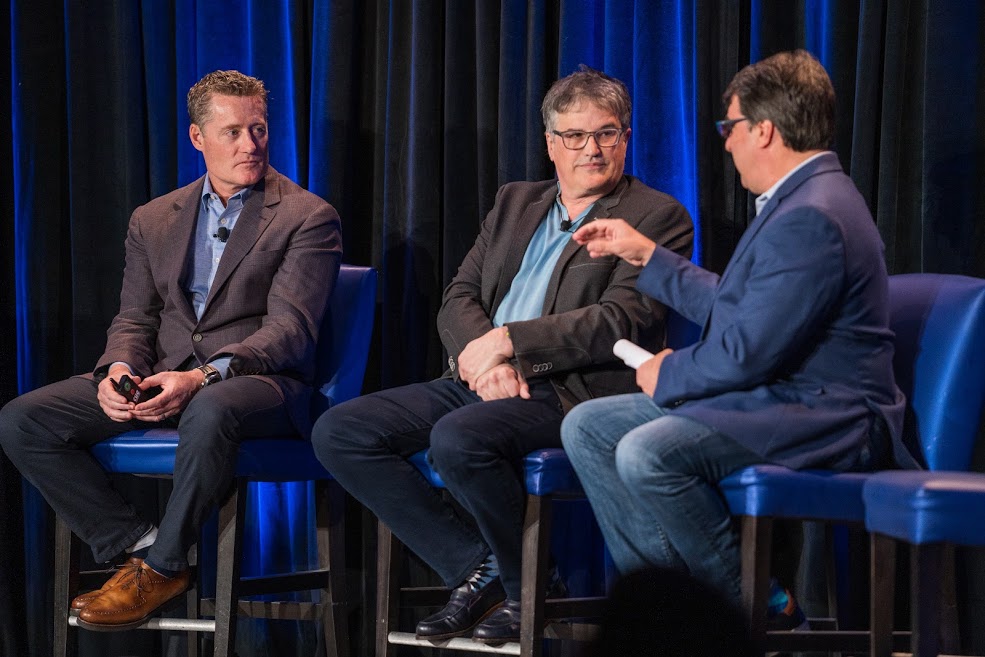
“While you’re in the network part of the cloud, connectivity to the cloud is simple,” said Simon Richard (pictured, center), cloud networking analyst at Gartner Inc. “You can use Terraform and create virtual private clouds and virtual networks across the three cloud providers. What’s difficult is the day two operations — let’s add an app; let’s add a server; let’s troubleshoot a problem.”
Richard spoke with John Furrier (right), host of theCUBE, SiliconANGLE Media’s mobile livestreaming studio, and Steve Mullaney (left), president and chief executive officer of Aviatrix Systems Inc., during the Altitude 2020 event in Santa Clara, California. They discussed the current approach for application allocation across multiple clouds and the need for tools that can provide visibility and networking control. (* Disclosure below.)
The challenge of multicloud application management has opened opportunities for companies such as Aviatrix to provide public cloud and edge orchestration solutions that can sit on top of multiple major provider platforms. Cloud users want the same resilience, performance and functionality that they can receive in on-premises environments.
“There’s not a lot of applications that use three clouds at once,” said Richard, in assessing how enterprises are dealing with multicloud management. “They move one app to Azure, one app to Amazon Web Services, one app to Google. That’s what we see so far.”
Multicloud networking is also placing pressure on information technology administrators not only to understand how the connectivity works, but to employ tools that can give them much-needed visibility and control.
“What you need from an entry point of view is a control plane across the three clouds,” Richard said. “That takes care of routing, connectivity and performance.”
Here’s the complete video interview, part of SiliconANGLE’s and theCUBE’s coverage of the Altitude event. (* Disclosure: TheCUBE is a paid media partner and co-producer for Altitude 2020. Neither Aviatrix nor other sponsors have editorial control over content on theCUBE or SiliconANGLE.)
Support our mission to keep content open and free by engaging with theCUBE community. Join theCUBE’s Alumni Trust Network, where technology leaders connect, share intelligence and create opportunities.
Founded by tech visionaries John Furrier and Dave Vellante, SiliconANGLE Media has built a dynamic ecosystem of industry-leading digital media brands that reach 15+ million elite tech professionals. Our new proprietary theCUBE AI Video Cloud is breaking ground in audience interaction, leveraging theCUBEai.com neural network to help technology companies make data-driven decisions and stay at the forefront of industry conversations.