
 EMERGING TECH
EMERGING TECH
EMERGING TECH

EMERGING TECH

The future is technologically complex. 5G, edge computing, open-source software, the internet of things, and hybrid cloud are combining to bring about a tsunami of change.
This mass convergence of high-tech advances will fuel yet another transformation of communication. And companies need to know how to prepare to take advantage of these new technologies.
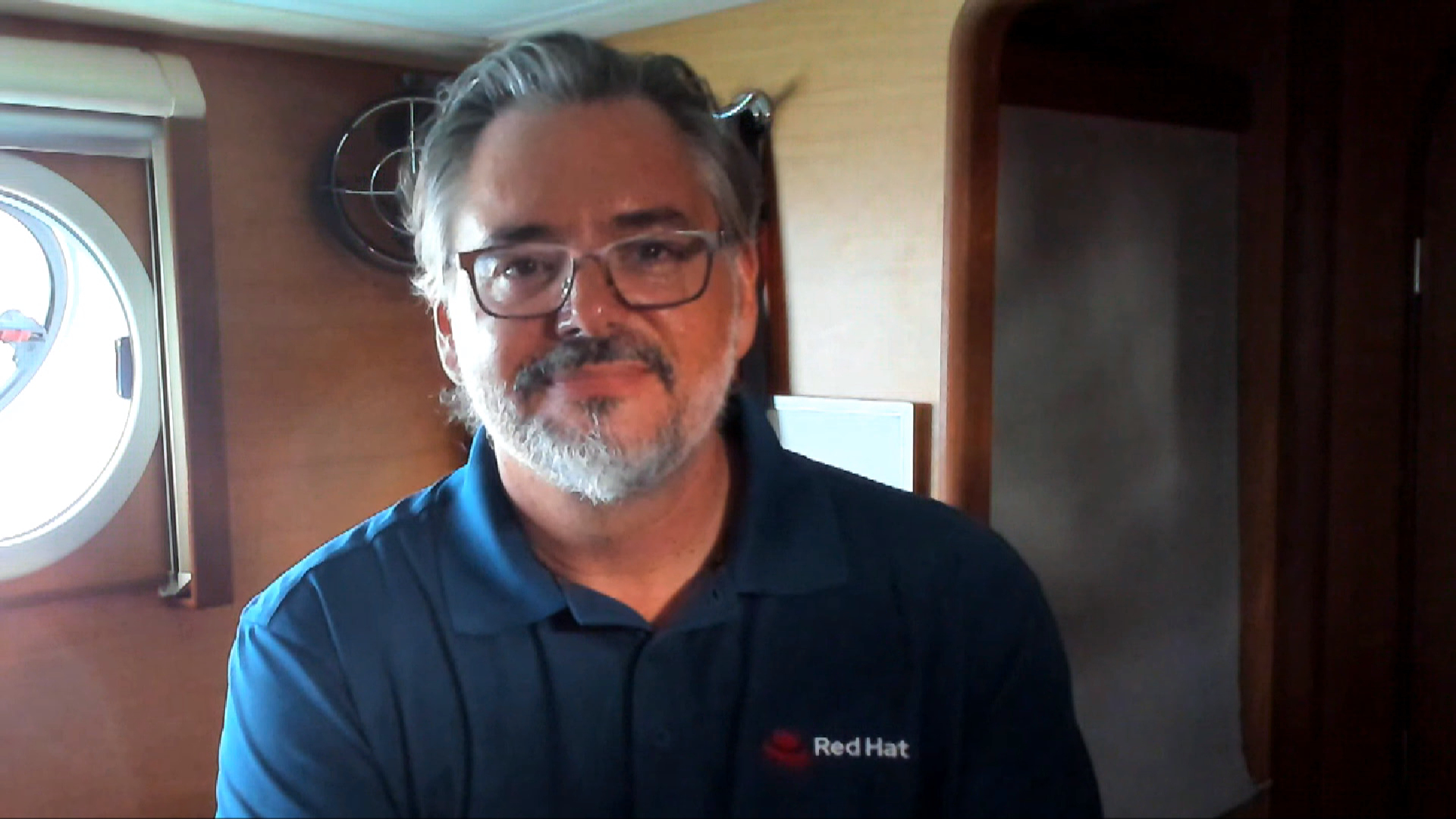
Getting down into the nuts and bolts of the intersection of 5G, edge, and hybrid cloud, Nick Barcet (pictured), senior director of technology strategy at Red Hat Inc., spoke with spoke with Stu Miniman, host of theCUBE, SiliconANGLE Media’s mobile livestreaming studio, during the Red Hat Summit Virtual Experience. (* Disclosure below.)
[Editor’s note: The following content has been condensed for clarity.]
Obviously, 5G is a big wave coming. There’s a lot of promise as what it will enable both for the service providers as well as the end users. Help us understand where that is today and what we should expect to see in the coming years.
Barcet: There are two reasons why 5G is important. One, it is important in terms of edge strategy because any person deploying 5G will need to deploy compute resources much closer to the antenna if they want to be able to deliver the promise of 5G and the promise of very low latency.
The second reason it is important is because it allows to build a network of things which do not need to be interconnected other than through a 5G connection. This simplifies some of the edge applications that we are going to see, where sensors needs to provide data in a way where you’re not necessarily always connected to a physical network, and where maintaining a WiFi connection is really complex and costly.
How is Red Hat helping its customers with edge solutions?
Barcet: Our vision for the future is a vision where OpenShift is delivering a common service on any platform, including hardware at the far edge on a model where both virtual machines and containers can be hosted on the same machine. However, there is a long road to get there. So, until we can fulfill all the needs, we are going to be using a combination of OpenShift, OpenStack, and many other products that we have in our portfolio to fulfill the needs of our customers.
For example, we’ve seen Verizon starting with OpenStack quite a few years ago. Now they’re going with OpenShift that they’re going to place on top of OpenStack or directly on bare metal.
There are great capabilities in the existing portfolio. We are just expanding that, simplifying it, because when we are talking about the edge, we are talking about managing thousands if not millions of devices and simplicity is key.
Can you connect the dots between what you’re talking about for edge, what’s happening with the telecommunication industry, and the broader conversation about hybrid cloud, or as Red Hat calls it, the open hybrid cloud?
Barcet: For us at Red Hat it’s very important to build edge as an extension of our open hybrid cloud strategy. What we are trying to build is an environment where developers can develop workloads once, and then the administrator that needs to deploy a workload or the business that needs to deploy a workload can do it on any footprint. The edge is just one of these footprints, as is the cloud, as is a private environment.
So really having a single way to administer all these footprints and having a single way to define the workloads running on it is really what we are achieving today and making better and better in the years to come.
Obviously, this is a maturing space with lots happening. What are the industry and Red Hat working on to bring full value out of the edge and 5G solution?
Barcet: As always, any such changes are driven by the application. What we are seeing is, in terms of applications, a very large predominance of requirements for artificial intelligence, machine learning, and data processing capability. So, reinforcing all the components around this environment is one of the key additions that we are making as we speak.
In his keynote, [Red Hat chief technology officer] Chris Wright demonstrates how we are enabling a manufacturer to process the signals sent from multiple sensors through an AI and doing early failure detection. You can also expect us to enable more and more complex use case in terms of footprint. Right now, we can do very small data centers that are residing on three machines. Tomorrow we’ll be able to handle remote worker nodes that are on a single machine. Further along we’ll be able to deal with disconnected nodes, a single machine acting as a cluster.
All these are elements that are going to allow us to go further and further in the complication of the use cases.
Watch the complete video interview below, and be sure to check out more of SiliconANGLE’s and theCUBE’s coverage of the Red Hat Summit Virtual Experience. (* Disclosure: TheCUBE is a paid media partner for the Red Hat Summit Virtual Experience. Neither Red Hat Inc., the sponsor for theCUBE’s event coverage, nor other sponsors have editorial control over content on theCUBE or SiliconANGLE.)
Support our mission to keep content open and free by engaging with theCUBE community. Join theCUBE’s Alumni Trust Network, where technology leaders connect, share intelligence and create opportunities.
Founded by tech visionaries John Furrier and Dave Vellante, SiliconANGLE Media has built a dynamic ecosystem of industry-leading digital media brands that reach 15+ million elite tech professionals. Our new proprietary theCUBE AI Video Cloud is breaking ground in audience interaction, leveraging theCUBEai.com neural network to help technology companies make data-driven decisions and stay at the forefront of industry conversations.