



 CLOUD
CLOUD
CLOUD
CLOUD
CLOUD

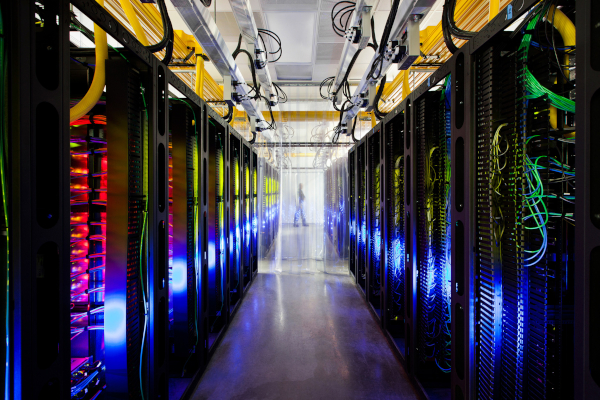
Google LLC today began publicly sharing information about the carbon emissions of its cloud data centers, a step that the search giant hopes will help Google Cloud customers reduce their own environmental footprints.
Google recently set a goal of powering its entire operations with carbon-free energy 24 hours a day by 2030. Currently, however, its cloud data centers use a mix of renewable and nonrenewable energy. The carbon emissions information the company is releasing will allow cloud customers to check the environmental footprint of the data centers in which they host their applications and find greener Google Cloud data centers they could potentially switch to.
Google is sharing sustainability data for more than 20 Google Cloud regions to start. A region in cloud provider parlance is a cluster of data centers located in the same geographic area.
For each region, Google is disclosing three sustainability metrics: carbon-free energy percentage, grid carbon intensity and net carbon emissions. In the last department, all the regions have net carbon emissions of zero because Google fully matches its nonrenewable energy usage with investments in carbon offsets.
The two other metrics the company is sharing, carbo- free energy percentage and grid carbon intensity, vary from location to location.
A Google Cloud region’s carbon-free energy percentage describes what part of the electricity it consumes comes from renewable sources and what part is nonrenewable power. More than a half-dozen Google Cloud regions already rely on sustainable electricity generation methods for most of their energy needs, the newly released data reveals. A few, including the ones in Oregon and Sao Paulo, have a carbon-free energy percentage of more than 70%.
Google calls the other sustainability metric it’s disclosing grid carbon intensity. The company is releasing the information because there are situations where two data centers may receive a similar portion of their energy from nonrenewable sources, but one has a bigger carbon footprint than the other. That’s usually because the power grid at one of the locations is supported by more carbon-intensive power plants.
To provide insight into such situations, Google will share regions’ average lifecycle gross emissions per unit of energy consumed. The information will enable customers to take power grid differences into account when making sustainability decisions, Google says.
Some customers are already incorporating the new data into their plans. Patrick Flynn, Salesforce.com Inc.’s vice president of sustainability, said in a statement that “with Google’s new Carbon Free Energy Percentage, Salesforce can prioritize locations that maximize carbon free energy, reducing our footprint as we continue to deliver all our customers a carbon neutral cloud every day.”
Google’s cloud platform already includes features that customers can use to reduce their workloads’ environmental footprint. Among other things, the platform generates recommendations on the optimal instance size for a given application. The recommendations help companies avoid provisioning unnecessary hardware resources.
As far as its own sustainability efforts are concerned, Google is taking multiple approaches to reaching its goal of switching entirely to carbon-free energy by 2030. The company has invested billions of dollars in wind and solar energy projects. It’s also working to reduce the overall electricity requirements of its data centers by deploying power-saving technologies, such artificial intelligence models for optimizing the energy usage of server cooling equipment.
Support our mission to keep content open and free by engaging with theCUBE community. Join theCUBE’s Alumni Trust Network, where technology leaders connect, share intelligence and create opportunities.
Founded by tech visionaries John Furrier and Dave Vellante, SiliconANGLE Media has built a dynamic ecosystem of industry-leading digital media brands that reach 15+ million elite tech professionals. Our new proprietary theCUBE AI Video Cloud is breaking ground in audience interaction, leveraging theCUBEai.com neural network to help technology companies make data-driven decisions and stay at the forefront of industry conversations.